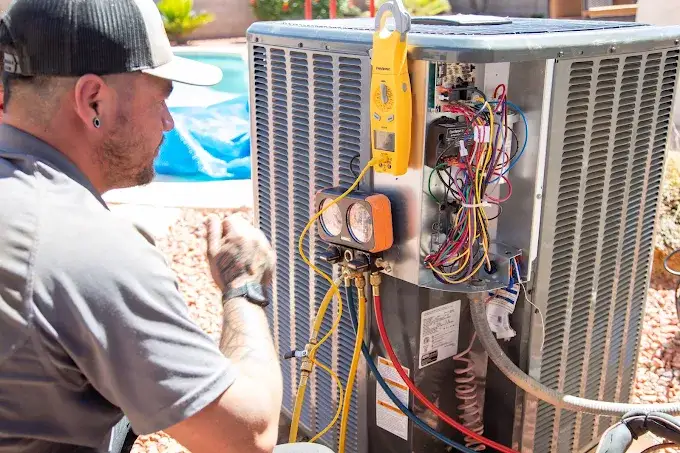


Don't Get Zapped: Safely Testing Your AC Capacitor
Don't get zapped! Perform an AC capacitor check safely. Learn failure signs, DIY tests, and when to call a pro for AC repair.


Why Your AC Capacitor Check Could Save Your Summer
An AC capacitor check is a crucial diagnostic test that can prevent costly repairs and keep your Arizona home cool. A struggling air conditioner during a blistering heat wave is unnerving, especially when temperatures soar above 100°F.
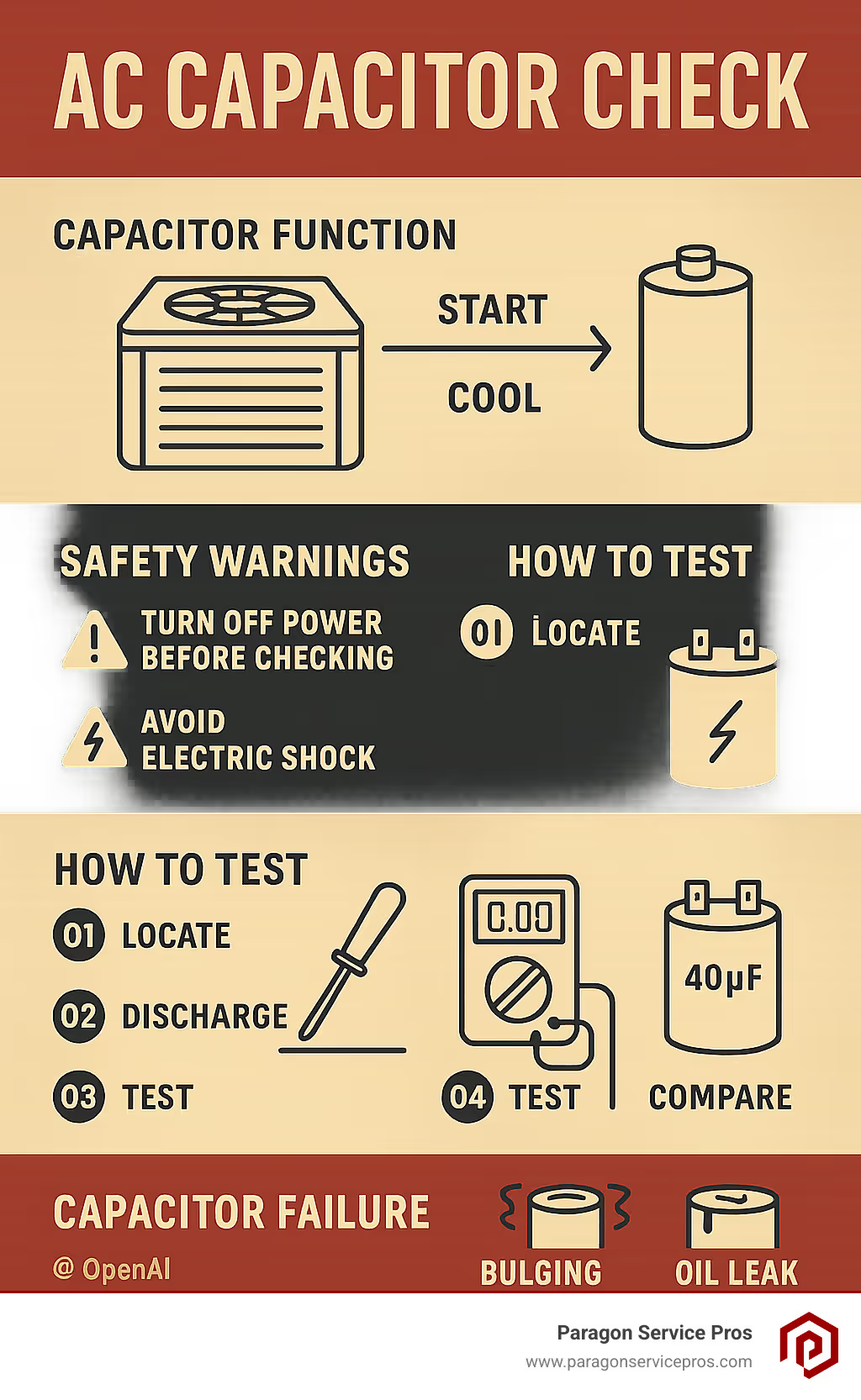
Quick AC Capacitor Check Steps:
- Turn off power at the breaker and disconnect switch.
- Locate the capacitor in the outdoor unit.
- Visual inspection for bulging, leaking, or damage.
- Discharge safely with an insulated screwdriver.
- Test with a multimeter on the capacitance setting.
- Compare readings to rated values on the capacitor label.
Your AC capacitor acts like a temporary battery, providing the power boost needed to start your air conditioner's motors. It's the heartbeat of your cooling system; when it fails, your AC can struggle or stop working completely.
Common signs your capacitor needs checking include:
- Humming or buzzing sounds from the outdoor unit
- AC won't start or starts intermittently
- Fan runs but no cold air
- Clicking noises when trying to start
- Rising energy bills
Testing a capacitor involves high-voltage components that hold a dangerous charge even when the power is off. Improper handling can cause serious injury or death.
Understanding the AC Capacitor: The Heartbeat of Your Cooling System
An AC capacitor works like giving a heavy shopping cart a strong push to get it rolling. Once moving, it's easier to keep going. The capacitor provides that initial jolt of power to your AC's motors. Tucked away in your outdoor unit, this cylindrical component is the powerhouse that gets your cooling system running.
What Does an AC Capacitor Do?
Your AC capacitor functions as a temporary energy storage device. When your thermostat calls for cooling, the capacitor delivers a powerful electrical jolt to kick-start your compressor motor and fan motor. Once the motors are running, the capacitor provides steady electrical support to keep them running smoothly and efficiently, which helps save money on summer electric bills in Arizona.
Types of AC Capacitors
Understanding the different types helps when speaking with technicians during an AC capacitor check.
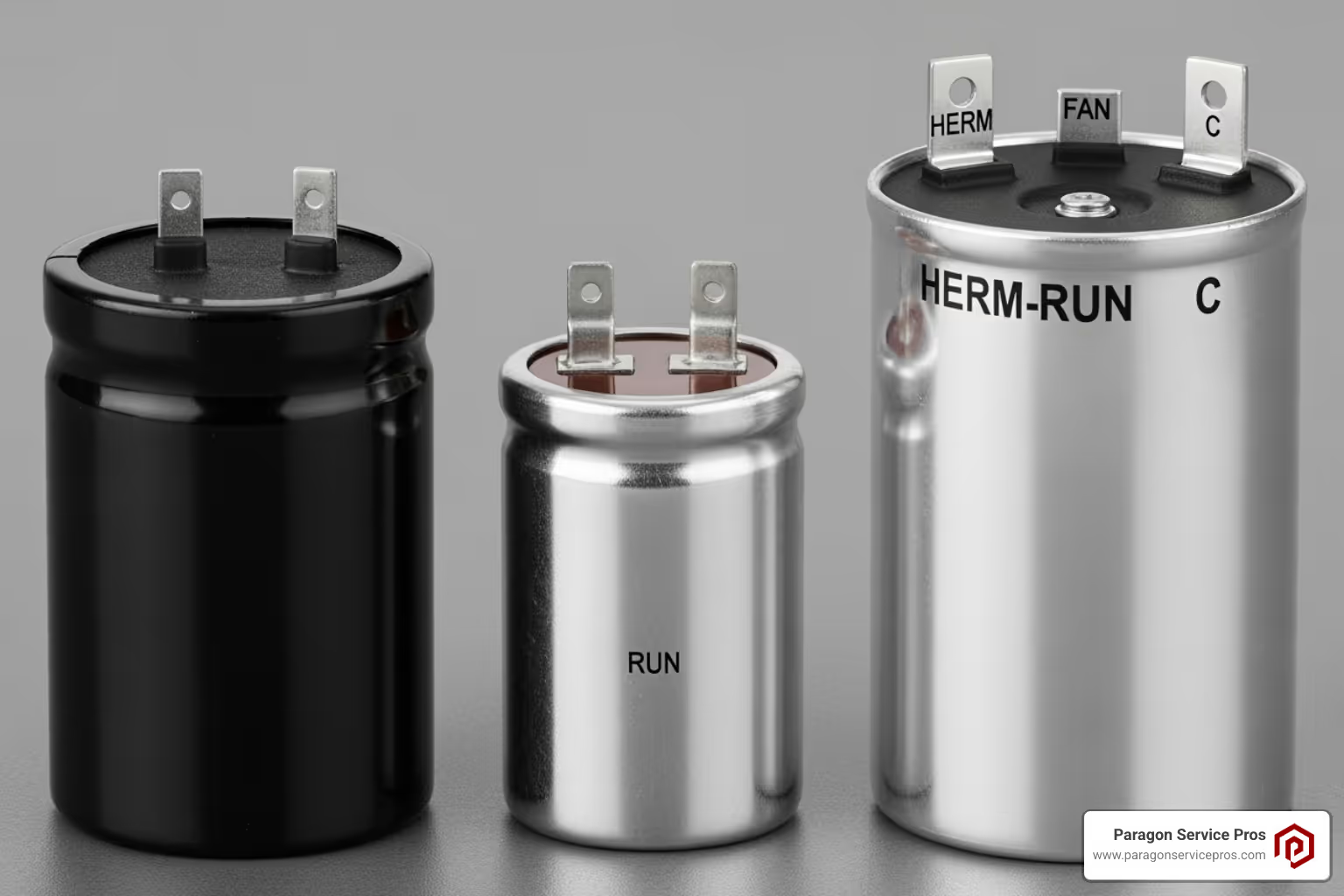
Start capacitors deliver an intense, brief burst of energy to get the compressor motor started.
Run capacitors provide steady, consistent electrical support to keep the fan and compressor motors running efficiently throughout the cooling cycle.
Dual-run capacitors are multitaskers found in many modern AC units. They combine both starting and running functions in one unit, with three terminals typically labeled "C" (common), "FAN" (fan motor), and "HERM" or "COMP" (compressor motor).
How Long Do AC Capacitors Last?
AC capacitors can last up to 20 years under normal conditions, but Arizona's extreme climate is tough on them. Relentless summer heat, power surges from monsoon storms, poor manufacturing, and electrical shorts can all cause premature failure. Heavy usage in areas like Chandler, Gilbert, and Mesa also puts extra strain on capacitors, leading to earlier-than-expected replacements.
For more detailed information about keeping your entire AC system running optimally, explore our comprehensive air conditioning services.
Is Your Capacitor Failing? Telltale Signs and Symptoms
Your AC unit usually gives clues when a capacitor is failing. Recognizing these signs early can help you address the problem before it becomes a more expensive repair.
Common Signs of a Struggling AC Capacitor
- Humming or Buzzing Noise: A loud hum from the outdoor unit without the fan or compressor starting is a classic sign. The motor is trying to start but lacks power from the capacitor.
- AC Won't Start or Starts Intermittently: The most obvious sign is an AC unit that refuses to turn on or tries to start but quickly shuts off. This "hard starting" strains other components, especially the compressor.
- No Cold Air (Fan Runs, but No Cooling): If the fan is spinning but you only get warm air, the compressor might not be starting, often due to a faulty run capacitor.
- Clicking Sounds: A rapid clicking from your outdoor unit can indicate the system is repeatedly failing to start the compressor or fan due to a weak capacitor.
- Rising Energy Bills: A weakening capacitor forces motors to work harder and draw more electricity, increasing your utility bill.
- AC Turns Off on Its Own: A unit that runs for a short time and then shuts off can be a symptom of a capacitor failing to maintain consistent power.
Visible Signs of Physical Damage
Always perform a visual inspection after safely turning off the power.
- Bulging Casing: A swollen or bulging top or sides is the clearest sign of failure, indicating internal pressure buildup.
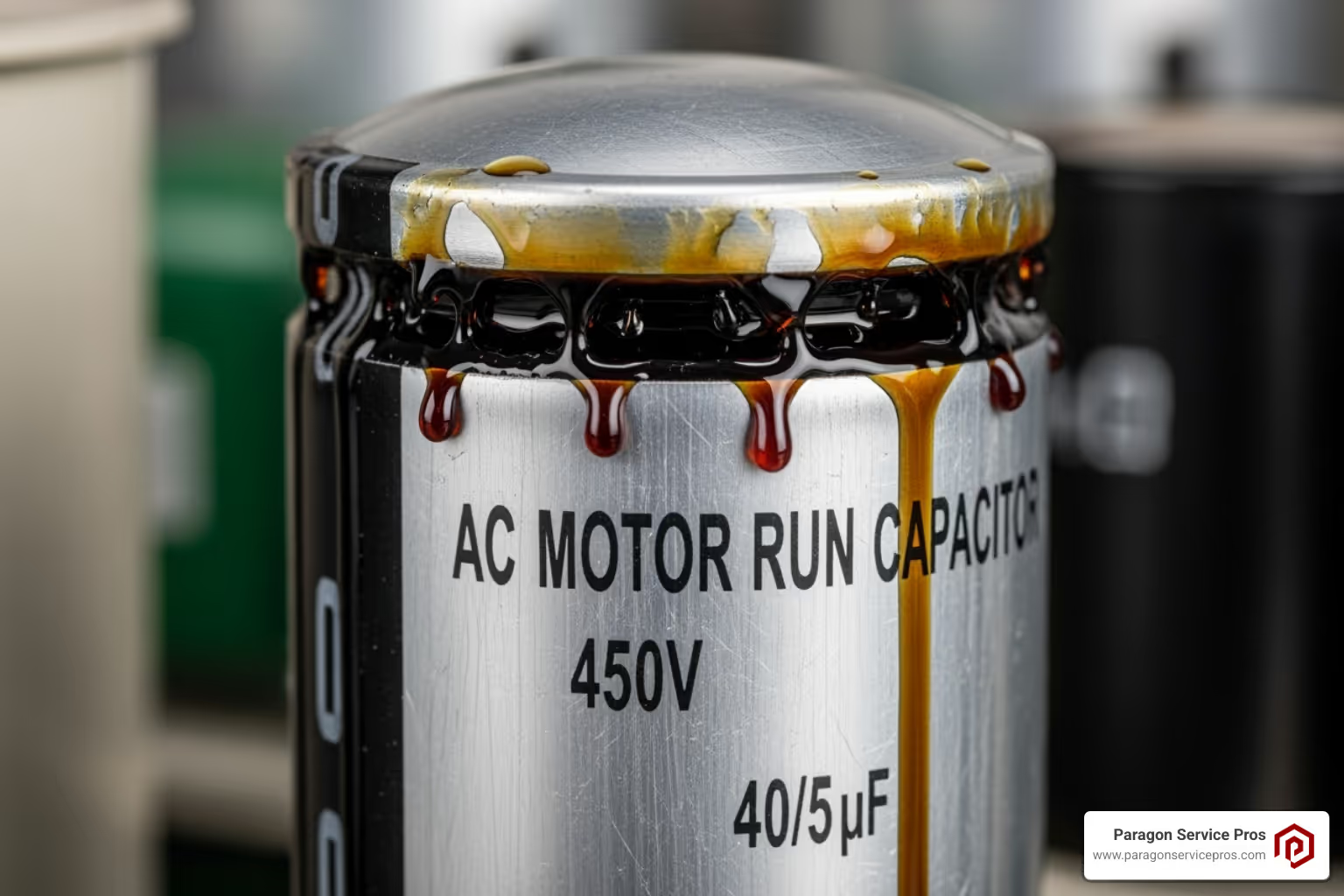
- Leaking Oil: If you see oily residue on or around the capacitor, its internal dielectric fluid is leaking, and it has failed.
- Burnt Smell or Discoloration: A burnt odor or visible scorching on the capacitor's casing or terminals signals severe overheating.
- Rusted Bottom or Broken Terminals: Corrosion or damage to the base or terminals can also indicate a compromised capacitor.
Can an AC Unit Still Run with a Bad Capacitor, and What Are the Consequences?
Yes, an AC can sometimes seem to run with a bad capacitor. The fan might spin, but if the compressor doesn't start, the unit will only blow warm air.
Continuing to run your AC with a failing capacitor has serious consequences:
- Further Damage: The biggest risk is damaging the compressor, which strains to start without the capacitor's boost. A compressor replacement is far more costly than a capacitor.
- Increased Energy Consumption: Weak capacitors cause motors to work harder, driving up energy bills.
- Reduced Comfort: Your home won't cool effectively.
- System Failure: Eventually, the unit will likely stop working entirely.
Don't let a small capacitor issue turn into a major system failure. For more warning signs that your AC needs professional attention, check out our guide on Air Conditioner SOS: Warning Signs Your Air Conditioner Needs Repair.
The Complete Guide to Your DIY AC Capacitor Check
Performing an AC capacitor check yourself can diagnose a common AC problem. However, due to the high voltage involved, safety is your top priority. If you're not comfortable with any step, call a professional.
Safety First: Essential Precautions
Capacitors can hold a powerful electrical charge even after the power is off, posing a serious risk of electric shock. Follow these critical safety steps.
- Turn Off All Power Sources:
- Set your thermostat to "Off."
- At your home's main electrical panel, flip the breaker for your outdoor AC unit to the "Off" position.
- At the outdoor disconnect switch (usually a box on the wall near the unit), pull the disconnect handle or switch it to "Off."
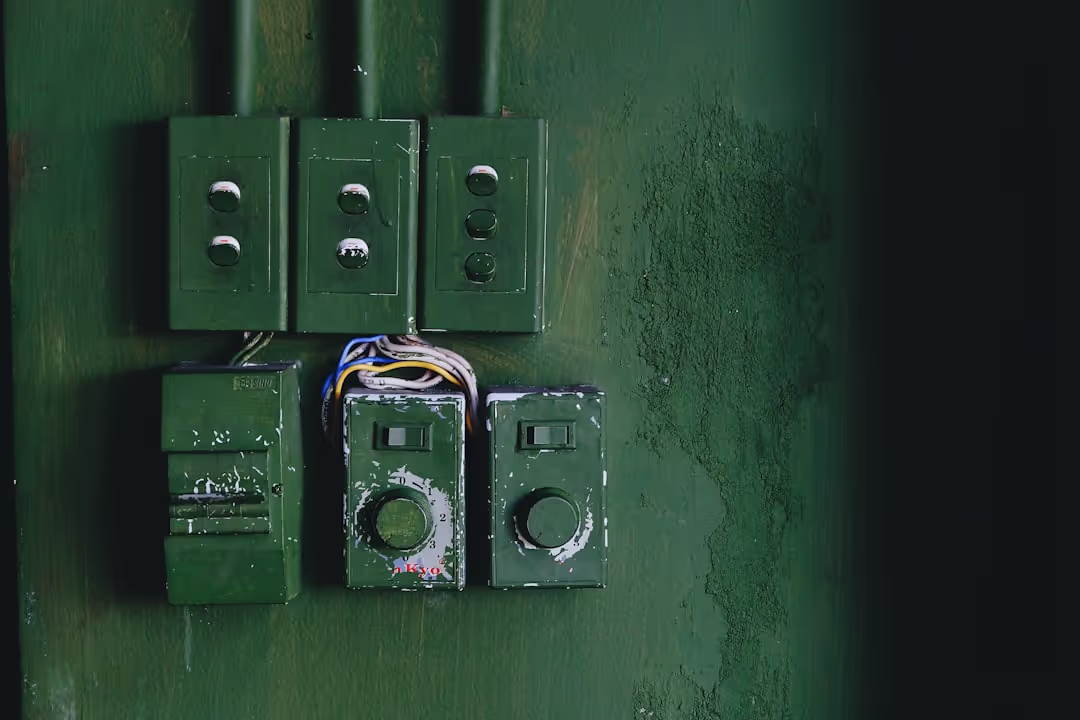
- Verify Power is Off: Use a non-contact voltage tester on the wires leading into the outdoor unit to confirm no electricity is flowing. If it beeps or lights up, power is still present. Do not proceed until you find and turn off the correct breaker.
- Wear Appropriate Safety Gear:
- Insulated Gloves: Wear heavy-duty electrical gloves.
- Safety Glasses: Protect your eyes from sparks or debris.
- Insulated Tools: Use tools with well-insulated handles.
The risk of severe or fatal electric shock is real. Stay safe.
Step-by-Step: How to Perform the AC Capacitor Check
Once you've confirmed the power is off and you're wearing safety gear, you can proceed.
Tools Needed:
- Multimeter with Capacitance (MFD or µF) Setting
- Insulated Screwdriver
- Needle-Nose Pliers
- Camera (your phone)
How to Perform the Check:
- Locate the Capacitor: Remove the access panel on the outdoor condenser unit. The capacitor is a cylindrical component, usually near the compressor and fan motor.
- Visual Inspection: Look for bulging, leaking fluid, or discoloration. If you see obvious physical damage, the capacitor is bad and needs replacement.
- Discharge the Capacitor: This is a critical safety step. Using your insulated screwdriver, touch the metal shaft across the capacitor's terminals simultaneously to release any stored charge. You might see a small spark or hear a pop.
- For a two-terminal capacitor, touch both terminals.
- For a dual-run capacitor (three terminals: C, FAN, HERM), discharge it in pairs: touch "C" and "FAN," then "C" and "HERM." Repeat a few times to be sure.
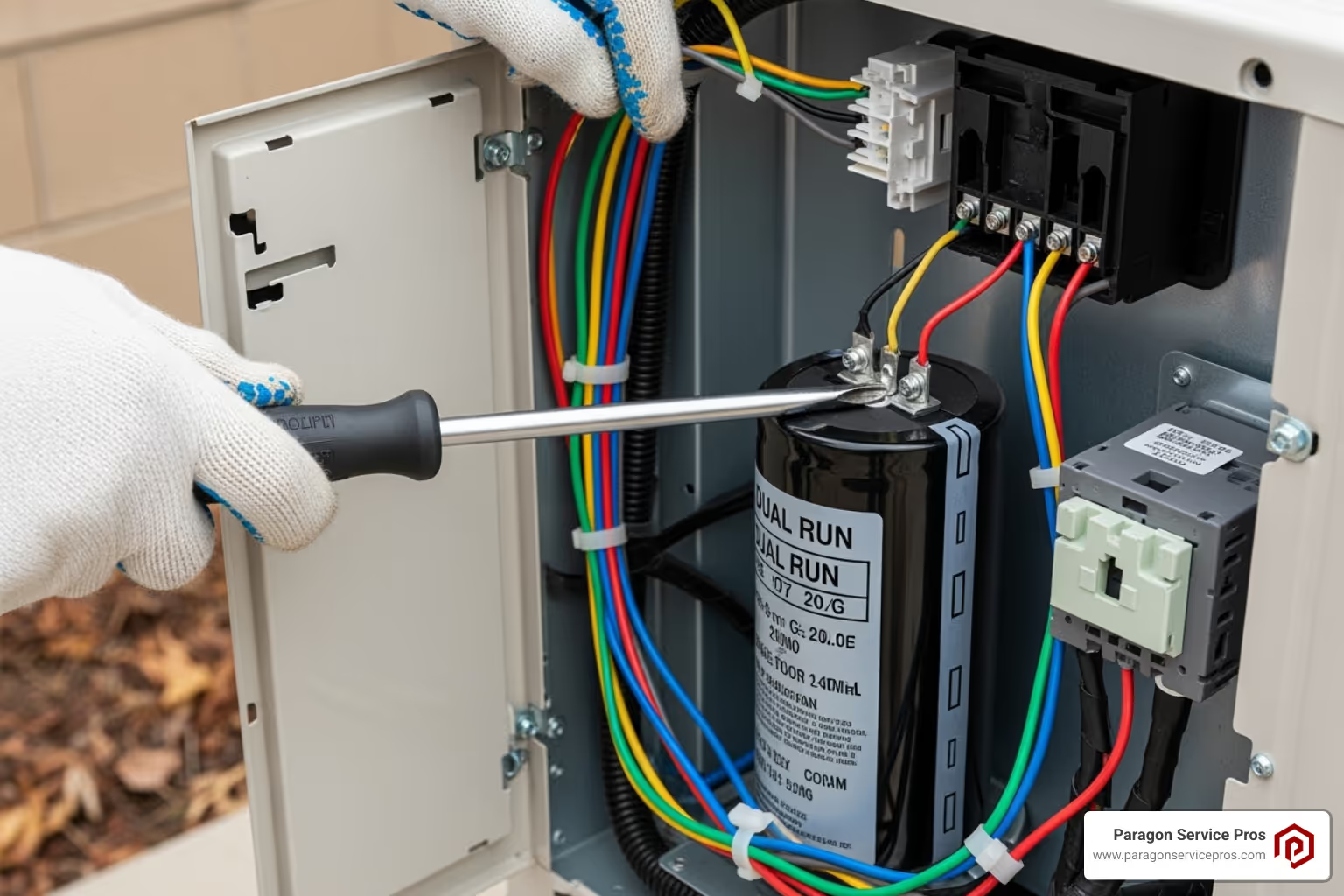
- Disconnect Wires: Take a photo of the wiring for reference. Use needle-nose pliers to carefully pull the wire connectors off the terminals.
- Remove the Capacitor: Unscrew the clamp or bracket holding it in place.
- Test with Multimeter:
- Set your multimeter to the capacitance setting (µF or MFD).
- Connect the probes to the terminals. For a dual-run capacitor, test each section separately:
- FAN section: Connect probes to "C" (Common) and "FAN."
- HERM (Compressor) section: Connect probes to "C" (Common) and "HERM."
- Read the display in microfarads (µF) after it stabilizes.
For a great visual guide, especially for dual capacitors, check out this helpful video: How To Check a DUAL CAPACITOR With A Multimeter ... - YouTube
Interpreting the Results of Your AC Capacitor Check
Compare your multimeter readings to the information on the capacitor's label.
Understanding Capacitor Labels:
- Microfarad (MFD/µF) Rating: The capacitance value. For example, "40/5 µF" means the compressor (HERM) side is 40µF and the fan side is 5µF.
- Voltage (VAC) Rating: The maximum voltage the capacitor can handle.
- Tolerance Percentage: Usually "+/- 5%" or "+/- 6%." This is the acceptable deviation from the rated MFD value. A 40µF capacitor with +/- 5% tolerance should read between 38µF and 42µF.
Comparing Your Readings:
- Good Capacitor: The reading is within the tolerance range (e.g., +/- 6%).
- Weak Capacitor: The reading is below the tolerance range. It's failing and should be replaced to prevent further issues and ensure efficiency, especially during an Arizona summer.
- Bad Capacitor: The reading is significantly below tolerance, zero, or "OL" (Over Limit). The capacitor is dead and must be replaced.
When replacing the capacitor, getting the ratings right is vital. The two key specifications are capacitance and voltage. As explained in educational resources from the University of Hawaiʻi, capacitance measures a capacitor’s ability to store an electrical charge. This is why matching the microfarad (µF) rating is so important for proper motor function.
DIY vs. Calling a Pro: Knowing Your Limits
While a successful DIY AC capacitor check is satisfying, we've seen many attempts lead to bigger, more expensive problems. Before you start, understand the risks.
The Real Risks You're Taking On
Electric shock is the most serious risk. A capacitor can hold a dangerous charge even when the power is off. We've responded to emergency calls where homeowners learned this the hard way.
You can also accidentally damage your AC unit. Wiring a new capacitor incorrectly can fry it instantly or destroy expensive motors, turning a small repair into a major replacement.
Misdiagnosis is another common issue. What seems like a bad capacitor could be a failing contactor, a dying compressor, or low refrigerant. You might replace a good part and still have a broken AC.
When It's Time to Call in the Cavalry
We always tell our customers in Chandler, Gilbert, and Mesa: if you feel uncertain at any point, please give us a call. Your safety is worth more than a service visit fee.
Call a professional if you have:
- Lack of experience with electrical work.
- No proper safety gear like insulated gloves, safety glasses, and a reliable voltage tester.
- Severe physical damage to the capacitor (melted, burnt, or exploded), which often signals a larger electrical problem.
- Inconclusive test results, where the capacitor tests fine but the AC still won't start.
The Bottom Line on DIY vs. Professional Service
A replacement capacitor is inexpensive, but the peace of mind from professional installation is priceless. Our certified technicians have handled thousands of these repairs, carry the right equipment, and guarantee our work. Plus, we're available for same-day and emergency appointments across Arizona. When it's 115°F outside, you don't have time for troubleshooting.
We admire homeowners who want to understand their systems, but with high-voltage work, the smartest move is often knowing when to call the pros.
For more information on our repair services and how we can help keep your AC running safely, visit our AC repair page.
Frequently Asked Questions about AC Capacitors
We get a lot of questions about AC capacitors from our customers across Arizona. Here are answers to the most common ones.
Can an AC unit still run with a bad capacitor?
Your AC might try to run, but it won't cool properly. A failing capacitor often causes the fan to run without the compressor, meaning no cold air. You might hear a humming or buzzing sound as the motor struggles to start. Continuing to run the unit this way can cause the motor to overheat, leading to more severe and expensive damage. It's best to address the issue immediately.
How do I choose the right replacement capacitor?
Choosing the right replacement is critical. You must match the microfarad (MFD/µF) rating exactly. The voltage (VAC) rating on the replacement must be equal to or higher than the original. These numbers are printed on the capacitor's label.
For example, if your original capacitor is "40/5 µF 370 VAC," you need a dual-run capacitor with exactly 40 µF for the compressor and 5 µF for the fan. For voltage, you can use a 370 VAC or a 440 VAC replacement, but never go lower. Using the wrong µF rating can underpower or damage your motors.
How often should I perform an AC capacitor check?
A visual inspection should be part of your annual AC Maintenance. A multimeter test is only necessary if you notice symptoms of failure. Routine multimeter testing isn't recommended.
During seasonal maintenance, look at the capacitor for any bulging, leaking oil, or burnt spots. These are clear signs of a problem. The real trigger for an AC capacitor check with a multimeter should be symptoms like strange noises, starting issues, or poor cooling. Regular professional maintenance helps catch these issues early, before they leave you sweating in the Arizona heat.
Conclusion: Keep Your Cool with Confidence
An AC capacitor check is a valuable skill that can save your summer and your budget. We've covered how to identify a failing capacitor and how to test it, putting you in control when your AC acts up on a hot Arizona day.
However, we must emphasize one last time: safety isn't negotiable. Capacitors pack a serious electrical punch. If you feel uncomfortable with any part of the process, there's no shame in calling for professional backup. Sometimes the smartest DIY move is knowing when not to DIY.
A failing capacitor doesn't have to become a disaster. Catching the issue early, whether you do it yourself or have our team handle it, prevents more expensive compressor failures.
For homeowners across Arizona and Utah who want the peace of mind that comes with professional service, Paragon Service Pros is here to help. We offer same-day and emergency appointments to keep your home comfortable. From routine maintenance that spots capacitor issues early to complete system repairs, we have your cooling needs covered.
Ready to ensure your AC is running at its best? Our technicians serve communities throughout our service areas, including HVAC Repair American Fork, and are ready to help.

Customer Testimonials
Our customers consistently praise our fast response times, honest communication, and the dependable results they can feel in their home.
.svg)