

Is It Time? A Homeowner's Guide to Residential AC Replacement
Is your AC failing? Learn signs, costs, and options for Residential AC replacement. Get comfort & save energy.


Why Timing Your AC Replacement Matters
Residential AC replacement becomes a critical decision when your cooling system starts showing signs of age, inefficiency, or frequent breakdowns. In Arizona's demanding climate, where air conditioners work overtime for months, knowing when to replace rather than repair can save you thousands in energy costs and emergency repairs.
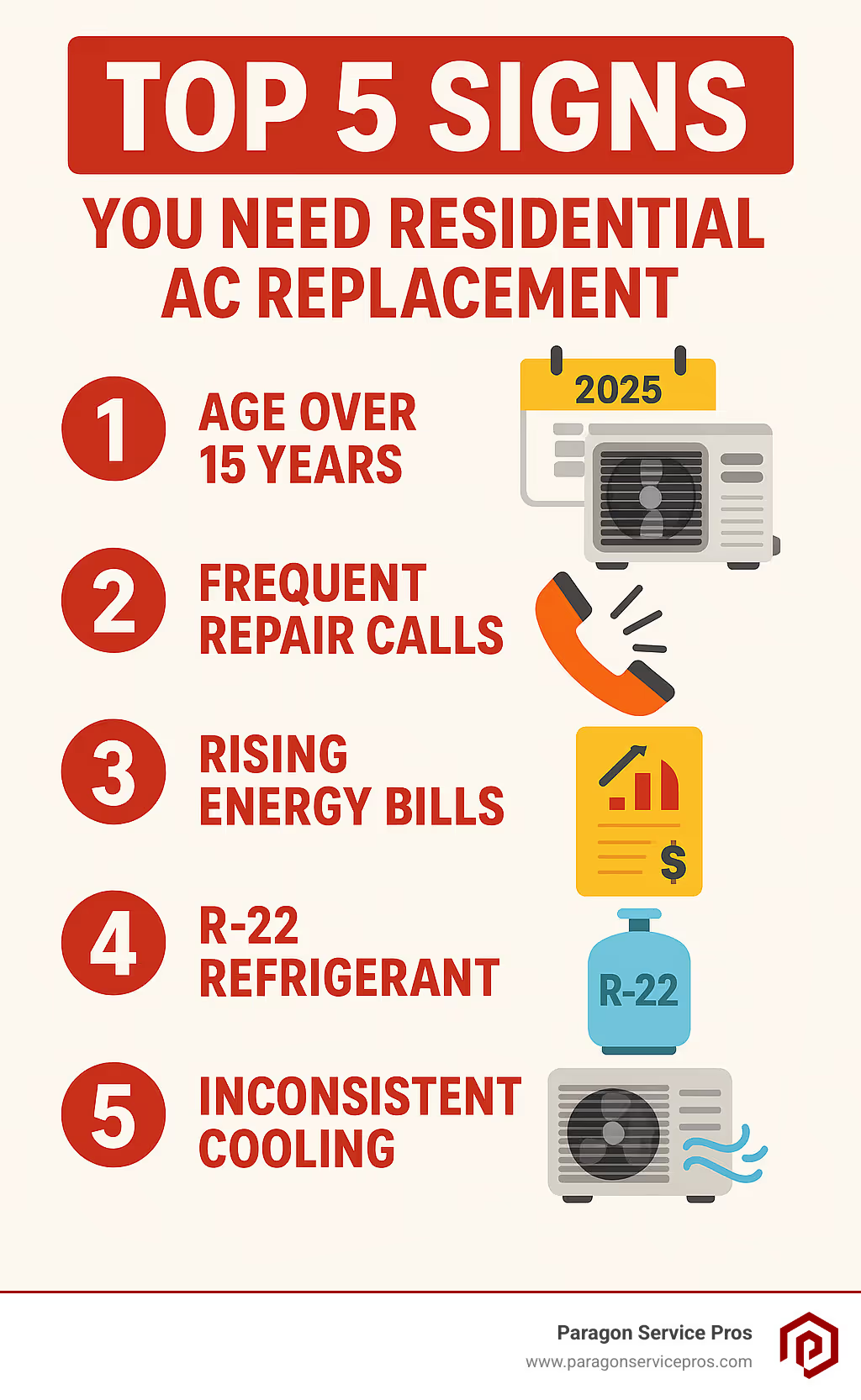
Key signs you need AC replacement:
- Age: Units over 15 years old are nearing end of life
- Frequent repairs: Multiple breakdowns per year signal replacement time
- Rising energy bills: Older units lose efficiency over time
- R-22 refrigerant: Units using this phased-out refrigerant are expensive to maintain
- Poor cooling: Struggling to maintain comfortable temperatures despite repairs
The average AC unit lasts about 15 years, but Arizona's extreme heat can shorten this to 10-12 years. Newer AC models can use up to 30-50% less energy than older models, making replacement a smart financial decision even for functioning older units.
Modern replacement options offer significant advantages: higher SEER ratings for better efficiency, improved humidity control, quieter operation, and smart home integration. The key is recognizing when repair costs and energy waste make replacement the better choice.
Understanding your replacement options - from central air systems to ductless mini-splits - helps you choose the right solution for your home's specific needs and budget.
Is It Time to Repair or Replace Your AC?
The moment your air conditioner starts acting up during Arizona's scorching summer, you're faced with a crucial question: should you repair what you have or invest in a residential AC replacement? We get it – this decision can feel overwhelming, especially when you're dealing with uncomfortable temperatures and potentially hefty costs. The good news is that once you know what to look for, the answer often becomes crystal clear.
Think of your AC like a trusted old car. At first, minor repairs make perfect sense – a tune-up here, a small part there. But eventually, you reach a tipping point where you're throwing good money after bad. Your air conditioner follows the same pattern, and recognizing that turning point can save you thousands of dollars and countless sleepless nights.
Key Indicators for a Residential AC Replacement
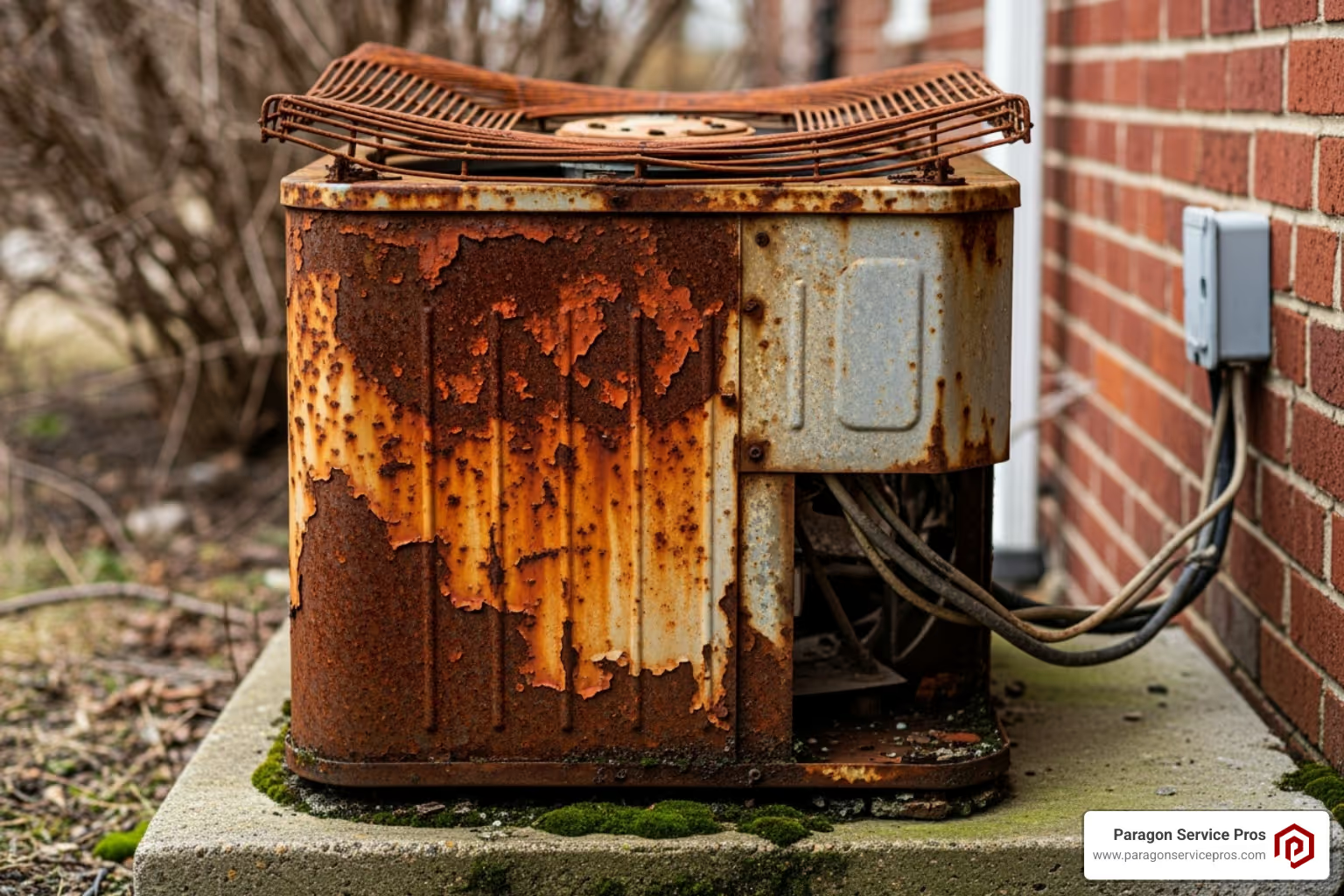
When we visit homes for AC evaluations, certain red flags immediately tell us it's time to have "the conversation" about replacement. Unit age over 15 years is often the first clue – while the national average for AC lifespan hovers around 15 years, Arizona's brutal heat can shorten that to just 10-12 years. Your system has been working overtime in our desert climate, and like any hardworking machine, it eventually wears out.
Frequent breakdowns are another telltale sign. If you're calling for repairs every couple of months or your HVAC technician knows your address by heart, your system is crying for help. These aren't just inconveniences – they're expensive warnings that bigger problems are brewing.
Here's where the math gets interesting: we often share the 50% rule with our clients. If a single repair costs more than half the price of a new unit, replacement usually makes more financial sense. Similarly, try the "5000 rule" – multiply your AC's age by the repair cost. If that number exceeds $5,000, you're typically better off with a residential AC replacement.
Rising energy bills without increased usage are like a slow leak in your wallet. As AC components age and wear out, your system works harder to achieve the same cooling, guzzling more electricity in the process. Modern units can slash your energy consumption by 30-50%, turning your monthly savings into a compelling reason to upgrade.
Don't ignore strange noises or odors either. Grinding, screeching, or banging sounds often signal serious mechanical failure, while musty smells can indicate dangerous mold growth or electrical issues. Your AC should run quietly and smell like... well, nothing at all.
Finally, inconsistent cooling – those frustrating hot and cold spots throughout your home – suggests your system can no longer handle its basic job. Whether it's struggling on hot days or leaving some rooms like saunas while others feel like igloos, inconsistent performance is your AC's way of waving the white flag.
If any of these scenarios sound familiar, you're not alone. We've put together a detailed guide that explores these warning signs further: 7 Signs Your Air Conditioner Needs to Be Replaced.
The R-22 Refrigerant Phase-Out
One factor that's forcing many residential AC replacement decisions isn't about your system failing – it's about what's running through its veins. If your AC uses R-22 refrigerant (also called Freon), you're dealing with a ticking time bomb of expense.
R-22's environmental impact led to its complete phase-out. This ozone-depleting substance was banned from production and import as of January 1, 2020. What does this mean for you? Any R-22 available today comes from recycled or reclaimed sources, making it incredibly scarce and expensive.
The high cost of R-22 has turned simple refrigerant top-offs into budget-busting repairs. A system that once cost $200 to recharge might now cost $2,000 or more – if you can even find the refrigerant. It's like trying to fuel a classic car when gasoline costs $50 per gallon.
Modern systems use R-410A as the standard refrigerant. This chlorine-free alternative doesn't harm the ozone layer and remains readily available at reasonable prices. Post-2010 equipment standards ensure that any new system you install will use this environmentally friendly refrigerant.
If your pre-2010 system uses R-22 and develops a leak, you're facing a difficult choice: pay astronomical prices for increasingly rare refrigerant, or invest in a new system that will serve you reliably for years to come. Most homeowners find the choice surprisingly easy once they see the numbers.
For Utah residents dealing with similar AC challenges, we can help you steer these refrigerant issues and explore your options: AC Repair Service Utah.
Choosing the Right New Air Conditioner
Once you've made the smart decision that residential AC replacement is the right path forward, the real trip begins: finding the perfect system for your home. We know this can feel overwhelming with all the technical terms and options out there, but don't worry – we're here to walk you through everything step by step.
Think of choosing a new AC like finding the perfect pair of shoes. It's not just about picking something that looks good; it needs to fit your home perfectly, match your lifestyle, and keep you comfortable for years to come. Let's break down what really matters.
Sizing Your Unit: Understanding BTUs and Tonnage
Here's something that might surprise you: bigger isn't always better when it comes to air conditioning. Getting the right size is absolutely critical – it's the difference between perfect comfort and constant frustration.
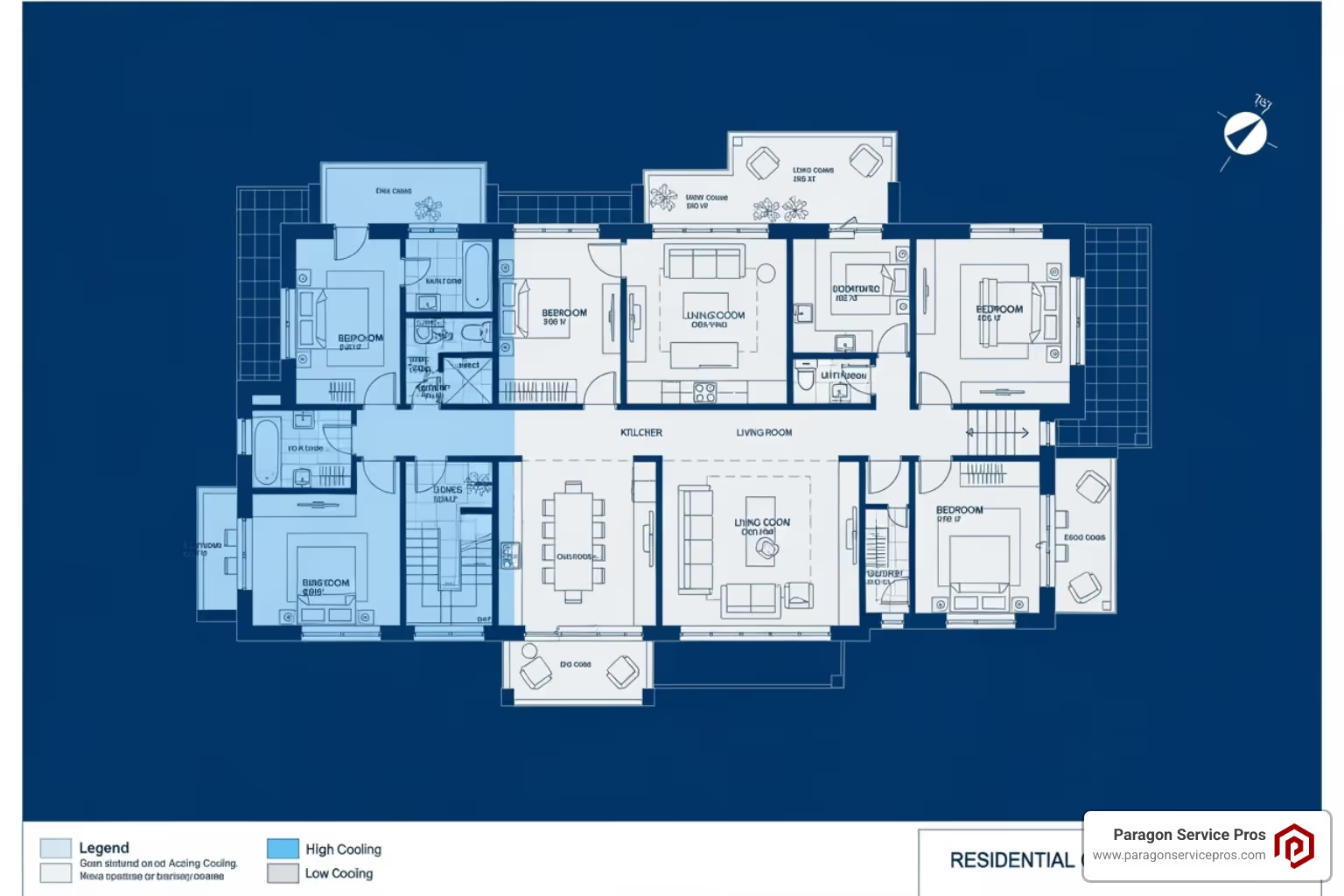
BTU (British Thermal Unit) measures how much heat your AC can remove from your home in one hour. It's like the horsepower rating for your car – it tells you how much work the system can do. Tonnage is just another way to express this power, with one ton equaling 12,000 BTUs per hour.
But here's where it gets interesting: sizing your AC isn't as simple as measuring your square footage and calling it a day. A proper load calculation considers your home's unique fingerprint. We look at your ceiling height (because hot air rises), the quality of your insulation, and even your window placement – those big south-facing windows can really heat things up!
An oversized unit might seem like a good idea, but it's actually a comfort killer. It cools your home too quickly, then shuts off before it can remove humidity. You end up feeling clammy and uncomfortable, even when the temperature is perfect. Plus, all that starting and stopping wears out your system faster.
An undersized unit, on the other hand, is like asking a compact car to tow a trailer up a mountain. It'll run constantly on hot days, struggling to keep up and driving your energy bills through the roof.
That's why we always perform thorough load calculations – because your comfort depends on getting this right. Learn more about how we match the perfect system to your home: AC Replacement Services.
Energy Efficiency: Decoding SEER Ratings
Let's talk about something that directly impacts your wallet every month: energy efficiency. This is where SEER ratings come into play, and understanding them can save you serious money.
SEER (Seasonal Energy Efficiency Ratio) is like the miles-per-gallon rating for your AC. A higher SEER rating means your system uses less electricity to cool your home. It's that simple.
The government sets minimum SEER ratings – currently 13 for most areas, but Arizona requires at least 14 SEER for new installations. These are the baseline models that meet basic efficiency standards.
High-efficiency models can reach SEER ratings of 25 or even higher. Yes, they cost more upfront, but here's the beautiful part: newer models can use up to 30–50% less energy than older models. In Arizona's demanding climate, that translates to substantial long-term savings – we're talking about cutting your cooling bills by up to 36%.
Think of it as an investment that pays you back every month through lower energy bills. Over the life of your system, those savings really add up, especially when your AC is working hard for months at a time.
Want to dive deeper into what these numbers really mean for your home? Check out our detailed guide: Understanding SEER Ratings: What They Mean for Your AC and Heating System.
Compressor Types and Your Comfort
The compressor is truly the heart of your AC system, and the type you choose makes a huge difference in how comfortable your home feels. Let's explore your options:
Compressor TypeDescriptionCost (Initial)Efficiency (Long-Term)Comfort/Humidity ControlNoise LevelSingle-StageThe most basic type, offering a single speed of operation (either full on or completely off).LowStandardLess precise temperature control; limited ability to remove humidity, leading to potential "clammy" feelings in humid climates.LoudestTwo-StageCan operate at two different speeds (typically 65% and 100% capacity), providing better comfort and efficiency.MediumBetterImproved temperature control and humidity removal; runs longer cycles at lower speed for more consistent comfort.QuieterVariable-SpeedCan adjust its output from about 40% to 100% capacity in small increments, providing the ultimate in comfort and efficiency.HighestBestExceptional temperature control and humidity removal; maintains very consistent temperatures with minimal fluctuations.Quietest
Single-stage compressors are the most budget-friendly option, but they're like having only two settings on everything: off or full blast. They work fine, but you might notice some temperature swings and less humidity control.
Two-stage compressors are the sweet spot for many homeowners. They can run at a lower speed most of the time, which means better humidity control and more consistent temperatures. They're quieter too, since they're not always running at full power.
Variable-speed compressors are the luxury option – and for good reason. They can adjust their output in tiny increments, maintaining incredibly consistent temperatures throughout your home. They're also champions at removing humidity, which is crucial for comfort in our climate.
System Types: Central vs. Ductless Mini-Splits
Your residential AC replacement journey also involves choosing between system types, and this decision often comes down to your home's setup and your specific needs.
Central air conditioning is the traditional choice for most homes. It uses your existing ductwork to distribute cool air throughout your house from a single outdoor unit. It's efficient, effective, and provides consistent cooling for your entire home.
Ductless mini-splits are perfect for homes without existing ductwork or for adding zoned cooling to specific areas. Maybe you have a home addition, a converted garage, or you just want independent control over different areas of your house. These systems consist of an outdoor unit connected to individual indoor units in each room or zone.
The beauty of ductless systems is their flexibility – you can cool only the rooms you're using, and each zone can have its own temperature setting. They're also incredibly efficient since there's no energy loss through ductwork.
Installation differences are significant too. Central systems work with your existing ducts (though we'll assess and upgrade them if needed), while ductless systems require only small holes for refrigerant lines.
If you're in the East Valley and want to explore your options, our team can help you determine which system type works best for your specific situation: Air Conditioning Services East Valley.
The right choice depends on your home's layout, your comfort preferences, and your budget. That's why we always start with a thorough assessment – because the perfect system for your neighbor might not be perfect for you.

Customer Testimonials
Our customers consistently praise our fast response times, honest communication, and the dependable results they can feel in their home.
.svg)