
Calibrate Your AC Thermostat: Simple Steps to Save Energy and Stay Cool
Calibrate your AC thermostat for energy savings and ultimate home comfort. Get our step-by-step guide now!

Why AC Thermostat Calibration Matters for Arizona Homeowners
AC thermostat calibration is the process of adjusting your thermostat to ensure it accurately reads and controls your home's temperature. When your thermostat displays 75°F, your home should actually be 75°F—not 78°F or 72°F.
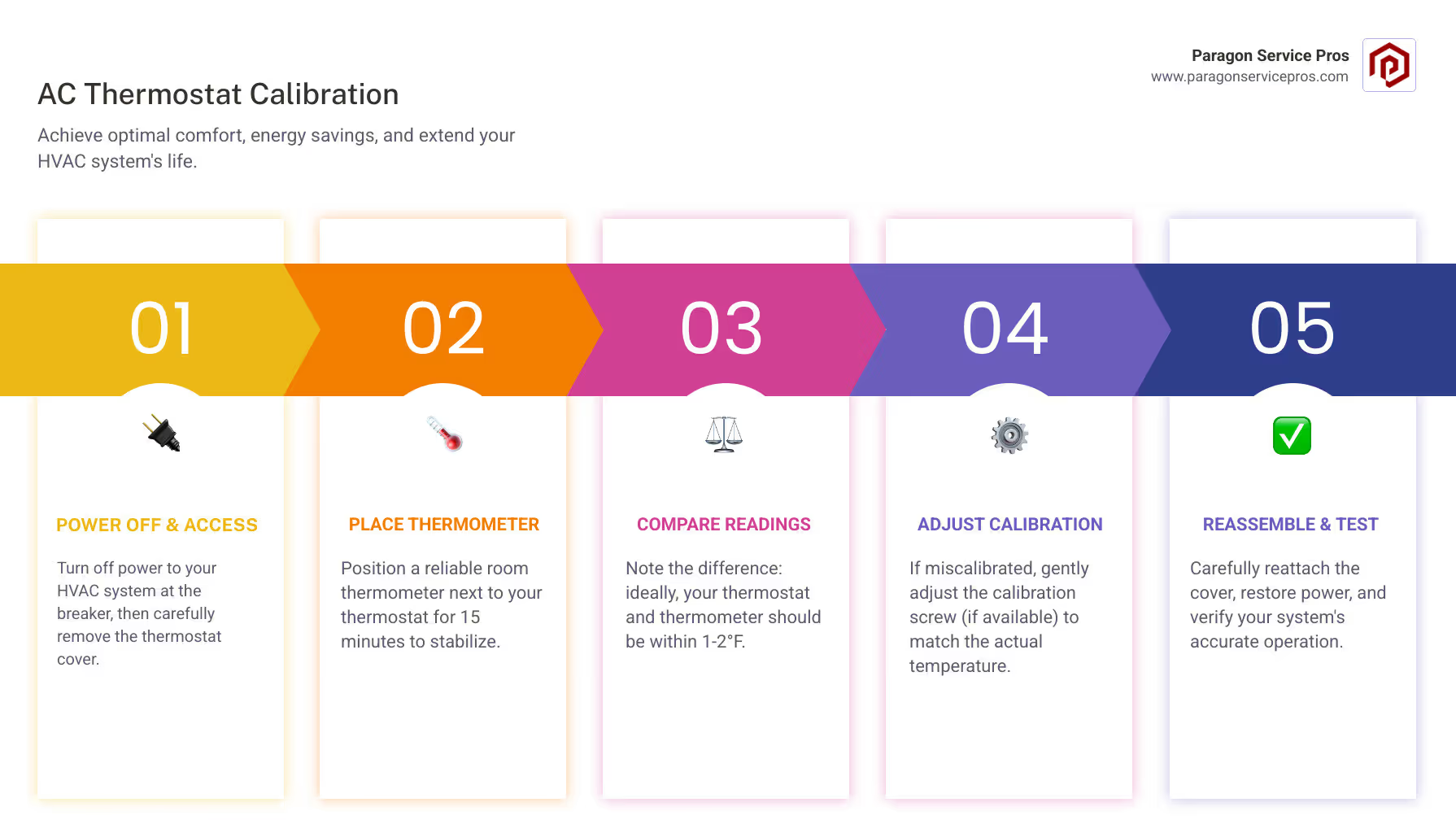
Quick Answer: How to Calibrate Your AC Thermostat
- Turn off power to your HVAC system at the breaker.
- Remove thermostat cover carefully with a screwdriver.
- Place a reliable thermometer next to the thermostat for 15 minutes.
- Compare readings—they should match within 1-2 degrees.
- Adjust the calibration screw (if present) to match the actual temperature.
- Reassemble and test your system.
In Arizona's heat, a small calibration error can be costly. A miscalibrated thermostat can make your AC run constantly, raising energy bills and straining your system. If your thermostat reads just 3 degrees cooler than reality, your AC will keep running to reach an impossible temperature, wasting energy and shortening your system's lifespan.
Common signs your thermostat needs calibration include uneven cooling, unexplained spikes in utility bills, and rooms that never feel right despite constant AC operation.
The good news is most homeowners can check and calibrate their thermostats in under 30 minutes with basic tools.
Why Thermostat Calibration is Crucial for Your Home
Your thermostat orchestrates your home's comfort. When it's accurate, your AC runs efficiently, keeping your home comfortable and bills predictable. But when it's off, things can get expensive and uncomfortable fast.
AC thermostat calibration is critical, especially in Arizona where cooling systems work overtime. A thermostat that's off by even a few degrees can waste energy and compromise the comfort you're paying for.
An inaccurate thermostat creates a domino effect: your HVAC system might short cycle (turn on and off in short bursts) or run constantly. This strains your equipment and drives up utility bills. You might not realize the thermostat is the culprit; you just know the house feels wrong and bills are climbing.
Signs Your Thermostat Needs Calibration
Knowing what to look for can prevent small issues from becoming big headaches.
- Uneven cooling: If your living room is an icebox while your bedroom is stuffy, your thermostat may not be getting an accurate reading, creating hot or cold spots.
- Your AC runs constantly or short cycles: A healthy system runs for 15-20 minutes, 2-3 times per hour. A miscalibrated thermostat confuses your system, making it work harder than needed.
- Thermostat reading vs. actual feel: If the thermostat says 72°F but you feel hot or cold, there's a disconnect.
- Unexplained high utility bills: If your usage habits haven't changed, a miscalibrated thermostat forcing your system to work overtime could be the cause. This directly impacts your wallet, a topic we explore in our guide to Maximizing Energy Efficiency Tips for Your AC Unit.
If you're experiencing multiple symptoms, check our guide on Air Conditioner SOS: Warning Signs Your Air Conditioner Needs Repair to rule out other issues.
Benefits of a Well-Calibrated Thermostat
Proper calibration open ups your home's full comfort and efficiency potential.
- Reduced energy consumption: An accurate thermostat ensures your HVAC system runs only when needed, preventing constant cycling or overcooling.
- Lower utility costs: Proper AC thermostat calibration ensures you're not overpaying for cooling you don't need.
- Extended lifespan: Reduced wear and tear on components like compressors and motors means fewer repairs and a longer time before you need to consider a replacement.
- Consistent indoor temperature: You'll enjoy consistent temperatures throughout your home, eliminating hot and cold spots.
- Improved air quality: Optimal system run times improve air circulation and filter effectiveness, which is a win for both comfort and health.
Your Step-by-Step Guide to AC Thermostat Calibration
Checking and adjusting your AC thermostat calibration is a 30-minute task that can make your home more comfortable and efficient. Before you begin, a safety note: always turn off power to your HVAC system at the breaker box to prevent electrical shock and accidental system startup.
Tools You Will Need
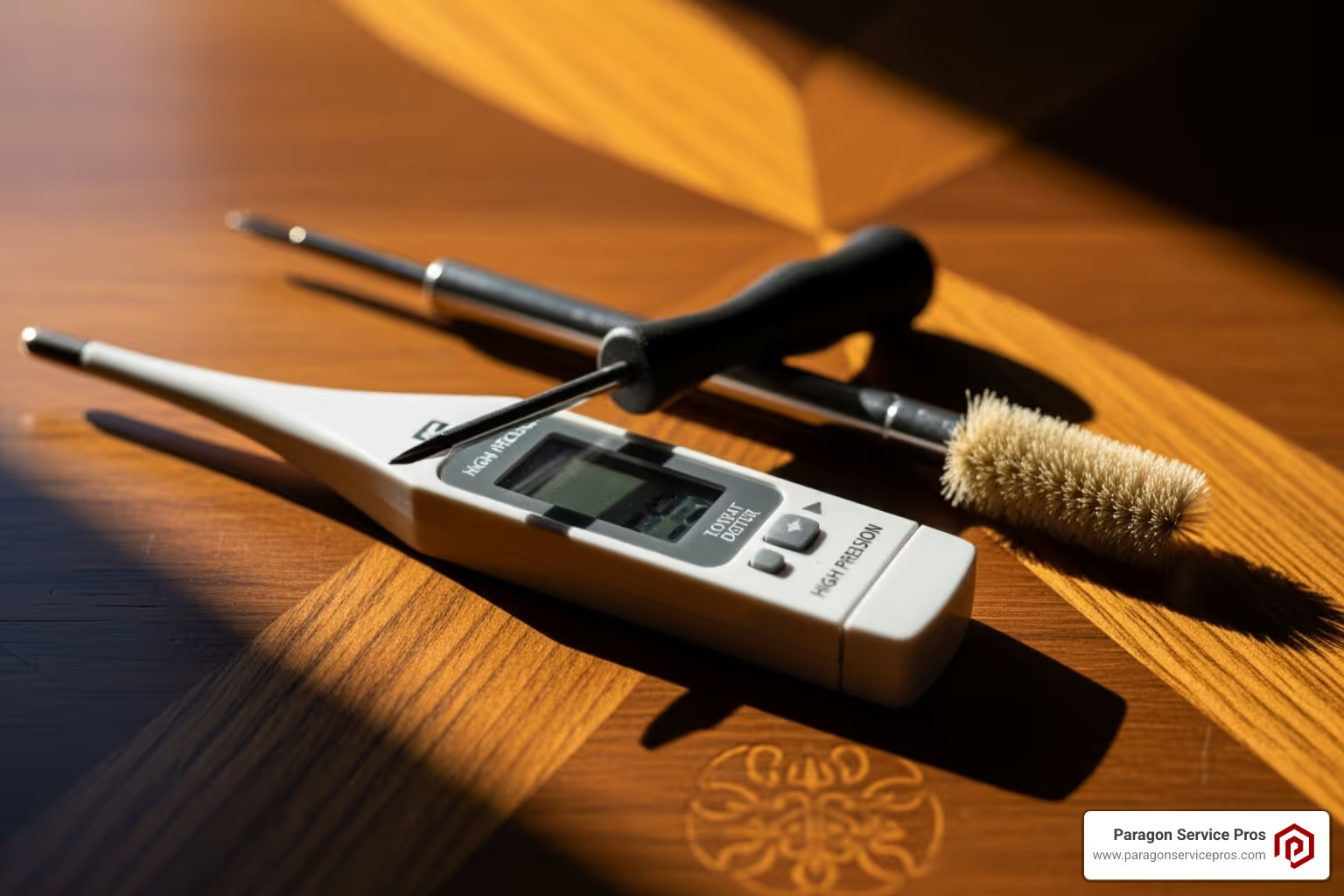
You likely have all the necessary tools at home:
- Reliable thermometer: A digital or glass thermometer is essential for checking accuracy.
- Screwdriver: Usually a Phillips head to remove the cover.
- Level: For older mechanical models, which must be perfectly straight.
- Soft brush or canned air: For cleaning dust away from sensors.
- Owner's manual: Key for finding specific calibration settings (digital versions are usually available online).
How to Check if AC Thermostat Calibration is Accurate
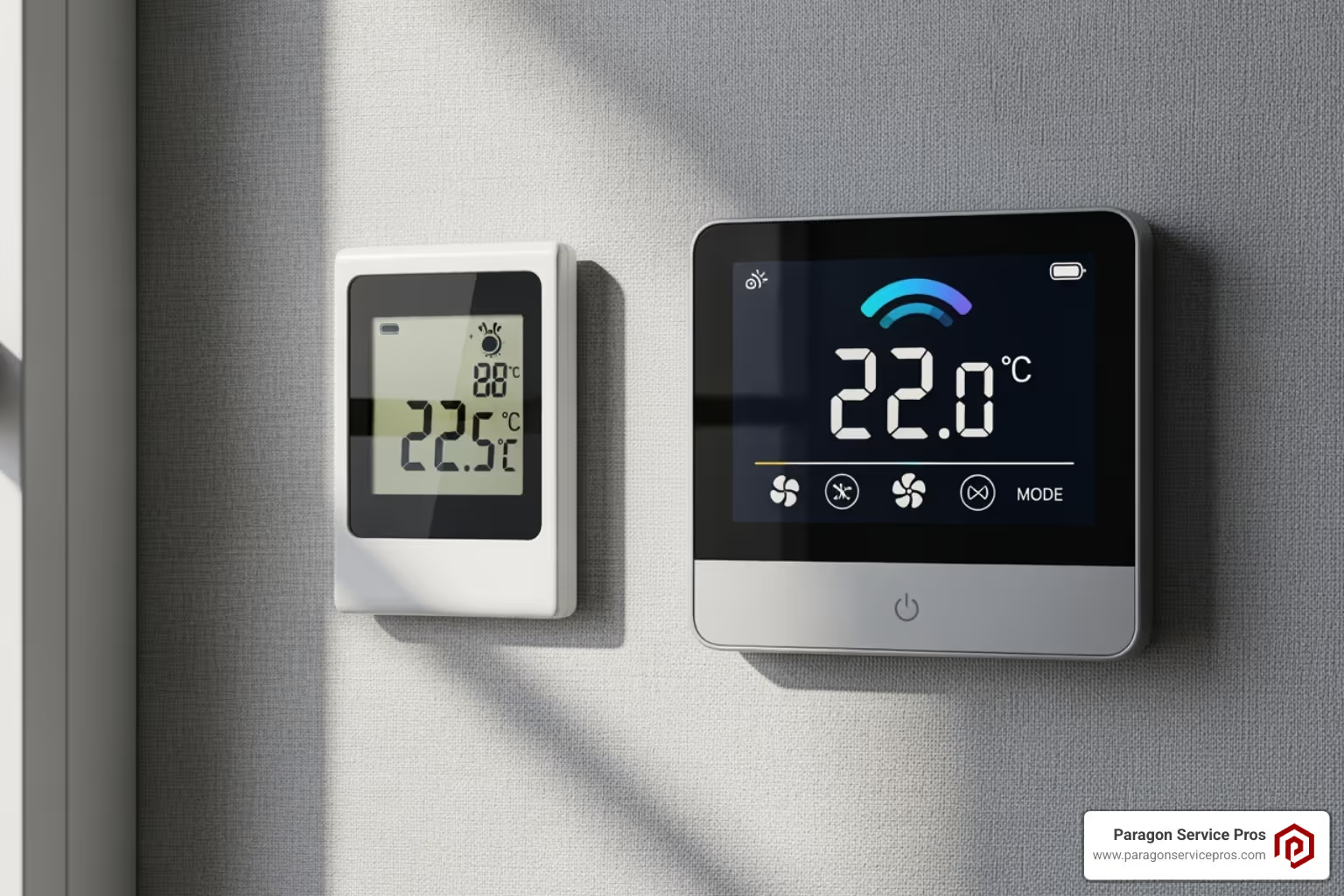
First, test if there's a problem. Turn your HVAC system off, then place your reliable thermometer a few inches from your thermostat at the same height. Make sure it's away from direct sunlight, vents, or heat sources.
Now, wait 15 minutes for the room and thermometer to settle to the true ambient temperature. After 15 minutes, compare the readings. A difference of 1-2 degrees is fine. A larger gap means it's time to calibrate.
The 5-Step Calibration Process
If you found a mismatch, it's time to fix it. Keep your owner's manual handy, as every thermostat is different.
Step 1: Turn off power at your main electrical panel. Flip the breaker for your furnace or air handler to "Off."
Step 2: Remove the thermostat cover carefully. Most snap off, but some have small screws.
Step 3: Compare temperatures again with the cover off to confirm the temperature difference.
Step 4: Make your adjustments. For mechanical thermostats, turn the small calibration screw. For digital and programmable models, use the menu settings to find "calibration mode" and adjust with the arrow buttons. For smart thermostats, use the app or consider a factory reset to clear errors.
Step 5: Reassemble and test. Put the cover back on, turn the breaker on, and set your thermostat. Monitor it for a few hours to ensure it cycles properly and maintains a consistent temperature.
If you're still having trouble after these steps, or if you prefer professional help, our team at Paragon Service Pros is ready to assist with services like AC Repair Service Utah.
Calibrating Different Thermostats and Proper Maintenance
Not all thermostats are created equal, especially regarding AC thermostat calibration. Technology has evolved from simple mechanical dials to sophisticated smart devices. While the technology has changed, the goal remains the same: getting an accurate temperature reading. The method, however, varies by thermostat type.
AC Thermostat Calibration for Manual, Programmable, and Smart Models
Here’s how to approach calibration for the three main types of thermostats:
Thermostat TypeDescription & Calibration MethodManual (Mechanical)These older models use a bimetallic coil or mercury switch. Calibration: After turning off power and removing the cover, look for a small calibration screw to turn. For mercury switch types, ensure the unit is perfectly level on the wall. Some have a heat anticipator lever that can be adjusted to prevent short cycling.Programmable (Digital)These have digital displays and allow scheduling. Calibration: After turning off power, access the "Installer Settings" or "Calibration Mode" via the menu settings (check your manual for button combinations). Find the "offset" or "temperature adjustment" setting and use the arrows to match your external thermometer. As the Department of Energy notes, programmable thermostats can save energy by automating temperature changes.Smart (Wi-Fi Connected)These models are controlled via smartphone and often learn your habits. Calibration: Check the app controls for a "calibration" or "offset" setting. If one isn't available, a factory reset may clear inaccuracies (back up your settings first). Some models use external sensors for a more accurate average home temperature.
Can Cleaning the Thermostat Help?
Yes. Sometimes, what seems like a calibration problem is just a cleaning issue. Over time, dust and debris accumulate on the thermostat's sensors, acting as an insulator and preventing an accurate reading. On older mechanical models, dust can also interfere with moving parts.
To clean your thermostat, first turn off the power to your HVAC system. After removing the cover, use a soft brush to gently clean dust from internal components and sensors. Canned air can also be used with short, gentle bursts. Avoid using a vacuum, as its static can damage electronics, and never use wet cloths or harsh cleaners on internal parts.
Regular cleaning as part of your AC Maintenance routine can prevent many calibration issues and keep your sensor accuracy sharp.
When to Call a Professional for Thermostat Issues
While many AC thermostat calibration issues are DIY-friendly, some problems require an expert. If your DIY efforts fail or the issue seems too complex, it's time to call a professional to avoid turning a simple issue into a bigger headache.
Call for help in these situations:
- Persistent inaccuracy after DIY attempts: If you've cleaned and calibrated your thermostat and it's still wrong, the issue could be a failing internal component or sensor that needs professional diagnosis.
- Complex wiring problems: If you see loose, frayed, or damaged wires, don't attempt a fix. Incorrect wiring is a safety hazard and can damage your HVAC system.
- Sensor failure: The temperature sensor is the heart of your thermostat's accuracy. If it fails, it can't be calibrated and usually requires replacing the unit.
- Unresponsive or blank display: If the screen is dark despite new batteries and confirmed power at the breaker, it indicates a hardware failure that needs professional attention.
- Underlying HVAC system issues: Sometimes, what seems like a thermostat problem is actually an HVAC issue in disguise. If your system still short-cycles or struggles to cool after calibration, a professional can perform diagnostics to find the real culprit, as detailed in our guide on How AC Repair Experts Diagnose and Fix Common Air Conditioning Issues.
- Thermostat replacement: Upgrading might be the best solution for an older, unreliable thermostat. It's often more cost-effective than repeatedly dealing with an outdated unit.
If you're simply not comfortable working with electrical components, call for professional help. Your safety and peace of mind are paramount. Our experienced HVAC professionals have the specialized tools and expertise to accurately diagnose any thermostat or system issue, from wiring repairs to complete thermostat upgrades.
Frequently Asked Questions about Thermostat Calibration
Here are answers to common questions about AC thermostat calibration.
How often should a thermostat be calibrated?
We recommend checking your thermostat's calibration at least once a year, ideally before summer. Also, check it after changing batteries or after any major HVAC work, as these can affect accuracy. If you notice warning signs like uneven temperatures or high energy bills, test the calibration immediately.
What if my thermostat doesn't have a calibration feature?
Some older or basic thermostats lack a user-adjustable calibration feature. If your older unit is consistently inaccurate, it may be time to consider an upgrade to a programmable or smart thermostat. Modern units offer better accuracy, scheduling features, and energy savings, and they include easy-to-use calibration settings. Consider it an opportunity to improve your home's efficiency; a Heating System Upgrade often includes a new thermostat.
Will a miscalibrated thermostat damage my AC unit?
Yes, a miscalibrated thermostat can shorten your AC unit's lifespan and lead to costly repairs. When your thermostat is inaccurate, your AC may run constantly or experience frequent cycling (short, repeated bursts). This creates increased wear and tear on critical components like the compressor and fan motor.
This forces the system to overwork, which leads to a reduced lifespan for your AC unit. Regular AC thermostat calibration is key to protecting your investment and ensuring your system lasts as long as possible. If you're concerned your AC is already struggling, our guide on 7 Signs Your Air Conditioner Needs to Be Replaced can help you assess the situation.
Achieve Perfect Comfort and Efficiency

AC thermostat calibration is a small action with big rewards. An accurate thermostat leads to a comfortable home, reasonable energy bills, and an efficient HVAC system. The benefits include energy savings, consistent comfort without hot or cold spots, and a longer lifespan for your equipment through proactive maintenance.
We've provided DIY steps, but sometimes they aren't enough. If your system is still acting up after you've tried to calibrate it, or if you simply prefer an expert to handle it, that's completely understandable. At Paragon Service Pros, we regularly fix frustrating calibration issues. A thermostat that's off by a few degrees can be a daily annoyance, but these problems are often a straightforward fix for our experienced team.
If you've tried these steps and still face issues, or if you're in Arizona and prefer an expert touch, our team is ready to help with professional HVAC Repair in Chandler. We'll ensure your thermostat is reading accurately and your whole system is working as it should, so you can get back to enjoying your perfectly comfortable home.
Keep reading: Smart Thermostats
Browse every article in Smart Thermostats or head back to the Learning Center .
Comfort you can count on, all year long.
Same-day service, honest diagnostics, and 24/7 emergency help with no overtime fees. A real Greater Phoenix team is standing by.