
My furnace isn’t turning on. Who can I call for furnace repair in Chandler, AZ?
Furnace not turning on? Call Paragon Service Pros Heating and Air Conditioning for fast furnace repair in Chandler AZ. Restore comfort now.

What to Do When Your Furnace Won’t Turn On in Chandler
My furnace isn’t turning on. Who can I call for furnace repair in Chandler, AZ? When your heating system quits on a cold desert night, you need help fast. If you’ve checked your thermostat settings, confirmed the circuit breaker is on, replaced a dirty filter, and your furnace still won’t start, it’s time to call a licensed HVAC professional in Chandler. Look for a local company that offers 24/7 emergency service, transparent pricing, and technicians who can diagnose and repair issues the same day.
Quick Answer:
- Check first: Thermostat set to “heat,” temperature above room temp, circuit breaker on, furnace power switch on, air filter clean
- Call a pro if: No heat after basic checks, strange noises, gas odor, pilot light won’t stay lit, or frequent cycling
- What to look for: Licensed and insured, positive local reviews, emergency availability, upfront communication
Even though Chandler winters are mild compared to other parts of the country, your family still depends on reliable heat when temperatures drop. A furnace that won’t turn on can signal anything from a simple thermostat issue to a serious safety concern like a cracked heat exchanger or gas leak. Most homeowners can handle a few basic troubleshooting steps, but many problems require professional diagnosis and repair to restore safe, efficient heating.
For expert guidance on maintaining your entire HVAC system year-round, explore our HVAC Services. When you need immediate help, our team provides Furnace Repair in Chandler, AZ with same-day service and honest answers.
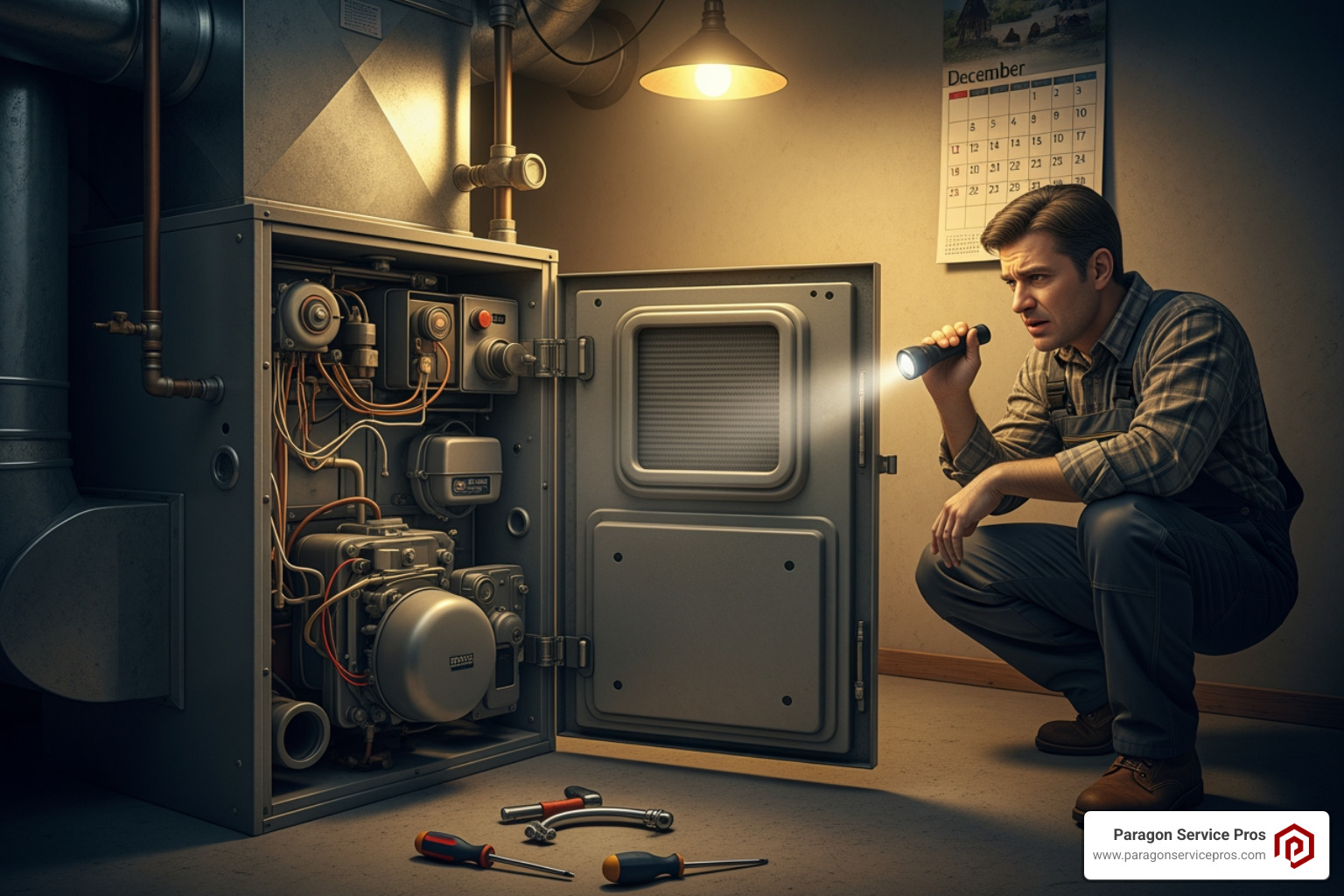
When your furnace fails in Chandler, AZ, the problem can feel urgent, even if our winters are short. A broken heating system can leave you uncomfortable, waste energy, and even create safety risks. Prompt repair is key to restoring comfort, improving efficiency, and addressing potential hazards like carbon monoxide or gas leaks. But before you panic and pick up the phone, there are a few simple checks you can perform.
Simple Checks to Perform When Your Furnace Isn’t Turning On Before You Call for Furnace Repair in Chandler, AZ
Before calling for furnace repair in Chandler, AZ, it’s always a good idea to perform a few basic checks. These steps can often resolve minor issues without the need for a service call, saving you time and hassle.
- Thermostat Settings: This might sound obvious, but ensure your thermostat is set to “Heat” and the desired temperature is several degrees higher than the current room temperature. Sometimes, the thermostat might be set to “Cool” or “Fan Only” by accident, or the battery might be dead. If your thermostat isn’t working correctly, it could prevent your furnace from turning on. For more insights, check out our guide on AC Thermostat Calibration.
- Circuit Breaker Check: Head to your home’s electrical panel. Look for the circuit breaker labeled for your furnace (or HVAC system) and see if it has tripped. If it’s in the “off” position, or even if it’s somewhere in between “on” and “off,” flip it completely off and then firmly back to the “on” position. A tripped breaker is a common culprit for a furnace not turning on.
- Furnace Power Switch: Most furnaces have a dedicated power switch located on or near the unit, often resembling a light switch. Make sure this switch is in the “on” position. It’s not uncommon for it to be accidentally switched off, especially if other work was recently done in the area.
- Clogged Air Filter: A dirty or clogged air filter can restrict airflow, causing your furnace to overheat and shut down as a safety measure. Check your furnace filter and replace it if it’s visibly dirty. We recommend replacing or cleaning filters every 1 to 3 months during active heating seasons, and even more often if you have pets or dusty conditions, which are common in Chandler. Learn more about the 15 Benefits of Regularly Replacing Your HVAC Filters.
- Pilot Light Status (for older gas furnaces): If you have an older gas furnace, it might have a pilot light. Check to see if it’s lit. If it’s out, you can often re-light it by following the instructions on your furnace or in its manual. However, if you notice the pilot light is flickering or has a yellow flame instead of a steady blue one, it could indicate a more serious issue, potentially too much harmful carbon monoxide present, and you should call a professional immediately. Our article on the Furnace Pilot Light offers more details.
If you’ve gone through these steps and your furnace still refuses to cooperate, it’s time to call in the experts.
Common Reasons Your Furnace Needs Professional Repair
When your furnace isn’t turning on, or is acting strangely, it’s often more than just a simple fix. Many issues require the trained eye and specialized tools of a professional. Here are some common reasons we encounter for furnaces needing professional repair in Chandler, AZ:
- Ignition System Failure: In our desert climate, intermittent use can expose furnaces to issues like corroding ignition components or dust buildup. Whether it’s a faulty ignitor, flame sensor, or pilot light assembly, if the ignition system can’t properly ignite the gas, your furnace won’t produce heat. Ignition problems are a frequent cause of “no heat” calls.
- Blower Motor Problems: The blower motor is responsible for circulating warm air throughout your home. If it’s malfunctioning, you might hear strange noises, or the furnace might turn on but not distribute heat. A worn-out blower belt can also cause loud squealing sounds. If the furnace isn’t blowing warm air, it might be due to a damaged blower motor or even debris blocking the blower.
- Thermostat Malfunction: While you can check basic settings, a faulty thermostat can send incorrect signals (or no signals at all) to your furnace, preventing it from turning on. This often requires professional diagnosis and potentially calibration or replacement. For issues with your home’s climate control, our guide on AC Thermostat Calibration can be helpful, as many thermostats control both heating and cooling.
- Cracked Heat Exchanger: This is a serious safety concern. The heat exchanger separates combustion gases from the air circulating in your home. A crack can allow dangerous carbon monoxide to leak into your living space. Signs include a persistent funny odor (not just the initial burnt dust smell after long idle periods), or if your carbon monoxide detector goes off. A broken heat exchanger can be caused by the system overheating or neglecting air filter changes. If the furnace starts to emit carbon monoxide, it’s a serious issue that demands immediate professional attention.
- Gas Supply Issues: Problems with the gas valve, gas line, or gas pressure can prevent your furnace from getting the fuel it needs to ignite. If you smell gas or a “rotten egg” odor, evacuate your home immediately and call your gas company and us from a safe location.
- Limit Switch Failure: If your furnace runs constantly or cycles on and off rapidly, it might be a problem with a broken limit switch. This switch is a safety device that prevents the furnace from overheating.
- Clogged Condensate Drain: High-efficiency furnaces produce condensation during operation. If the condensate trap or drain line becomes clogged, it can trigger a safety switch that shuts down the furnace.
- Electrical Diagnostics: Modern furnaces have complex control boards and wiring. Electrical issues, such as a faulty control board or loose wiring, can prevent the furnace from starting.
- Unusual Noises or Odors: Loud clunks, bangs, scrapes, or whistles indicate internal mechanical problems. A gross stench or funny odor (beyond normal dust burning) can signal serious issues like a gas leak or overheating components.
These common problems highlight why professional intervention is often necessary. Our team of experts is equipped to diagnose and resolve these issues efficiently. You can learn more about general HVAC System Problems in our comprehensive guide.
Deciding Between Furnace Repair and Replacement
When your furnace isn’t turning on, you’re faced with a critical decision: repair or replace? This isn’t always a straightforward choice, especially in Chandler where heating needs, while important, aren’t as constant as in colder climates. We’re here to help you weigh the factors.
| Factor | Consider Repair | Consider Replacement |
|---|---|---|
| Age of Unit | Under 10-15 years old | Over 15 years old |
| Frequency of Breakdowns | Infrequent, minor issues | Frequent, costly repairs |
| Energy Efficiency | Acceptable AFUE rating, reasonable energy bills | Poor AFUE rating, high energy bills |
| Safety Concerns | No carbon monoxide leaks, no cracked heat exchanger | Carbon monoxide leaks, cracked heat exchanger |
| Cost of Repair | Less than half the cost of a new furnace | More than half the cost of a new furnace |
Choosing between repair and replacement is an important decision for your home’s comfort and your budget. Our guide, Furnace Replacement vs. Repair: How to Make the Right Decision for Your Home, offers an in-depth look at this dilemma.
Signs Your Furnace Needs Professional Repair
Your furnace often sends out distress signals before it completely gives up the ghost. Paying attention to these warning signs can help you address issues proactively, preventing a complete breakdown when you least expect it. If you notice any of the following, it’s a good time to call us for a professional assessment:
- Strange Noises: Furnaces should operate relatively quietly. Loud clunks, bangs, scrapes, squealing, or persistent rattling indicate internal problems. A worn-out blower belt, for instance, can cause a loud squealing sound.
- Unusual Odors: While a slight burning smell on initial startup after a long idle period is normal (just burnt dust), any persistent fuel smell, a “rotten egg” odor, or a strong electrical burning smell is a serious warning sign. If there is a gross stench or funny odor, it could indicate a serious issue.
- Weak Airflow: If your furnace is running but the air coming from your vents is weak, or some rooms aren’t getting warm, it could signal issues with the blower motor, ductwork, or a severely clogged filter. If the furnace is not producing warm air, this is a sign of damaged components.
- Short Cycling: This means your furnace turns on, heats up quickly, and then shuts off before reaching the desired temperature, only to turn on again shortly after. This frequent on-off cycle is inefficient, increases wear and tear, and can be caused by problems like a broken limit switch or poor airflow.
- Increased Energy Bills: If your heating bills are suddenly much higher than usual without a corresponding increase in usage or utility rates, your furnace is likely working harder than it should to heat your home, indicating an inefficiency or underlying problem.
- Yellow Pilot Light: For furnaces with a pilot light, it should always be a strong, steady blue flame. A yellow or flickering pilot light can indicate incomplete combustion, which produces carbon monoxide. This is a serious safety hazard.
While some of these signs might seem minor, ignoring them can lead to more expensive and complex repairs down the line. Small issues are almost always cheaper and easier to fix than major breakdowns.
When to Consider a Full Furnace Replacement
Sometimes, a repair simply isn’t the most practical or economical solution. There are clear indicators that suggest it might be time to say goodbye to your old furnace and invest in a new, more efficient model.
- Furnace Over 15 Years Old: Most furnaces have a lifespan of 15-20 years. If your unit is approaching or has exceeded 15 years, and especially if it’s experiencing frequent breakdowns, replacement often makes more sense. An older furnace under 10 years old with repair costs less than half of a new one is generally worth fixing, but if it’s 10-15 years old and the repair costs exceed half the price of a new system, replacement might be the better choice.
- Frequent, Costly Repairs: If you’re calling for furnace repair every winter, or if individual repair costs are adding up to a significant percentage of a new unit’s price, it’s a sign that your furnace is nearing the end of its life. At some point, throwing good money after bad simply doesn’t make sense.
- Safety Risks: This is paramount. If your furnace is leaking carbon monoxide, has a cracked heat exchanger, or poses other safety hazards that cannot be reliably repaired, immediate replacement is necessary to protect your family.
- Desire for Higher Efficiency: Older furnaces are significantly less energy-efficient than modern units. If you’re tired of high energy bills and want to reduce your environmental footprint, upgrading to a new, high-efficiency furnace can provide substantial long-term savings. New systems are likely to be much more energy efficient than older systems. Upgrading your heating system can make a big difference. Explore your options for a Heating System Upgrade and consider if it’s time to Install New Furnace.
My furnace isn’t turning on. Who can I call for furnace repair in Chandler, AZ?
When your furnace isn’t turning on, and you’ve exhausted all the basic troubleshooting steps, the question becomes, “My furnace isn’t turning on. Who can I call for furnace repair in Chandler, AZ?” The answer is a trusted, licensed, and experienced HVAC professional. In Chandler, you need a company that understands the specific needs of heating systems in our unique climate.
Choosing the right furnace repair company is crucial for getting your heat back quickly and safely. We pride ourselves on providing unparalleled service, quality workmanship, and complete transparency. Our technicians follow a systematic diagnostic routine for safety and speed, ensuring your comfort is restored promptly. Most repairs can be completed the same day, as our fully-stocked service vehicles mean we rarely need to “order parts” and leave you in the cold. We carry a wide range of parts and tools, allowing us to make repairs right on the spot.
Key Qualities to Look for in a Chandler HVAC Company
When searching for a furnace repair company in Chandler, AZ, it’s important to choose wisely. Here’s what to look for:
- Licensed & Insured: Always ensure the company and its technicians are fully licensed, insured, and bonded. This protects you in case of accidents or faulty work. Our EPA-certified technicians are all of these things, providing you with peace of mind.
- Positive Reviews: Check online reviews and testimonials. A company with a strong track record of customer satisfaction is a good indicator of reliable service. You can read our customer Reviews to see what your neighbors say about us.
- Local Experience: A company with experience in Chandler and the surrounding East Valley (like Gilbert, Mesa, Queen Creek, and San Tan Valley) will understand the specific challenges and needs of local heating systems.
- 24/7 Emergency Service: Furnace breakdowns don’t always happen during business hours. A company offering 24/7 emergency furnace repair services is essential for those unexpected cold snaps. We offer Emergency Furnace Service to ensure you’re never left in the cold.
- Upfront Communication: Look for a company that provides clear explanations of the issue in everyday language and offers transparent pricing before any work begins. This ensures you understand the problem and the solution without any surprises.
Making an informed choice will lead to a smoother, more satisfactory repair experience. For more guidance, check out our article on How to Choose the Best HVAC Service Provider: Key Questions to Ask.
Preparing for the Technician’s Visit
Once you’ve called us for furnace repair, there are a few things you can do to prepare for our technician’s arrival. This helps us work efficiently and gets your heat restored even faster.
- Clear a Path to the Furnace: Ensure the area around your furnace and the outdoor unit (if you have a heat pump) is clear of clutter, storage items, and debris. This provides our technician with easy access to perform diagnostics and repairs. Also, keep the area around the furnace and outdoor vent terminations clear of debris, leaves, and vegetation.
- Secure Pets: For the safety and comfort of both your pets and our technician, please secure any pets in a separate room or area before we arrive.
- Note Down Observations: Jot down any specific details you’ve noticed about your furnace’s behavior. When did the problem start? What sounds or smells did you detect? Does the thermostat display any error codes? These details can provide valuable clues for diagnosis.
- Information to Provide: When we arrive, having the following information ready can be very helpful:
- Furnace Model and Age: If you know it, this helps us understand your system better.
- Description of the Problem: Be as specific as possible about what’s happening (e.g., “no heat at all,” “furnace turns on but fan doesn’t blow,” “loud banging noise before it shut off”).
- What You’ve Already Checked: Let us know the troubleshooting steps you’ve already taken (thermostat, circuit breaker, filter, pilot light).
Our technicians will perform a thorough inspection to pinpoint the exact issues. They’ll then provide a clear explanation and discuss repair options, ensuring you’re fully informed every step of the way.
Preventing Future Furnace Problems with Regular Maintenance
The best defense against a furnace breakdown is a good offense: regular maintenance. Even in Chandler, where our furnaces work harder during air conditioning season (as many homes use heat pumps), annual maintenance is essential. We often say that most furnace problems don’t happen overnight; your heating system usually sends warning signals before completely breaking down. Regular maintenance helps us catch these small issues before they become major, costly failures.
Benefits of Maintenance:
- Improved Efficiency: A well-maintained furnace runs more efficiently, meaning it uses less energy to heat your home. This translates directly to lower utility bills when you do need to use your heat.
- Extended Lifespan: Just like a car, regular tune-ups extend the life of your furnace. By keeping components clean and properly adjusted, you reduce wear and tear, helping your unit last longer.
- Improved Safety: Maintenance checks include inspecting for potential hazards like carbon monoxide leaks, gas leaks, and faulty electrical connections. This ensures your furnace operates safely, protecting your family.
- Prevents Breakdowns: Annual maintenance allows our technicians to identify and address minor issues before they escalate into major breakdowns, saving you from unexpected “no heat” emergencies. Small issues are almost always cheaper and easier to fix than major breakdowns.
Regular furnace maintenance is essential for ensuring the longevity and efficiency of your heating system. Our Heating/Heating Maintenance services are designed to keep your unit in top condition. You can also find the many advantages in our article, 11 Reasons Annual HVAC Maintenance Saves You Money.
What’s Included in a Professional Furnace Tune-Up?
When we perform a professional furnace tune-up, we go through a comprehensive checklist to ensure every component is functioning optimally and safely. This annual check-up, ideally scheduled before the first cold snap, is crucial for preparing your system for year-round comfort.
- Burner Cleaning: We clean the furnace burners to ensure efficient and complete combustion.
- Ignition System Testing: The ignition system (whether a pilot light or electronic ignitor) is tested to ensure reliable startup.
- Electrical Connection Tightening: Loose electrical connections can cause intermittent operation or even safety hazards. We inspect and tighten all wiring.
- Flue/Venting Inspection: The flue pipe and venting system are checked for blockages, leaks, or corrosion to ensure proper exhaust of combustion gases.
- Safety Control Checks: All safety controls, including limit switches and flame sensors, are tested to ensure they are operating correctly and protecting your system.
- Air Filter Inspection & Replacement: We check your air filter and recommend replacement if it’s dirty, ensuring optimal airflow and efficiency.
- Blower Component Inspection: We inspect the blower motor and fan for proper operation, cleaning, and lubrication as needed.
- Carbon Monoxide Testing: We test for carbon monoxide leaks, especially critical for gas furnaces, to ensure your home is safe. Installing and maintaining CO detectors near sleeping areas and the furnace room is also highly recommended.
- Ductwork Inspection: We check for obvious leaks or damage in accessible ductwork, which can impact heating efficiency.
A professional tune-up is a proactive step that extends your furnace’s life and keeps it running efficiently. Our Furnace Tune Up Service covers all these vital aspects. For more details on preparing your system for the seasons, refer to Seasonal HVAC Maintenance: Preparing Your System for Year-Round Comfort.
Your Trusted Partner for Heating Services in Chandler
When your furnace fails during a Chandler cold snap, taking quick, informed action is key to restoring warmth and safety to your home. For reliable, expert service, turn to the professionals. We understand that when your furnace decides to quit working, it’s a comfort emergency for families in Chandler. A broken furnace can make your home uncomfortable and even cause damage, especially during our chilly winter months.
At Paragon Service Pros, we are committed to restoring your comfort, ensuring your safety, and providing prompt, transparent service. Our team is dedicated to addressing your heating needs with unparalleled service, quality workmanship, and complete transparency, offering same-day and emergency appointments to get your home warm again.
Get your furnace running again with our Furnace Repair Chandler, AZ Guide.
Keep reading: Heating & Furnaces
Browse every article in Heating & Furnaces or head back to the Learning Center .
Comfort you can count on, all year long.
Same-day service, honest diagnostics, and 24/7 emergency help with no overtime fees. A real Greater Phoenix team is standing by.