
The Gold Standard: Professional Furnace Maintenance in Chandler

deatilbg3D wireframe geometric shape with overlapping red and white lines on a black background.

Why Chandler Homeowners Can't Afford to Skip Furnace Maintenance

When temperatures in Chandler drop to the mid-40s from November through February, finding your furnace won't fire up is more than inconvenient - it's a safety concern. Finding the best furnace maintenance in chandler, az means partnering with experienced technicians who understand Arizona's unique heating demands and can keep your system running reliably when you need it most.

At Paragon Service Pros, our furnace maintenance is designed to help Chandler homeowners stay comfortable, protect system safety, and reduce the chances of surprise breakdowns during the coldest nights. Most homeowners don't realize their furnace needs attention until it stops working entirely. Regular maintenance helps catch worn or failing components early, supports your system's expected service life, and helps your furnace run efficiently.

A professional tune-up typically includes thermostat calibration, electrical connection inspection, heat exchanger examination, burner cleaning, and carbon monoxide safety testing. These steps help keep your furnace dependable and your home safe.

For expert guidance on maintaining your entire HVAC system year-round, check out our comprehensive HVAC services in Chandler. Ready to schedule your furnace inspection? Contact our certified technicians for same-day service.
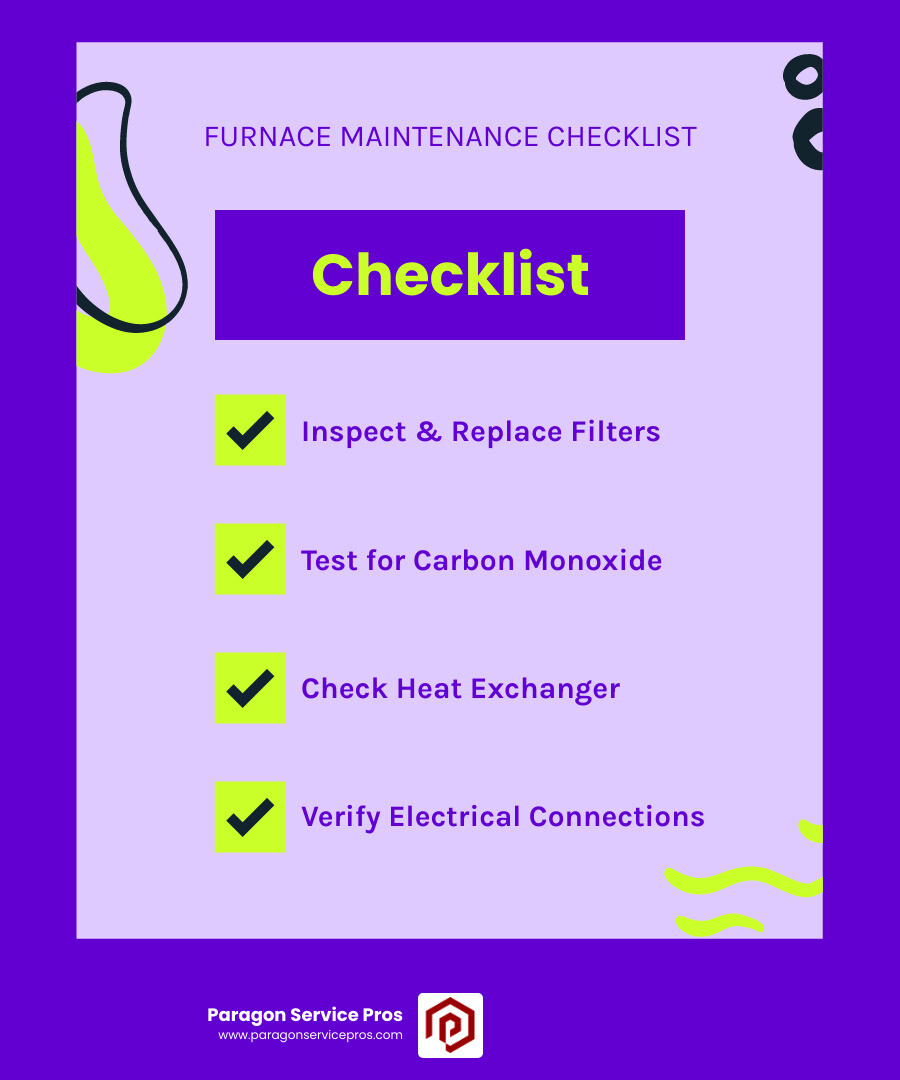
Infographic showing 10-step furnace maintenance checklist including thermostat testing, filter inspection, blower motor cleaning, burner adjustment, heat exchanger inspection, gas pressure check, electrical connection tightening, condensate drain clearing, carbon monoxide testing, and airflow verification with recommended annual service timing before heating season

Why Investing in the Best Furnace Maintenance in Chandler, AZ Matters

In the vibrant city of Chandler, AZ, where summer temperatures can soar above 110 degrees and winter nights can dip into the low 40s, our heating, ventilation, and air conditioning (HVAC) systems are not just conveniences - they are necessities. While the scorching summers often dominate our thoughts about HVAC, the importance of a well-maintained furnace for the cooler months cannot be overstated. Investing in the best furnace maintenance in chandler, az is a smart decision that pays dividends in comfort, safety, and day-to-day reliability.

Imagine this: a brisk Chandler evening, the family is gathered, and suddenly, a chill creeps into the room. Your furnace, which you haven't thought about since last winter, has decided to take a break. Regular maintenance helps reduce the likelihood of that happening by keeping key components clean, tested, and operating as designed.

One of the most immediate benefits of routine furnace maintenance is improved energy efficiency. Furnaces, like any mechanical system, can lose efficiency over time due to dirt, wear, and normal use. A furnace that has to work harder to produce the same amount of heat can use more energy than necessary. By keeping your system operating at peak efficiency, you're supporting lower energy consumption and more consistent comfort at home.

Regular maintenance also supports the lifespan of your heating system. Modern furnaces are built to last, often in the 15 to 30 year range, but that longevity depends heavily on consistent care. Skipping check-ups is like skipping oil changes on a vehicle: small issues can compound over time.

Maximizing Efficiency with the Best Furnace Maintenance in Chandler, AZ

Maximizing your furnace's efficiency is about getting the most from your heating system while keeping operation steady and dependable. During professional furnace maintenance, our technicians focus on several areas that directly affect performance.

Fuel combustion is a key area. A dirty or misadjusted burner can lead to incomplete combustion, which wastes fuel and reduces heat output. During service, we clean and adjust burners as needed so your furnace can operate as efficiently as possible.

Heat transfer also matters. The heat exchanger transfers heat from the combustion process to the air that circulates through your home. If surfaces are coated with buildup, heat transfer can be reduced and the furnace may run longer to reach the thermostat setting. Maintenance helps keep the heat exchanger and surrounding components in proper condition.

Airflow optimization is equally important. Your furnace relies on steady airflow to distribute heated air evenly. Restricted airflow (often caused by dirty filters, blower buildup, or blocked returns/registers) can increase strain on the blower motor and reduce comfort. A tune-up includes checks that help verify your system is moving air correctly.

Finally, we address normal component wear. Tightening electrical connections, inspecting belts (when applicable), and verifying safe operation helps reduce unnecessary stress that can lead to unexpected interruptions.

Safety First: The Best Furnace Maintenance in Chandler, AZ

While comfort and efficiency matter, safety is the priority. A malfunctioning furnace can create serious hazards, which is why a professional inspection is so important.

Carbon monoxide (CO) risk is one of the biggest concerns for fuel-burning systems. CO is colorless and odorless, and it can be dangerous if allowed to build up indoors. During maintenance, our technicians inspect the heat exchanger for damage and confirm the venting system is exhausting properly. We also perform carbon monoxide safety testing as part of a complete safety check.

We also check for gas leaks (for gas furnaces) by inspecting connections and verifying proper operation of fuel delivery components. Fire prevention and electrical safety are addressed by inspecting wiring, tightening connections, and confirming that safety switches and controls function correctly.

Finally, we verify that sensors and safeties, such as flame sensing and limit controls, respond appropriately. These components are designed to shut the system down if conditions become unsafe, so keeping them in proper working order is essential for peace of mind.

Recognizing the Signs Your Heating System Needs Attention

Our furnaces are often out of sight, out of mind, until they suddenly demand our attention with a dramatic drop in temperature or a new sound you have never heard before. Recognizing early warning signs can help you schedule service before a small issue becomes a major disruption.

One common indicator is unusual noises. Furnaces are designed to operate relatively quietly, so if you start hearing clicks, bangs, buzzes, rattles, or squeals, your system may be signaling a problem. Clicking can point to an ignition-related issue, banging can be linked to burner or airflow problems, and squealing may indicate blower wear.

Another red flag is short-cycling. This is when your furnace turns on, runs briefly, and shuts off before completing a normal heating cycle, then repeats the pattern. Short-cycling can be caused by issues such as airflow restrictions, thermostat problems, or safety controls reacting to abnormal conditions. It can also put extra wear on the system.

Pay attention to burner flame color on gas furnaces if you can view it safely through the designated sight glass or access panel as intended by the manufacturer. A steady blue flame is typically expected. Yellow or orange flames can indicate combustion problems and should be checked promptly by a professional because they may be associated with carbon monoxide concerns.

Finally, inconsistent heating throughout your home is a clear sign that the furnace and/or duct system may not be performing as it should. If some rooms are warm while others stay chilly, it can be tied to airflow imbalance, blower performance, duct leakage, or thermostat placement and settings.

Indicators of Mechanical Stress

When your furnace is under mechanical stress, it is working harder than it should, and that strain usually shows up in a few recognizable ways.

Blower motor strain is common when filters are clogged or vents are blocked. You may notice reduced airflow at registers or a louder-than-usual blower sound. Left unaddressed, this extra load can shorten the life of the motor.

Ignition problems are another frequent warning sign. If your furnace attempts to start but does not ignite, or if it repeatedly tries and fails, the ignition system or flame sensing components may need cleaning, adjustment, or repair.

Ductwork leaks can reduce comfort and efficiency by allowing heated air to escape before it reaches living spaces. You might also notice more dust than usual if return leaks draw air from attics, crawl spaces, or wall cavities.

Thermostat issues can mimic furnace problems. If the thermostat is not reading temperature accurately or is not communicating properly with the furnace, you may see delayed starts, constant running, or inconsistent comfort.

When Maintenance Becomes Repair

Sometimes, the signs point beyond routine maintenance and indicate a repair is needed.

A cracked heat exchanger is one of the most serious issues because it can allow combustion byproducts to mix with indoor air. If a crack is suspected or confirmed, the furnace should be shut down and evaluated right away.

Corrosion on internal components can also signal deterioration that may affect performance and safety. While minor surface rust is not always urgent, significant corrosion should be assessed by a professional.

Age and repair frequency matter too. Furnaces often last 15 to 30 years, but older systems may experience more frequent interruptions and reduced efficiency. If you are scheduling repairs repeatedly or experiencing ongoing comfort issues, a professional evaluation can help you understand whether repair, continued maintenance, or replacement is the most practical path for your home.

What to Expect During a Professional Furnace Tune-Up

When you schedule professional furnace maintenance with us, you're investing in a comprehensive check-up designed to optimize your system's performance, improve safety, and prolong its life. Unlike quick visual checks, our tune-ups are thorough and detailed, going far beyond what a homeowner can typically do.

Here's a comparison of what homeowners can do versus what our professionals handle during a tune-up:

Homeowner Maintenance (Between Tune-ups)Professional Tune-Up
Change air filters monthly/quarterlyThermostat testing and calibration
Check for vent obstructionsElectrical connection tightening
Test carbon monoxide detectorsMoving part lubrication (motors, bearings)
Keep area around furnace clearBurner cleaning and adjustment
Listen for unusual noisesHeat exchanger inspection for cracks/corrosion
Check pilot light (if applicable)Condensate drain clearing and flushing
Safety control testing (limit switches, flame sensors)
Gas pressure check and adjustment
Flue and venting system inspection
Blower motor and fan cleaning/inspection
Airflow measurement and adjustment
Carbon monoxide detection and safety checks

During your professional furnace tune-up, our certified technicians will carefully perform a multi-point inspection and service. We start by testing and calibrating your thermostat to ensure accurate temperature readings and proper communication with your furnace. Then, we move to the heart of the system, tightening all electrical connections to prevent hazards and improve efficiency. Moving parts, such as the blower motor and fan bearings, are lubricated to reduce friction and wear, extending their lifespan.

We'll clean and adjust the burners to ensure efficient fuel combustion and inspect the heat exchanger for any signs of cracks or corrosion, which are critical safety concerns. For furnaces with condensate drains, we'll clear and flush them to prevent clogs and potential water damage. All safety controls, including limit switches and flame sensors, are rigorously tested to ensure they respond correctly in emergency situations. We'll also check the gas pressure, inspect the flue and venting system, clean the blower motor and fan, and measure/adjust airflow for optimal heating and distribution throughout your home. A crucial part of our service includes comprehensive carbon monoxide detection and safety checks, giving you peace of mind.

This detailed process ensures that your furnace is not only running efficiently but also safely, ready to tackle Chandler's cooler temperatures.

Proactive Care: Maintenance Plans and DIY Tips

While professional furnace maintenance is indispensable, there are also proactive steps you can take as a homeowner to keep your system running smoothly between our visits. Think of it as a partnership: we handle the deep dive, and you keep things ticking over daily.

One of the simplest yet most impactful DIY tasks is regular filter replacement. A dirty air filter restricts airflow, forcing your furnace to work harder and reducing its efficiency. We recommend checking your furnace filter monthly and replacing it when it looks dirty, typically every 1-3 months. This small action can make a big difference in both your energy bills and indoor air quality.

Another important step is to check for vent obstructions. Ensure that all your registers and return air vents are clear of furniture, rugs, or other blockages. Restricted airflow can lead to uneven heating and put undue stress on your system.

Regularly test your carbon monoxide detectors. While our professional tune-ups include CO detection, having working detectors throughout your home provides an essential layer of continuous protection.

Here's a list of monthly homeowner tasks to keep your furnace happy:

  • Change your air filter: Check monthly, replace every 1-3 months.
  • Clear vents and registers: Ensure no furniture or drapes are blocking airflow.
  • Test CO detectors: Press the test button to ensure they're functioning.
  • Keep the area clear: Ensure the space around your furnace is free of clutter and flammable materials.
  • Listen to your furnace: Pay attention to any new or unusual sounds.
  • Check the pilot light (if applicable): Ensure it's a strong, blue flame.

For those who want to take the guesswork out of maintenance and enjoy additional benefits, consider joining an HVAC maintenance plan. These plans are designed to provide consistent, professional care for your furnace and air conditioning systems. Our plans, for example, offer distinct advantages such as:

  • Priority scheduling: When an unexpected issue arises, you get to jump to the front of the line.
  • Reduced repair rates: Members often receive discounts on any necessary repairs.
  • Annual service reminders: We'll remind you when it's time for your next tune-up, so you never miss a beat.
  • Comprehensive tune-ups: Ensuring your system receives thorough inspections and cleanings regularly.
  • Extended equipment life: Proactive care helps your furnace last longer.

Joining a maintenance plan is a proactive step that helps prevent costly breakdowns, ensures your system runs efficiently, and keeps your home comfortable year-round. It’s a bit like having an annual physical for your furnace – catching small issues before they become big problems.

Frequently Asked Questions about Furnace Care

We understand that homeowners have many questions about keeping their heating systems in top shape. Here are some of the most common inquiries we receive about furnace care in Chandler, AZ:

How often should a furnace be serviced in Chandler?

For optimal performance, safety, and longevity, we recommend having your furnace serviced at least once a year. The ideal time for this annual inspection is in the fall, right before the heating season begins. This ensures your system is prepared for the cooler temperatures and allows us to address any potential issues before you rely on your furnace daily. Regular servicing can also be a requirement to maintain your manufacturer's warranty, ensuring you're covered if a major component fails. Annual tune-ups help your furnace achieve peak performance, providing consistent warmth when you need it most.

Can regular maintenance improve indoor air quality?

Absolutely! Regular furnace maintenance plays a significant role in improving your home's indoor air quality (IAQ). During a tune-up, we clean components like the blower motor and fan, which can accumulate dust, allergens, and other particulates. A clean system means less dust and fewer allergens are circulated throughout your home. Furthermore, ensuring your air filter is clean and properly installed is crucial for capturing airborne contaminants before they enter your living space. Some maintenance routines also include checking humidity levels and can integrate solutions like humidifiers or air purifiers, further enhancing your home's air quality. A well-maintained furnace, coupled with a clean filter, acts as a first line of defense against indoor air pollutants.

What are the signs a furnace needs replacement instead of maintenance?

Determining whether to repair or replace your furnace can be a tough decision. Here are some key signs that might indicate it's time for a replacement:

  • System Age: Furnaces typically have a lifespan of 15 to 30 years. If your furnace is nearing or past the 15-year mark, it's likely operating less efficiently and may start requiring more frequent repairs.
  • Frequent Repair Needs: If you're calling for repairs every year, or even multiple times a season, the cumulative cost of these repairs can quickly approach the cost of a new unit. At some point, continued repairs become financially impractical.
  • Decreased Efficiency: An older furnace will naturally be less energy-efficient than newer models. If you notice a significant increase in your energy bills without a change in usage habits, your furnace might be losing its ability to convert fuel into heat effectively.
  • Inadequate Heating Capacity: If your furnace struggles to keep your home warm, or if there are significant temperature inconsistencies between rooms, it might no longer have the capacity to heat your home properly. This could be due to age-related wear or an improperly sized unit for your home's current needs.
  • Visible Wear and Tear: Signs like a cracked heat exchanger (a major safety hazard), excessive rust, or a visible yellow flame (indicating incomplete combustion) are strong indicators that replacement is the safer and more cost-effective option.

Our technicians can provide a comprehensive assessment of your furnace's condition, helping you make an informed decision that's best for your home and budget.

Conclusion

Ensuring your furnace is well-maintained is not just about avoiding a chilly surprise in the middle of a Chandler winter; it's about protecting your home's comfort, efficiency, and safety. From supporting reliable performance and system longevity to helping reduce the risk of carbon monoxide concerns, the benefits of regular, professional furnace maintenance are clear.

At Paragon Service Pros, we are dedicated to providing the best furnace maintenance in chandler, az. Our Arizona-based residential team understands the unique demands of desert living and is committed to delivering unparalleled service, quality workmanship, complete transparency, and same-day or emergency appointments when you need them.

Do not wait for your furnace to start making strange noises or stop working altogether. Be proactive and schedule seasonal maintenance so your system is ready before cooler nights arrive.

Experience the difference of dedicated, expert care. Find The Gold Standard of HVAC Care in Chandler with Paragon Service Pros. We're here to help keep your home comfortable in every season.

Why Chandler Homeowners Can't Afford to Skip Furnace Maintenance

When temperatures in Chandler drop to the mid-40s from November through February, finding your furnace won't fire up is more than inconvenient - it's a safety concern. Finding the best furnace maintenance in chandler, az means partnering with experienced technicians who understand Arizona's unique heating demands and can keep your system running reliably when you need it most.

At Paragon Service Pros, our furnace maintenance is designed to help Chandler homeowners stay comfortable, protect system safety, and reduce the chances of surprise breakdowns during the coldest nights. Most homeowners don't realize their furnace needs attention until it stops working entirely. Regular maintenance helps catch worn or failing components early, supports your system's expected service life, and helps your furnace run efficiently.

A professional tune-up typically includes thermostat calibration, electrical connection inspection, heat exchanger examination, burner cleaning, and carbon monoxide safety testing. These steps help keep your furnace dependable and your home safe.

For expert guidance on maintaining your entire HVAC system year-round, check out our comprehensive HVAC services in Chandler. Ready to schedule your furnace inspection? Contact our certified technicians for same-day service.

Infographic showing 10-step furnace maintenance checklist including thermostat testing, filter inspection, blower motor cleaning, burner adjustment, heat exchanger inspection, gas pressure check, electrical connection tightening, condensate drain clearing, carbon monoxide testing, and airflow verification with recommended annual service timing before heating season

Why Investing in the Best Furnace Maintenance in Chandler, AZ Matters

In the vibrant city of Chandler, AZ, where summer temperatures can soar above 110 degrees and winter nights can dip into the low 40s, our heating, ventilation, and air conditioning (HVAC) systems are not just conveniences - they are necessities. While the scorching summers often dominate our thoughts about HVAC, the importance of a well-maintained furnace for the cooler months cannot be overstated. Investing in the best furnace maintenance in chandler, az is a smart decision that pays dividends in comfort, safety, and day-to-day reliability.

Imagine this: a brisk Chandler evening, the family is gathered, and suddenly, a chill creeps into the room. Your furnace, which you haven't thought about since last winter, has decided to take a break. Regular maintenance helps reduce the likelihood of that happening by keeping key components clean, tested, and operating as designed.

One of the most immediate benefits of routine furnace maintenance is improved energy efficiency. Furnaces, like any mechanical system, can lose efficiency over time due to dirt, wear, and normal use. A furnace that has to work harder to produce the same amount of heat can use more energy than necessary. By keeping your system operating at peak efficiency, you're supporting lower energy consumption and more consistent comfort at home.

Regular maintenance also supports the lifespan of your heating system. Modern furnaces are built to last, often in the 15 to 30 year range, but that longevity depends heavily on consistent care. Skipping check-ups is like skipping oil changes on a vehicle: small issues can compound over time.

Maximizing Efficiency with the Best Furnace Maintenance in Chandler, AZ

Maximizing your furnace's efficiency is about getting the most from your heating system while keeping operation steady and dependable. During professional furnace maintenance, our technicians focus on several areas that directly affect performance.

Fuel combustion is a key area. A dirty or misadjusted burner can lead to incomplete combustion, which wastes fuel and reduces heat output. During service, we clean and adjust burners as needed so your furnace can operate as efficiently as possible.

Heat transfer also matters. The heat exchanger transfers heat from the combustion process to the air that circulates through your home. If surfaces are coated with buildup, heat transfer can be reduced and the furnace may run longer to reach the thermostat setting. Maintenance helps keep the heat exchanger and surrounding components in proper condition.

Airflow optimization is equally important. Your furnace relies on steady airflow to distribute heated air evenly. Restricted airflow (often caused by dirty filters, blower buildup, or blocked returns/registers) can increase strain on the blower motor and reduce comfort. A tune-up includes checks that help verify your system is moving air correctly.

Finally, we address normal component wear. Tightening electrical connections, inspecting belts (when applicable), and verifying safe operation helps reduce unnecessary stress that can lead to unexpected interruptions.

Safety First: The Best Furnace Maintenance in Chandler, AZ

While comfort and efficiency matter, safety is the priority. A malfunctioning furnace can create serious hazards, which is why a professional inspection is so important.

Carbon monoxide (CO) risk is one of the biggest concerns for fuel-burning systems. CO is colorless and odorless, and it can be dangerous if allowed to build up indoors. During maintenance, our technicians inspect the heat exchanger for damage and confirm the venting system is exhausting properly. We also perform carbon monoxide safety testing as part of a complete safety check.

We also check for gas leaks (for gas furnaces) by inspecting connections and verifying proper operation of fuel delivery components. Fire prevention and electrical safety are addressed by inspecting wiring, tightening connections, and confirming that safety switches and controls function correctly.

Finally, we verify that sensors and safeties, such as flame sensing and limit controls, respond appropriately. These components are designed to shut the system down if conditions become unsafe, so keeping them in proper working order is essential for peace of mind.

Recognizing the Signs Your Heating System Needs Attention

Our furnaces are often out of sight, out of mind, until they suddenly demand our attention with a dramatic drop in temperature or a new sound you have never heard before. Recognizing early warning signs can help you schedule service before a small issue becomes a major disruption.

One common indicator is unusual noises. Furnaces are designed to operate relatively quietly, so if you start hearing clicks, bangs, buzzes, rattles, or squeals, your system may be signaling a problem. Clicking can point to an ignition-related issue, banging can be linked to burner or airflow problems, and squealing may indicate blower wear.

Another red flag is short-cycling. This is when your furnace turns on, runs briefly, and shuts off before completing a normal heating cycle, then repeats the pattern. Short-cycling can be caused by issues such as airflow restrictions, thermostat problems, or safety controls reacting to abnormal conditions. It can also put extra wear on the system.

Pay attention to burner flame color on gas furnaces if you can view it safely through the designated sight glass or access panel as intended by the manufacturer. A steady blue flame is typically expected. Yellow or orange flames can indicate combustion problems and should be checked promptly by a professional because they may be associated with carbon monoxide concerns.

Finally, inconsistent heating throughout your home is a clear sign that the furnace and/or duct system may not be performing as it should. If some rooms are warm while others stay chilly, it can be tied to airflow imbalance, blower performance, duct leakage, or thermostat placement and settings.

Indicators of Mechanical Stress

When your furnace is under mechanical stress, it is working harder than it should, and that strain usually shows up in a few recognizable ways.

Blower motor strain is common when filters are clogged or vents are blocked. You may notice reduced airflow at registers or a louder-than-usual blower sound. Left unaddressed, this extra load can shorten the life of the motor.

Ignition problems are another frequent warning sign. If your furnace attempts to start but does not ignite, or if it repeatedly tries and fails, the ignition system or flame sensing components may need cleaning, adjustment, or repair.

Ductwork leaks can reduce comfort and efficiency by allowing heated air to escape before it reaches living spaces. You might also notice more dust than usual if return leaks draw air from attics, crawl spaces, or wall cavities.

Thermostat issues can mimic furnace problems. If the thermostat is not reading temperature accurately or is not communicating properly with the furnace, you may see delayed starts, constant running, or inconsistent comfort.

When Maintenance Becomes Repair

Sometimes, the signs point beyond routine maintenance and indicate a repair is needed.

A cracked heat exchanger is one of the most serious issues because it can allow combustion byproducts to mix with indoor air. If a crack is suspected or confirmed, the furnace should be shut down and evaluated right away.

Corrosion on internal components can also signal deterioration that may affect performance and safety. While minor surface rust is not always urgent, significant corrosion should be assessed by a professional.

Age and repair frequency matter too. Furnaces often last 15 to 30 years, but older systems may experience more frequent interruptions and reduced efficiency. If you are scheduling repairs repeatedly or experiencing ongoing comfort issues, a professional evaluation can help you understand whether repair, continued maintenance, or replacement is the most practical path for your home.

What to Expect During a Professional Furnace Tune-Up

When you schedule professional furnace maintenance with us, you're investing in a comprehensive check-up designed to optimize your system's performance, improve safety, and prolong its life. Unlike quick visual checks, our tune-ups are thorough and detailed, going far beyond what a homeowner can typically do.

Here's a comparison of what homeowners can do versus what our professionals handle during a tune-up:

Homeowner Maintenance (Between Tune-ups)Professional Tune-Up
Change air filters monthly/quarterlyThermostat testing and calibration
Check for vent obstructionsElectrical connection tightening
Test carbon monoxide detectorsMoving part lubrication (motors, bearings)
Keep area around furnace clearBurner cleaning and adjustment
Listen for unusual noisesHeat exchanger inspection for cracks/corrosion
Check pilot light (if applicable)Condensate drain clearing and flushing
Safety control testing (limit switches, flame sensors)
Gas pressure check and adjustment
Flue and venting system inspection
Blower motor and fan cleaning/inspection
Airflow measurement and adjustment
Carbon monoxide detection and safety checks

During your professional furnace tune-up, our certified technicians will carefully perform a multi-point inspection and service. We start by testing and calibrating your thermostat to ensure accurate temperature readings and proper communication with your furnace. Then, we move to the heart of the system, tightening all electrical connections to prevent hazards and improve efficiency. Moving parts, such as the blower motor and fan bearings, are lubricated to reduce friction and wear, extending their lifespan.

We'll clean and adjust the burners to ensure efficient fuel combustion and inspect the heat exchanger for any signs of cracks or corrosion, which are critical safety concerns. For furnaces with condensate drains, we'll clear and flush them to prevent clogs and potential water damage. All safety controls, including limit switches and flame sensors, are rigorously tested to ensure they respond correctly in emergency situations. We'll also check the gas pressure, inspect the flue and venting system, clean the blower motor and fan, and measure/adjust airflow for optimal heating and distribution throughout your home. A crucial part of our service includes comprehensive carbon monoxide detection and safety checks, giving you peace of mind.

This detailed process ensures that your furnace is not only running efficiently but also safely, ready to tackle Chandler's cooler temperatures.

Proactive Care: Maintenance Plans and DIY Tips

While professional furnace maintenance is indispensable, there are also proactive steps you can take as a homeowner to keep your system running smoothly between our visits. Think of it as a partnership: we handle the deep dive, and you keep things ticking over daily.

One of the simplest yet most impactful DIY tasks is regular filter replacement. A dirty air filter restricts airflow, forcing your furnace to work harder and reducing its efficiency. We recommend checking your furnace filter monthly and replacing it when it looks dirty, typically every 1-3 months. This small action can make a big difference in both your energy bills and indoor air quality.

Another important step is to check for vent obstructions. Ensure that all your registers and return air vents are clear of furniture, rugs, or other blockages. Restricted airflow can lead to uneven heating and put undue stress on your system.

Regularly test your carbon monoxide detectors. While our professional tune-ups include CO detection, having working detectors throughout your home provides an essential layer of continuous protection.

Here's a list of monthly homeowner tasks to keep your furnace happy:

  • Change your air filter: Check monthly, replace every 1-3 months.
  • Clear vents and registers: Ensure no furniture or drapes are blocking airflow.
  • Test CO detectors: Press the test button to ensure they're functioning.
  • Keep the area clear: Ensure the space around your furnace is free of clutter and flammable materials.
  • Listen to your furnace: Pay attention to any new or unusual sounds.
  • Check the pilot light (if applicable): Ensure it's a strong, blue flame.

For those who want to take the guesswork out of maintenance and enjoy additional benefits, consider joining an HVAC maintenance plan. These plans are designed to provide consistent, professional care for your furnace and air conditioning systems. Our plans, for example, offer distinct advantages such as:

  • Priority scheduling: When an unexpected issue arises, you get to jump to the front of the line.
  • Reduced repair rates: Members often receive discounts on any necessary repairs.
  • Annual service reminders: We'll remind you when it's time for your next tune-up, so you never miss a beat.
  • Comprehensive tune-ups: Ensuring your system receives thorough inspections and cleanings regularly.
  • Extended equipment life: Proactive care helps your furnace last longer.

Joining a maintenance plan is a proactive step that helps prevent costly breakdowns, ensures your system runs efficiently, and keeps your home comfortable year-round. It’s a bit like having an annual physical for your furnace – catching small issues before they become big problems.

Frequently Asked Questions about Furnace Care

We understand that homeowners have many questions about keeping their heating systems in top shape. Here are some of the most common inquiries we receive about furnace care in Chandler, AZ:

How often should a furnace be serviced in Chandler?

For optimal performance, safety, and longevity, we recommend having your furnace serviced at least once a year. The ideal time for this annual inspection is in the fall, right before the heating season begins. This ensures your system is prepared for the cooler temperatures and allows us to address any potential issues before you rely on your furnace daily. Regular servicing can also be a requirement to maintain your manufacturer's warranty, ensuring you're covered if a major component fails. Annual tune-ups help your furnace achieve peak performance, providing consistent warmth when you need it most.

Can regular maintenance improve indoor air quality?

Absolutely! Regular furnace maintenance plays a significant role in improving your home's indoor air quality (IAQ). During a tune-up, we clean components like the blower motor and fan, which can accumulate dust, allergens, and other particulates. A clean system means less dust and fewer allergens are circulated throughout your home. Furthermore, ensuring your air filter is clean and properly installed is crucial for capturing airborne contaminants before they enter your living space. Some maintenance routines also include checking humidity levels and can integrate solutions like humidifiers or air purifiers, further enhancing your home's air quality. A well-maintained furnace, coupled with a clean filter, acts as a first line of defense against indoor air pollutants.

What are the signs a furnace needs replacement instead of maintenance?

Determining whether to repair or replace your furnace can be a tough decision. Here are some key signs that might indicate it's time for a replacement:

  • System Age: Furnaces typically have a lifespan of 15 to 30 years. If your furnace is nearing or past the 15-year mark, it's likely operating less efficiently and may start requiring more frequent repairs.
  • Frequent Repair Needs: If you're calling for repairs every year, or even multiple times a season, the cumulative cost of these repairs can quickly approach the cost of a new unit. At some point, continued repairs become financially impractical.
  • Decreased Efficiency: An older furnace will naturally be less energy-efficient than newer models. If you notice a significant increase in your energy bills without a change in usage habits, your furnace might be losing its ability to convert fuel into heat effectively.
  • Inadequate Heating Capacity: If your furnace struggles to keep your home warm, or if there are significant temperature inconsistencies between rooms, it might no longer have the capacity to heat your home properly. This could be due to age-related wear or an improperly sized unit for your home's current needs.
  • Visible Wear and Tear: Signs like a cracked heat exchanger (a major safety hazard), excessive rust, or a visible yellow flame (indicating incomplete combustion) are strong indicators that replacement is the safer and more cost-effective option.

Our technicians can provide a comprehensive assessment of your furnace's condition, helping you make an informed decision that's best for your home and budget.

Conclusion

Ensuring your furnace is well-maintained is not just about avoiding a chilly surprise in the middle of a Chandler winter; it's about protecting your home's comfort, efficiency, and safety. From supporting reliable performance and system longevity to helping reduce the risk of carbon monoxide concerns, the benefits of regular, professional furnace maintenance are clear.

At Paragon Service Pros, we are dedicated to providing the best furnace maintenance in chandler, az. Our Arizona-based residential team understands the unique demands of desert living and is committed to delivering unparalleled service, quality workmanship, complete transparency, and same-day or emergency appointments when you need them.

Do not wait for your furnace to start making strange noises or stop working altogether. Be proactive and schedule seasonal maintenance so your system is ready before cooler nights arrive.

Experience the difference of dedicated, expert care. Find The Gold Standard of HVAC Care in Chandler with Paragon Service Pros. We're here to help keep your home comfortable in every season.

Why Chandler Homeowners Can't Afford to Skip Furnace Maintenance

When temperatures in Chandler drop to the mid-40s from November through February, finding your furnace won't fire up is more than inconvenient - it's a safety concern. Finding the best furnace maintenance in chandler, az means partnering with experienced technicians who understand Arizona's unique heating demands and can keep your system running reliably when you need it most.

At Paragon Service Pros, our furnace maintenance is designed to help Chandler homeowners stay comfortable, protect system safety, and reduce the chances of surprise breakdowns during the coldest nights. Most homeowners don't realize their furnace needs attention until it stops working entirely. Regular maintenance helps catch worn or failing components early, supports your system's expected service life, and helps your furnace run efficiently.

A professional tune-up typically includes thermostat calibration, electrical connection inspection, heat exchanger examination, burner cleaning, and carbon monoxide safety testing. These steps help keep your furnace dependable and your home safe.

For expert guidance on maintaining your entire HVAC system year-round, check out our comprehensive HVAC services in Chandler. Ready to schedule your furnace inspection? Contact our certified technicians for same-day service.

Infographic showing 10-step furnace maintenance checklist including thermostat testing, filter inspection, blower motor cleaning, burner adjustment, heat exchanger inspection, gas pressure check, electrical connection tightening, condensate drain clearing, carbon monoxide testing, and airflow verification with recommended annual service timing before heating season

Why Investing in the Best Furnace Maintenance in Chandler, AZ Matters

In the vibrant city of Chandler, AZ, where summer temperatures can soar above 110 degrees and winter nights can dip into the low 40s, our heating, ventilation, and air conditioning (HVAC) systems are not just conveniences - they are necessities. While the scorching summers often dominate our thoughts about HVAC, the importance of a well-maintained furnace for the cooler months cannot be overstated. Investing in the best furnace maintenance in chandler, az is a smart decision that pays dividends in comfort, safety, and day-to-day reliability.

Imagine this: a brisk Chandler evening, the family is gathered, and suddenly, a chill creeps into the room. Your furnace, which you haven't thought about since last winter, has decided to take a break. Regular maintenance helps reduce the likelihood of that happening by keeping key components clean, tested, and operating as designed.

One of the most immediate benefits of routine furnace maintenance is improved energy efficiency. Furnaces, like any mechanical system, can lose efficiency over time due to dirt, wear, and normal use. A furnace that has to work harder to produce the same amount of heat can use more energy than necessary. By keeping your system operating at peak efficiency, you're supporting lower energy consumption and more consistent comfort at home.

Regular maintenance also supports the lifespan of your heating system. Modern furnaces are built to last, often in the 15 to 30 year range, but that longevity depends heavily on consistent care. Skipping check-ups is like skipping oil changes on a vehicle: small issues can compound over time.

Maximizing Efficiency with the Best Furnace Maintenance in Chandler, AZ

Maximizing your furnace's efficiency is about getting the most from your heating system while keeping operation steady and dependable. During professional furnace maintenance, our technicians focus on several areas that directly affect performance.

Fuel combustion is a key area. A dirty or misadjusted burner can lead to incomplete combustion, which wastes fuel and reduces heat output. During service, we clean and adjust burners as needed so your furnace can operate as efficiently as possible.

Heat transfer also matters. The heat exchanger transfers heat from the combustion process to the air that circulates through your home. If surfaces are coated with buildup, heat transfer can be reduced and the furnace may run longer to reach the thermostat setting. Maintenance helps keep the heat exchanger and surrounding components in proper condition.

Airflow optimization is equally important. Your furnace relies on steady airflow to distribute heated air evenly. Restricted airflow (often caused by dirty filters, blower buildup, or blocked returns/registers) can increase strain on the blower motor and reduce comfort. A tune-up includes checks that help verify your system is moving air correctly.

Finally, we address normal component wear. Tightening electrical connections, inspecting belts (when applicable), and verifying safe operation helps reduce unnecessary stress that can lead to unexpected interruptions.

Safety First: The Best Furnace Maintenance in Chandler, AZ

While comfort and efficiency matter, safety is the priority. A malfunctioning furnace can create serious hazards, which is why a professional inspection is so important.

Carbon monoxide (CO) risk is one of the biggest concerns for fuel-burning systems. CO is colorless and odorless, and it can be dangerous if allowed to build up indoors. During maintenance, our technicians inspect the heat exchanger for damage and confirm the venting system is exhausting properly. We also perform carbon monoxide safety testing as part of a complete safety check.

We also check for gas leaks (for gas furnaces) by inspecting connections and verifying proper operation of fuel delivery components. Fire prevention and electrical safety are addressed by inspecting wiring, tightening connections, and confirming that safety switches and controls function correctly.

Finally, we verify that sensors and safeties, such as flame sensing and limit controls, respond appropriately. These components are designed to shut the system down if conditions become unsafe, so keeping them in proper working order is essential for peace of mind.

Recognizing the Signs Your Heating System Needs Attention

Our furnaces are often out of sight, out of mind, until they suddenly demand our attention with a dramatic drop in temperature or a new sound you have never heard before. Recognizing early warning signs can help you schedule service before a small issue becomes a major disruption.

One common indicator is unusual noises. Furnaces are designed to operate relatively quietly, so if you start hearing clicks, bangs, buzzes, rattles, or squeals, your system may be signaling a problem. Clicking can point to an ignition-related issue, banging can be linked to burner or airflow problems, and squealing may indicate blower wear.

Another red flag is short-cycling. This is when your furnace turns on, runs briefly, and shuts off before completing a normal heating cycle, then repeats the pattern. Short-cycling can be caused by issues such as airflow restrictions, thermostat problems, or safety controls reacting to abnormal conditions. It can also put extra wear on the system.

Pay attention to burner flame color on gas furnaces if you can view it safely through the designated sight glass or access panel as intended by the manufacturer. A steady blue flame is typically expected. Yellow or orange flames can indicate combustion problems and should be checked promptly by a professional because they may be associated with carbon monoxide concerns.

Finally, inconsistent heating throughout your home is a clear sign that the furnace and/or duct system may not be performing as it should. If some rooms are warm while others stay chilly, it can be tied to airflow imbalance, blower performance, duct leakage, or thermostat placement and settings.

Indicators of Mechanical Stress

When your furnace is under mechanical stress, it is working harder than it should, and that strain usually shows up in a few recognizable ways.

Blower motor strain is common when filters are clogged or vents are blocked. You may notice reduced airflow at registers or a louder-than-usual blower sound. Left unaddressed, this extra load can shorten the life of the motor.

Ignition problems are another frequent warning sign. If your furnace attempts to start but does not ignite, or if it repeatedly tries and fails, the ignition system or flame sensing components may need cleaning, adjustment, or repair.

Ductwork leaks can reduce comfort and efficiency by allowing heated air to escape before it reaches living spaces. You might also notice more dust than usual if return leaks draw air from attics, crawl spaces, or wall cavities.

Thermostat issues can mimic furnace problems. If the thermostat is not reading temperature accurately or is not communicating properly with the furnace, you may see delayed starts, constant running, or inconsistent comfort.

When Maintenance Becomes Repair

Sometimes, the signs point beyond routine maintenance and indicate a repair is needed.

A cracked heat exchanger is one of the most serious issues because it can allow combustion byproducts to mix with indoor air. If a crack is suspected or confirmed, the furnace should be shut down and evaluated right away.

Corrosion on internal components can also signal deterioration that may affect performance and safety. While minor surface rust is not always urgent, significant corrosion should be assessed by a professional.

Age and repair frequency matter too. Furnaces often last 15 to 30 years, but older systems may experience more frequent interruptions and reduced efficiency. If you are scheduling repairs repeatedly or experiencing ongoing comfort issues, a professional evaluation can help you understand whether repair, continued maintenance, or replacement is the most practical path for your home.

What to Expect During a Professional Furnace Tune-Up

When you schedule professional furnace maintenance with us, you're investing in a comprehensive check-up designed to optimize your system's performance, improve safety, and prolong its life. Unlike quick visual checks, our tune-ups are thorough and detailed, going far beyond what a homeowner can typically do.

Here's a comparison of what homeowners can do versus what our professionals handle during a tune-up:

Homeowner Maintenance (Between Tune-ups)Professional Tune-Up
Change air filters monthly/quarterlyThermostat testing and calibration
Check for vent obstructionsElectrical connection tightening
Test carbon monoxide detectorsMoving part lubrication (motors, bearings)
Keep area around furnace clearBurner cleaning and adjustment
Listen for unusual noisesHeat exchanger inspection for cracks/corrosion
Check pilot light (if applicable)Condensate drain clearing and flushing
Safety control testing (limit switches, flame sensors)
Gas pressure check and adjustment
Flue and venting system inspection
Blower motor and fan cleaning/inspection
Airflow measurement and adjustment
Carbon monoxide detection and safety checks

During your professional furnace tune-up, our certified technicians will carefully perform a multi-point inspection and service. We start by testing and calibrating your thermostat to ensure accurate temperature readings and proper communication with your furnace. Then, we move to the heart of the system, tightening all electrical connections to prevent hazards and improve efficiency. Moving parts, such as the blower motor and fan bearings, are lubricated to reduce friction and wear, extending their lifespan.

We'll clean and adjust the burners to ensure efficient fuel combustion and inspect the heat exchanger for any signs of cracks or corrosion, which are critical safety concerns. For furnaces with condensate drains, we'll clear and flush them to prevent clogs and potential water damage. All safety controls, including limit switches and flame sensors, are rigorously tested to ensure they respond correctly in emergency situations. We'll also check the gas pressure, inspect the flue and venting system, clean the blower motor and fan, and measure/adjust airflow for optimal heating and distribution throughout your home. A crucial part of our service includes comprehensive carbon monoxide detection and safety checks, giving you peace of mind.

This detailed process ensures that your furnace is not only running efficiently but also safely, ready to tackle Chandler's cooler temperatures.

Proactive Care: Maintenance Plans and DIY Tips

While professional furnace maintenance is indispensable, there are also proactive steps you can take as a homeowner to keep your system running smoothly between our visits. Think of it as a partnership: we handle the deep dive, and you keep things ticking over daily.

One of the simplest yet most impactful DIY tasks is regular filter replacement. A dirty air filter restricts airflow, forcing your furnace to work harder and reducing its efficiency. We recommend checking your furnace filter monthly and replacing it when it looks dirty, typically every 1-3 months. This small action can make a big difference in both your energy bills and indoor air quality.

Another important step is to check for vent obstructions. Ensure that all your registers and return air vents are clear of furniture, rugs, or other blockages. Restricted airflow can lead to uneven heating and put undue stress on your system.

Regularly test your carbon monoxide detectors. While our professional tune-ups include CO detection, having working detectors throughout your home provides an essential layer of continuous protection.

Here's a list of monthly homeowner tasks to keep your furnace happy:

  • Change your air filter: Check monthly, replace every 1-3 months.
  • Clear vents and registers: Ensure no furniture or drapes are blocking airflow.
  • Test CO detectors: Press the test button to ensure they're functioning.
  • Keep the area clear: Ensure the space around your furnace is free of clutter and flammable materials.
  • Listen to your furnace: Pay attention to any new or unusual sounds.
  • Check the pilot light (if applicable): Ensure it's a strong, blue flame.

For those who want to take the guesswork out of maintenance and enjoy additional benefits, consider joining an HVAC maintenance plan. These plans are designed to provide consistent, professional care for your furnace and air conditioning systems. Our plans, for example, offer distinct advantages such as:

  • Priority scheduling: When an unexpected issue arises, you get to jump to the front of the line.
  • Reduced repair rates: Members often receive discounts on any necessary repairs.
  • Annual service reminders: We'll remind you when it's time for your next tune-up, so you never miss a beat.
  • Comprehensive tune-ups: Ensuring your system receives thorough inspections and cleanings regularly.
  • Extended equipment life: Proactive care helps your furnace last longer.

Joining a maintenance plan is a proactive step that helps prevent costly breakdowns, ensures your system runs efficiently, and keeps your home comfortable year-round. It’s a bit like having an annual physical for your furnace – catching small issues before they become big problems.

Frequently Asked Questions about Furnace Care

We understand that homeowners have many questions about keeping their heating systems in top shape. Here are some of the most common inquiries we receive about furnace care in Chandler, AZ:

How often should a furnace be serviced in Chandler?

For optimal performance, safety, and longevity, we recommend having your furnace serviced at least once a year. The ideal time for this annual inspection is in the fall, right before the heating season begins. This ensures your system is prepared for the cooler temperatures and allows us to address any potential issues before you rely on your furnace daily. Regular servicing can also be a requirement to maintain your manufacturer's warranty, ensuring you're covered if a major component fails. Annual tune-ups help your furnace achieve peak performance, providing consistent warmth when you need it most.

Can regular maintenance improve indoor air quality?

Absolutely! Regular furnace maintenance plays a significant role in improving your home's indoor air quality (IAQ). During a tune-up, we clean components like the blower motor and fan, which can accumulate dust, allergens, and other particulates. A clean system means less dust and fewer allergens are circulated throughout your home. Furthermore, ensuring your air filter is clean and properly installed is crucial for capturing airborne contaminants before they enter your living space. Some maintenance routines also include checking humidity levels and can integrate solutions like humidifiers or air purifiers, further enhancing your home's air quality. A well-maintained furnace, coupled with a clean filter, acts as a first line of defense against indoor air pollutants.

What are the signs a furnace needs replacement instead of maintenance?

Determining whether to repair or replace your furnace can be a tough decision. Here are some key signs that might indicate it's time for a replacement:

  • System Age: Furnaces typically have a lifespan of 15 to 30 years. If your furnace is nearing or past the 15-year mark, it's likely operating less efficiently and may start requiring more frequent repairs.
  • Frequent Repair Needs: If you're calling for repairs every year, or even multiple times a season, the cumulative cost of these repairs can quickly approach the cost of a new unit. At some point, continued repairs become financially impractical.
  • Decreased Efficiency: An older furnace will naturally be less energy-efficient than newer models. If you notice a significant increase in your energy bills without a change in usage habits, your furnace might be losing its ability to convert fuel into heat effectively.
  • Inadequate Heating Capacity: If your furnace struggles to keep your home warm, or if there are significant temperature inconsistencies between rooms, it might no longer have the capacity to heat your home properly. This could be due to age-related wear or an improperly sized unit for your home's current needs.
  • Visible Wear and Tear: Signs like a cracked heat exchanger (a major safety hazard), excessive rust, or a visible yellow flame (indicating incomplete combustion) are strong indicators that replacement is the safer and more cost-effective option.

Our technicians can provide a comprehensive assessment of your furnace's condition, helping you make an informed decision that's best for your home and budget.

Conclusion

Ensuring your furnace is well-maintained is not just about avoiding a chilly surprise in the middle of a Chandler winter; it's about protecting your home's comfort, efficiency, and safety. From supporting reliable performance and system longevity to helping reduce the risk of carbon monoxide concerns, the benefits of regular, professional furnace maintenance are clear.

At Paragon Service Pros, we are dedicated to providing the best furnace maintenance in chandler, az. Our Arizona-based residential team understands the unique demands of desert living and is committed to delivering unparalleled service, quality workmanship, complete transparency, and same-day or emergency appointments when you need them.

Do not wait for your furnace to start making strange noises or stop working altogether. Be proactive and schedule seasonal maintenance so your system is ready before cooler nights arrive.

Experience the difference of dedicated, expert care. Find The Gold Standard of HVAC Care in Chandler with Paragon Service Pros. We're here to help keep your home comfortable in every season.

Why Chandler Homeowners Can't Afford to Skip Furnace Maintenance

When temperatures in Chandler drop to the mid-40s from November through February, finding your furnace won't fire up is more than inconvenient - it's a safety concern. Finding the best furnace maintenance in chandler, az means partnering with experienced technicians who understand Arizona's unique heating demands and can keep your system running reliably when you need it most.

At Paragon Service Pros, our furnace maintenance is designed to help Chandler homeowners stay comfortable, protect system safety, and reduce the chances of surprise breakdowns during the coldest nights. Most homeowners don't realize their furnace needs attention until it stops working entirely. Regular maintenance helps catch worn or failing components early, supports your system's expected service life, and helps your furnace run efficiently.

A professional tune-up typically includes thermostat calibration, electrical connection inspection, heat exchanger examination, burner cleaning, and carbon monoxide safety testing. These steps help keep your furnace dependable and your home safe.

For expert guidance on maintaining your entire HVAC system year-round, check out our comprehensive HVAC services in Chandler. Ready to schedule your furnace inspection? Contact our certified technicians for same-day service.

Infographic showing 10-step furnace maintenance checklist including thermostat testing, filter inspection, blower motor cleaning, burner adjustment, heat exchanger inspection, gas pressure check, electrical connection tightening, condensate drain clearing, carbon monoxide testing, and airflow verification with recommended annual service timing before heating season

Why Investing in the Best Furnace Maintenance in Chandler, AZ Matters

In the vibrant city of Chandler, AZ, where summer temperatures can soar above 110 degrees and winter nights can dip into the low 40s, our heating, ventilation, and air conditioning (HVAC) systems are not just conveniences - they are necessities. While the scorching summers often dominate our thoughts about HVAC, the importance of a well-maintained furnace for the cooler months cannot be overstated. Investing in the best furnace maintenance in chandler, az is a smart decision that pays dividends in comfort, safety, and day-to-day reliability.

Imagine this: a brisk Chandler evening, the family is gathered, and suddenly, a chill creeps into the room. Your furnace, which you haven't thought about since last winter, has decided to take a break. Regular maintenance helps reduce the likelihood of that happening by keeping key components clean, tested, and operating as designed.

One of the most immediate benefits of routine furnace maintenance is improved energy efficiency. Furnaces, like any mechanical system, can lose efficiency over time due to dirt, wear, and normal use. A furnace that has to work harder to produce the same amount of heat can use more energy than necessary. By keeping your system operating at peak efficiency, you're supporting lower energy consumption and more consistent comfort at home.

Regular maintenance also supports the lifespan of your heating system. Modern furnaces are built to last, often in the 15 to 30 year range, but that longevity depends heavily on consistent care. Skipping check-ups is like skipping oil changes on a vehicle: small issues can compound over time.

Maximizing Efficiency with the Best Furnace Maintenance in Chandler, AZ

Maximizing your furnace's efficiency is about getting the most from your heating system while keeping operation steady and dependable. During professional furnace maintenance, our technicians focus on several areas that directly affect performance.

Fuel combustion is a key area. A dirty or misadjusted burner can lead to incomplete combustion, which wastes fuel and reduces heat output. During service, we clean and adjust burners as needed so your furnace can operate as efficiently as possible.

Heat transfer also matters. The heat exchanger transfers heat from the combustion process to the air that circulates through your home. If surfaces are coated with buildup, heat transfer can be reduced and the furnace may run longer to reach the thermostat setting. Maintenance helps keep the heat exchanger and surrounding components in proper condition.

Airflow optimization is equally important. Your furnace relies on steady airflow to distribute heated air evenly. Restricted airflow (often caused by dirty filters, blower buildup, or blocked returns/registers) can increase strain on the blower motor and reduce comfort. A tune-up includes checks that help verify your system is moving air correctly.

Finally, we address normal component wear. Tightening electrical connections, inspecting belts (when applicable), and verifying safe operation helps reduce unnecessary stress that can lead to unexpected interruptions.

Safety First: The Best Furnace Maintenance in Chandler, AZ

While comfort and efficiency matter, safety is the priority. A malfunctioning furnace can create serious hazards, which is why a professional inspection is so important.

Carbon monoxide (CO) risk is one of the biggest concerns for fuel-burning systems. CO is colorless and odorless, and it can be dangerous if allowed to build up indoors. During maintenance, our technicians inspect the heat exchanger for damage and confirm the venting system is exhausting properly. We also perform carbon monoxide safety testing as part of a complete safety check.

We also check for gas leaks (for gas furnaces) by inspecting connections and verifying proper operation of fuel delivery components. Fire prevention and electrical safety are addressed by inspecting wiring, tightening connections, and confirming that safety switches and controls function correctly.

Finally, we verify that sensors and safeties, such as flame sensing and limit controls, respond appropriately. These components are designed to shut the system down if conditions become unsafe, so keeping them in proper working order is essential for peace of mind.

Recognizing the Signs Your Heating System Needs Attention

Our furnaces are often out of sight, out of mind, until they suddenly demand our attention with a dramatic drop in temperature or a new sound you have never heard before. Recognizing early warning signs can help you schedule service before a small issue becomes a major disruption.

One common indicator is unusual noises. Furnaces are designed to operate relatively quietly, so if you start hearing clicks, bangs, buzzes, rattles, or squeals, your system may be signaling a problem. Clicking can point to an ignition-related issue, banging can be linked to burner or airflow problems, and squealing may indicate blower wear.

Another red flag is short-cycling. This is when your furnace turns on, runs briefly, and shuts off before completing a normal heating cycle, then repeats the pattern. Short-cycling can be caused by issues such as airflow restrictions, thermostat problems, or safety controls reacting to abnormal conditions. It can also put extra wear on the system.

Pay attention to burner flame color on gas furnaces if you can view it safely through the designated sight glass or access panel as intended by the manufacturer. A steady blue flame is typically expected. Yellow or orange flames can indicate combustion problems and should be checked promptly by a professional because they may be associated with carbon monoxide concerns.

Finally, inconsistent heating throughout your home is a clear sign that the furnace and/or duct system may not be performing as it should. If some rooms are warm while others stay chilly, it can be tied to airflow imbalance, blower performance, duct leakage, or thermostat placement and settings.

Indicators of Mechanical Stress

When your furnace is under mechanical stress, it is working harder than it should, and that strain usually shows up in a few recognizable ways.

Blower motor strain is common when filters are clogged or vents are blocked. You may notice reduced airflow at registers or a louder-than-usual blower sound. Left unaddressed, this extra load can shorten the life of the motor.

Ignition problems are another frequent warning sign. If your furnace attempts to start but does not ignite, or if it repeatedly tries and fails, the ignition system or flame sensing components may need cleaning, adjustment, or repair.

Ductwork leaks can reduce comfort and efficiency by allowing heated air to escape before it reaches living spaces. You might also notice more dust than usual if return leaks draw air from attics, crawl spaces, or wall cavities.

Thermostat issues can mimic furnace problems. If the thermostat is not reading temperature accurately or is not communicating properly with the furnace, you may see delayed starts, constant running, or inconsistent comfort.

When Maintenance Becomes Repair

Sometimes, the signs point beyond routine maintenance and indicate a repair is needed.

A cracked heat exchanger is one of the most serious issues because it can allow combustion byproducts to mix with indoor air. If a crack is suspected or confirmed, the furnace should be shut down and evaluated right away.

Corrosion on internal components can also signal deterioration that may affect performance and safety. While minor surface rust is not always urgent, significant corrosion should be assessed by a professional.

Age and repair frequency matter too. Furnaces often last 15 to 30 years, but older systems may experience more frequent interruptions and reduced efficiency. If you are scheduling repairs repeatedly or experiencing ongoing comfort issues, a professional evaluation can help you understand whether repair, continued maintenance, or replacement is the most practical path for your home.

What to Expect During a Professional Furnace Tune-Up

When you schedule professional furnace maintenance with us, you're investing in a comprehensive check-up designed to optimize your system's performance, improve safety, and prolong its life. Unlike quick visual checks, our tune-ups are thorough and detailed, going far beyond what a homeowner can typically do.

Here's a comparison of what homeowners can do versus what our professionals handle during a tune-up:

Homeowner Maintenance (Between Tune-ups)Professional Tune-Up
Change air filters monthly/quarterlyThermostat testing and calibration
Check for vent obstructionsElectrical connection tightening
Test carbon monoxide detectorsMoving part lubrication (motors, bearings)
Keep area around furnace clearBurner cleaning and adjustment
Listen for unusual noisesHeat exchanger inspection for cracks/corrosion
Check pilot light (if applicable)Condensate drain clearing and flushing
Safety control testing (limit switches, flame sensors)
Gas pressure check and adjustment
Flue and venting system inspection
Blower motor and fan cleaning/inspection
Airflow measurement and adjustment
Carbon monoxide detection and safety checks

During your professional furnace tune-up, our certified technicians will carefully perform a multi-point inspection and service. We start by testing and calibrating your thermostat to ensure accurate temperature readings and proper communication with your furnace. Then, we move to the heart of the system, tightening all electrical connections to prevent hazards and improve efficiency. Moving parts, such as the blower motor and fan bearings, are lubricated to reduce friction and wear, extending their lifespan.

We'll clean and adjust the burners to ensure efficient fuel combustion and inspect the heat exchanger for any signs of cracks or corrosion, which are critical safety concerns. For furnaces with condensate drains, we'll clear and flush them to prevent clogs and potential water damage. All safety controls, including limit switches and flame sensors, are rigorously tested to ensure they respond correctly in emergency situations. We'll also check the gas pressure, inspect the flue and venting system, clean the blower motor and fan, and measure/adjust airflow for optimal heating and distribution throughout your home. A crucial part of our service includes comprehensive carbon monoxide detection and safety checks, giving you peace of mind.

This detailed process ensures that your furnace is not only running efficiently but also safely, ready to tackle Chandler's cooler temperatures.

Proactive Care: Maintenance Plans and DIY Tips

While professional furnace maintenance is indispensable, there are also proactive steps you can take as a homeowner to keep your system running smoothly between our visits. Think of it as a partnership: we handle the deep dive, and you keep things ticking over daily.

One of the simplest yet most impactful DIY tasks is regular filter replacement. A dirty air filter restricts airflow, forcing your furnace to work harder and reducing its efficiency. We recommend checking your furnace filter monthly and replacing it when it looks dirty, typically every 1-3 months. This small action can make a big difference in both your energy bills and indoor air quality.

Another important step is to check for vent obstructions. Ensure that all your registers and return air vents are clear of furniture, rugs, or other blockages. Restricted airflow can lead to uneven heating and put undue stress on your system.

Regularly test your carbon monoxide detectors. While our professional tune-ups include CO detection, having working detectors throughout your home provides an essential layer of continuous protection.

Here's a list of monthly homeowner tasks to keep your furnace happy:

  • Change your air filter: Check monthly, replace every 1-3 months.
  • Clear vents and registers: Ensure no furniture or drapes are blocking airflow.
  • Test CO detectors: Press the test button to ensure they're functioning.
  • Keep the area clear: Ensure the space around your furnace is free of clutter and flammable materials.
  • Listen to your furnace: Pay attention to any new or unusual sounds.
  • Check the pilot light (if applicable): Ensure it's a strong, blue flame.

For those who want to take the guesswork out of maintenance and enjoy additional benefits, consider joining an HVAC maintenance plan. These plans are designed to provide consistent, professional care for your furnace and air conditioning systems. Our plans, for example, offer distinct advantages such as:

  • Priority scheduling: When an unexpected issue arises, you get to jump to the front of the line.
  • Reduced repair rates: Members often receive discounts on any necessary repairs.
  • Annual service reminders: We'll remind you when it's time for your next tune-up, so you never miss a beat.
  • Comprehensive tune-ups: Ensuring your system receives thorough inspections and cleanings regularly.
  • Extended equipment life: Proactive care helps your furnace last longer.

Joining a maintenance plan is a proactive step that helps prevent costly breakdowns, ensures your system runs efficiently, and keeps your home comfortable year-round. It’s a bit like having an annual physical for your furnace – catching small issues before they become big problems.

Frequently Asked Questions about Furnace Care

We understand that homeowners have many questions about keeping their heating systems in top shape. Here are some of the most common inquiries we receive about furnace care in Chandler, AZ:

How often should a furnace be serviced in Chandler?

For optimal performance, safety, and longevity, we recommend having your furnace serviced at least once a year. The ideal time for this annual inspection is in the fall, right before the heating season begins. This ensures your system is prepared for the cooler temperatures and allows us to address any potential issues before you rely on your furnace daily. Regular servicing can also be a requirement to maintain your manufacturer's warranty, ensuring you're covered if a major component fails. Annual tune-ups help your furnace achieve peak performance, providing consistent warmth when you need it most.

Can regular maintenance improve indoor air quality?

Absolutely! Regular furnace maintenance plays a significant role in improving your home's indoor air quality (IAQ). During a tune-up, we clean components like the blower motor and fan, which can accumulate dust, allergens, and other particulates. A clean system means less dust and fewer allergens are circulated throughout your home. Furthermore, ensuring your air filter is clean and properly installed is crucial for capturing airborne contaminants before they enter your living space. Some maintenance routines also include checking humidity levels and can integrate solutions like humidifiers or air purifiers, further enhancing your home's air quality. A well-maintained furnace, coupled with a clean filter, acts as a first line of defense against indoor air pollutants.

What are the signs a furnace needs replacement instead of maintenance?

Determining whether to repair or replace your furnace can be a tough decision. Here are some key signs that might indicate it's time for a replacement:

  • System Age: Furnaces typically have a lifespan of 15 to 30 years. If your furnace is nearing or past the 15-year mark, it's likely operating less efficiently and may start requiring more frequent repairs.
  • Frequent Repair Needs: If you're calling for repairs every year, or even multiple times a season, the cumulative cost of these repairs can quickly approach the cost of a new unit. At some point, continued repairs become financially impractical.
  • Decreased Efficiency: An older furnace will naturally be less energy-efficient than newer models. If you notice a significant increase in your energy bills without a change in usage habits, your furnace might be losing its ability to convert fuel into heat effectively.
  • Inadequate Heating Capacity: If your furnace struggles to keep your home warm, or if there are significant temperature inconsistencies between rooms, it might no longer have the capacity to heat your home properly. This could be due to age-related wear or an improperly sized unit for your home's current needs.
  • Visible Wear and Tear: Signs like a cracked heat exchanger (a major safety hazard), excessive rust, or a visible yellow flame (indicating incomplete combustion) are strong indicators that replacement is the safer and more cost-effective option.

Our technicians can provide a comprehensive assessment of your furnace's condition, helping you make an informed decision that's best for your home and budget.

Conclusion

Ensuring your furnace is well-maintained is not just about avoiding a chilly surprise in the middle of a Chandler winter; it's about protecting your home's comfort, efficiency, and safety. From supporting reliable performance and system longevity to helping reduce the risk of carbon monoxide concerns, the benefits of regular, professional furnace maintenance are clear.

At Paragon Service Pros, we are dedicated to providing the best furnace maintenance in chandler, az. Our Arizona-based residential team understands the unique demands of desert living and is committed to delivering unparalleled service, quality workmanship, complete transparency, and same-day or emergency appointments when you need them.

Do not wait for your furnace to start making strange noises or stop working altogether. Be proactive and schedule seasonal maintenance so your system is ready before cooler nights arrive.

Experience the difference of dedicated, expert care. Find The Gold Standard of HVAC Care in Chandler with Paragon Service Pros. We're here to help keep your home comfortable in every season.

Why Chandler Homeowners Can't Afford to Skip Furnace Maintenance

When temperatures in Chandler drop to the mid-40s from November through February, finding your furnace won't fire up is more than inconvenient - it's a safety concern. Finding the best furnace maintenance in chandler, az means partnering with experienced technicians who understand Arizona's unique heating demands and can keep your system running reliably when you need it most.

At Paragon Service Pros, our furnace maintenance is designed to help Chandler homeowners stay comfortable, protect system safety, and reduce the chances of surprise breakdowns during the coldest nights. Most homeowners don't realize their furnace needs attention until it stops working entirely. Regular maintenance helps catch worn or failing components early, supports your system's expected service life, and helps your furnace run efficiently.

A professional tune-up typically includes thermostat calibration, electrical connection inspection, heat exchanger examination, burner cleaning, and carbon monoxide safety testing. These steps help keep your furnace dependable and your home safe.

For expert guidance on maintaining your entire HVAC system year-round, check out our comprehensive HVAC services in Chandler. Ready to schedule your furnace inspection? Contact our certified technicians for same-day service.

Infographic showing 10-step furnace maintenance checklist including thermostat testing, filter inspection, blower motor cleaning, burner adjustment, heat exchanger inspection, gas pressure check, electrical connection tightening, condensate drain clearing, carbon monoxide testing, and airflow verification with recommended annual service timing before heating season

Why Investing in the Best Furnace Maintenance in Chandler, AZ Matters

In the vibrant city of Chandler, AZ, where summer temperatures can soar above 110 degrees and winter nights can dip into the low 40s, our heating, ventilation, and air conditioning (HVAC) systems are not just conveniences - they are necessities. While the scorching summers often dominate our thoughts about HVAC, the importance of a well-maintained furnace for the cooler months cannot be overstated. Investing in the best furnace maintenance in chandler, az is a smart decision that pays dividends in comfort, safety, and day-to-day reliability.

Imagine this: a brisk Chandler evening, the family is gathered, and suddenly, a chill creeps into the room. Your furnace, which you haven't thought about since last winter, has decided to take a break. Regular maintenance helps reduce the likelihood of that happening by keeping key components clean, tested, and operating as designed.

One of the most immediate benefits of routine furnace maintenance is improved energy efficiency. Furnaces, like any mechanical system, can lose efficiency over time due to dirt, wear, and normal use. A furnace that has to work harder to produce the same amount of heat can use more energy than necessary. By keeping your system operating at peak efficiency, you're supporting lower energy consumption and more consistent comfort at home.

Regular maintenance also supports the lifespan of your heating system. Modern furnaces are built to last, often in the 15 to 30 year range, but that longevity depends heavily on consistent care. Skipping check-ups is like skipping oil changes on a vehicle: small issues can compound over time.

Maximizing Efficiency with the Best Furnace Maintenance in Chandler, AZ

Maximizing your furnace's efficiency is about getting the most from your heating system while keeping operation steady and dependable. During professional furnace maintenance, our technicians focus on several areas that directly affect performance.

Fuel combustion is a key area. A dirty or misadjusted burner can lead to incomplete combustion, which wastes fuel and reduces heat output. During service, we clean and adjust burners as needed so your furnace can operate as efficiently as possible.

Heat transfer also matters. The heat exchanger transfers heat from the combustion process to the air that circulates through your home. If surfaces are coated with buildup, heat transfer can be reduced and the furnace may run longer to reach the thermostat setting. Maintenance helps keep the heat exchanger and surrounding components in proper condition.

Airflow optimization is equally important. Your furnace relies on steady airflow to distribute heated air evenly. Restricted airflow (often caused by dirty filters, blower buildup, or blocked returns/registers) can increase strain on the blower motor and reduce comfort. A tune-up includes checks that help verify your system is moving air correctly.

Finally, we address normal component wear. Tightening electrical connections, inspecting belts (when applicable), and verifying safe operation helps reduce unnecessary stress that can lead to unexpected interruptions.

Safety First: The Best Furnace Maintenance in Chandler, AZ

While comfort and efficiency matter, safety is the priority. A malfunctioning furnace can create serious hazards, which is why a professional inspection is so important.

Carbon monoxide (CO) risk is one of the biggest concerns for fuel-burning systems. CO is colorless and odorless, and it can be dangerous if allowed to build up indoors. During maintenance, our technicians inspect the heat exchanger for damage and confirm the venting system is exhausting properly. We also perform carbon monoxide safety testing as part of a complete safety check.

We also check for gas leaks (for gas furnaces) by inspecting connections and verifying proper operation of fuel delivery components. Fire prevention and electrical safety are addressed by inspecting wiring, tightening connections, and confirming that safety switches and controls function correctly.

Finally, we verify that sensors and safeties, such as flame sensing and limit controls, respond appropriately. These components are designed to shut the system down if conditions become unsafe, so keeping them in proper working order is essential for peace of mind.

Recognizing the Signs Your Heating System Needs Attention

Our furnaces are often out of sight, out of mind, until they suddenly demand our attention with a dramatic drop in temperature or a new sound you have never heard before. Recognizing early warning signs can help you schedule service before a small issue becomes a major disruption.

One common indicator is unusual noises. Furnaces are designed to operate relatively quietly, so if you start hearing clicks, bangs, buzzes, rattles, or squeals, your system may be signaling a problem. Clicking can point to an ignition-related issue, banging can be linked to burner or airflow problems, and squealing may indicate blower wear.

Another red flag is short-cycling. This is when your furnace turns on, runs briefly, and shuts off before completing a normal heating cycle, then repeats the pattern. Short-cycling can be caused by issues such as airflow restrictions, thermostat problems, or safety controls reacting to abnormal conditions. It can also put extra wear on the system.

Pay attention to burner flame color on gas furnaces if you can view it safely through the designated sight glass or access panel as intended by the manufacturer. A steady blue flame is typically expected. Yellow or orange flames can indicate combustion problems and should be checked promptly by a professional because they may be associated with carbon monoxide concerns.

Finally, inconsistent heating throughout your home is a clear sign that the furnace and/or duct system may not be performing as it should. If some rooms are warm while others stay chilly, it can be tied to airflow imbalance, blower performance, duct leakage, or thermostat placement and settings.

Indicators of Mechanical Stress

When your furnace is under mechanical stress, it is working harder than it should, and that strain usually shows up in a few recognizable ways.

Blower motor strain is common when filters are clogged or vents are blocked. You may notice reduced airflow at registers or a louder-than-usual blower sound. Left unaddressed, this extra load can shorten the life of the motor.

Ignition problems are another frequent warning sign. If your furnace attempts to start but does not ignite, or if it repeatedly tries and fails, the ignition system or flame sensing components may need cleaning, adjustment, or repair.

Ductwork leaks can reduce comfort and efficiency by allowing heated air to escape before it reaches living spaces. You might also notice more dust than usual if return leaks draw air from attics, crawl spaces, or wall cavities.

Thermostat issues can mimic furnace problems. If the thermostat is not reading temperature accurately or is not communicating properly with the furnace, you may see delayed starts, constant running, or inconsistent comfort.

When Maintenance Becomes Repair

Sometimes, the signs point beyond routine maintenance and indicate a repair is needed.

A cracked heat exchanger is one of the most serious issues because it can allow combustion byproducts to mix with indoor air. If a crack is suspected or confirmed, the furnace should be shut down and evaluated right away.

Corrosion on internal components can also signal deterioration that may affect performance and safety. While minor surface rust is not always urgent, significant corrosion should be assessed by a professional.

Age and repair frequency matter too. Furnaces often last 15 to 30 years, but older systems may experience more frequent interruptions and reduced efficiency. If you are scheduling repairs repeatedly or experiencing ongoing comfort issues, a professional evaluation can help you understand whether repair, continued maintenance, or replacement is the most practical path for your home.

What to Expect During a Professional Furnace Tune-Up

When you schedule professional furnace maintenance with us, you're investing in a comprehensive check-up designed to optimize your system's performance, improve safety, and prolong its life. Unlike quick visual checks, our tune-ups are thorough and detailed, going far beyond what a homeowner can typically do.

Here's a comparison of what homeowners can do versus what our professionals handle during a tune-up:

Homeowner Maintenance (Between Tune-ups)Professional Tune-Up
Change air filters monthly/quarterlyThermostat testing and calibration
Check for vent obstructionsElectrical connection tightening
Test carbon monoxide detectorsMoving part lubrication (motors, bearings)
Keep area around furnace clearBurner cleaning and adjustment
Listen for unusual noisesHeat exchanger inspection for cracks/corrosion
Check pilot light (if applicable)Condensate drain clearing and flushing
Safety control testing (limit switches, flame sensors)
Gas pressure check and adjustment
Flue and venting system inspection
Blower motor and fan cleaning/inspection
Airflow measurement and adjustment
Carbon monoxide detection and safety checks

During your professional furnace tune-up, our certified technicians will carefully perform a multi-point inspection and service. We start by testing and calibrating your thermostat to ensure accurate temperature readings and proper communication with your furnace. Then, we move to the heart of the system, tightening all electrical connections to prevent hazards and improve efficiency. Moving parts, such as the blower motor and fan bearings, are lubricated to reduce friction and wear, extending their lifespan.

We'll clean and adjust the burners to ensure efficient fuel combustion and inspect the heat exchanger for any signs of cracks or corrosion, which are critical safety concerns. For furnaces with condensate drains, we'll clear and flush them to prevent clogs and potential water damage. All safety controls, including limit switches and flame sensors, are rigorously tested to ensure they respond correctly in emergency situations. We'll also check the gas pressure, inspect the flue and venting system, clean the blower motor and fan, and measure/adjust airflow for optimal heating and distribution throughout your home. A crucial part of our service includes comprehensive carbon monoxide detection and safety checks, giving you peace of mind.

This detailed process ensures that your furnace is not only running efficiently but also safely, ready to tackle Chandler's cooler temperatures.

Proactive Care: Maintenance Plans and DIY Tips

While professional furnace maintenance is indispensable, there are also proactive steps you can take as a homeowner to keep your system running smoothly between our visits. Think of it as a partnership: we handle the deep dive, and you keep things ticking over daily.

One of the simplest yet most impactful DIY tasks is regular filter replacement. A dirty air filter restricts airflow, forcing your furnace to work harder and reducing its efficiency. We recommend checking your furnace filter monthly and replacing it when it looks dirty, typically every 1-3 months. This small action can make a big difference in both your energy bills and indoor air quality.

Another important step is to check for vent obstructions. Ensure that all your registers and return air vents are clear of furniture, rugs, or other blockages. Restricted airflow can lead to uneven heating and put undue stress on your system.

Regularly test your carbon monoxide detectors. While our professional tune-ups include CO detection, having working detectors throughout your home provides an essential layer of continuous protection.

Here's a list of monthly homeowner tasks to keep your furnace happy:

  • Change your air filter: Check monthly, replace every 1-3 months.
  • Clear vents and registers: Ensure no furniture or drapes are blocking airflow.
  • Test CO detectors: Press the test button to ensure they're functioning.
  • Keep the area clear: Ensure the space around your furnace is free of clutter and flammable materials.
  • Listen to your furnace: Pay attention to any new or unusual sounds.
  • Check the pilot light (if applicable): Ensure it's a strong, blue flame.

For those who want to take the guesswork out of maintenance and enjoy additional benefits, consider joining an HVAC maintenance plan. These plans are designed to provide consistent, professional care for your furnace and air conditioning systems. Our plans, for example, offer distinct advantages such as:

  • Priority scheduling: When an unexpected issue arises, you get to jump to the front of the line.
  • Reduced repair rates: Members often receive discounts on any necessary repairs.
  • Annual service reminders: We'll remind you when it's time for your next tune-up, so you never miss a beat.
  • Comprehensive tune-ups: Ensuring your system receives thorough inspections and cleanings regularly.
  • Extended equipment life: Proactive care helps your furnace last longer.

Joining a maintenance plan is a proactive step that helps prevent costly breakdowns, ensures your system runs efficiently, and keeps your home comfortable year-round. It’s a bit like having an annual physical for your furnace – catching small issues before they become big problems.

Frequently Asked Questions about Furnace Care

We understand that homeowners have many questions about keeping their heating systems in top shape. Here are some of the most common inquiries we receive about furnace care in Chandler, AZ:

How often should a furnace be serviced in Chandler?

For optimal performance, safety, and longevity, we recommend having your furnace serviced at least once a year. The ideal time for this annual inspection is in the fall, right before the heating season begins. This ensures your system is prepared for the cooler temperatures and allows us to address any potential issues before you rely on your furnace daily. Regular servicing can also be a requirement to maintain your manufacturer's warranty, ensuring you're covered if a major component fails. Annual tune-ups help your furnace achieve peak performance, providing consistent warmth when you need it most.

Can regular maintenance improve indoor air quality?

Absolutely! Regular furnace maintenance plays a significant role in improving your home's indoor air quality (IAQ). During a tune-up, we clean components like the blower motor and fan, which can accumulate dust, allergens, and other particulates. A clean system means less dust and fewer allergens are circulated throughout your home. Furthermore, ensuring your air filter is clean and properly installed is crucial for capturing airborne contaminants before they enter your living space. Some maintenance routines also include checking humidity levels and can integrate solutions like humidifiers or air purifiers, further enhancing your home's air quality. A well-maintained furnace, coupled with a clean filter, acts as a first line of defense against indoor air pollutants.

What are the signs a furnace needs replacement instead of maintenance?

Determining whether to repair or replace your furnace can be a tough decision. Here are some key signs that might indicate it's time for a replacement:

  • System Age: Furnaces typically have a lifespan of 15 to 30 years. If your furnace is nearing or past the 15-year mark, it's likely operating less efficiently and may start requiring more frequent repairs.
  • Frequent Repair Needs: If you're calling for repairs every year, or even multiple times a season, the cumulative cost of these repairs can quickly approach the cost of a new unit. At some point, continued repairs become financially impractical.
  • Decreased Efficiency: An older furnace will naturally be less energy-efficient than newer models. If you notice a significant increase in your energy bills without a change in usage habits, your furnace might be losing its ability to convert fuel into heat effectively.
  • Inadequate Heating Capacity: If your furnace struggles to keep your home warm, or if there are significant temperature inconsistencies between rooms, it might no longer have the capacity to heat your home properly. This could be due to age-related wear or an improperly sized unit for your home's current needs.
  • Visible Wear and Tear: Signs like a cracked heat exchanger (a major safety hazard), excessive rust, or a visible yellow flame (indicating incomplete combustion) are strong indicators that replacement is the safer and more cost-effective option.

Our technicians can provide a comprehensive assessment of your furnace's condition, helping you make an informed decision that's best for your home and budget.

Conclusion

Ensuring your furnace is well-maintained is not just about avoiding a chilly surprise in the middle of a Chandler winter; it's about protecting your home's comfort, efficiency, and safety. From supporting reliable performance and system longevity to helping reduce the risk of carbon monoxide concerns, the benefits of regular, professional furnace maintenance are clear.

At Paragon Service Pros, we are dedicated to providing the best furnace maintenance in chandler, az. Our Arizona-based residential team understands the unique demands of desert living and is committed to delivering unparalleled service, quality workmanship, complete transparency, and same-day or emergency appointments when you need them.

Do not wait for your furnace to start making strange noises or stop working altogether. Be proactive and schedule seasonal maintenance so your system is ready before cooler nights arrive.

Experience the difference of dedicated, expert care. Find The Gold Standard of HVAC Care in Chandler with Paragon Service Pros. We're here to help keep your home comfortable in every season.

Clients Say About Us

Customer Testimonials

Our customers consistently praise our fast response times, honest communication, and the dependable results they can feel in their home.