
How to Prepare Your Home for Dust Storms
Prepare your home systems with dust storm preparedness for your home systems before Arizona monsoon season hits.

Why Dust Storm Preparedness for Your Home Systems Can Save You From Costly Repairs
Dust storm preparedness for your home systems is one of the most important things you can do as a homeowner in Arizona — especially before monsoon season hits between June 15 and September 30.
Here is a quick overview of the essential steps:
- Replace HVAC filters with MERV 11-13 or HEPA-rated options before dust season begins
- Seal gaps around doors, windows, vents, attic access points, and pet doors with weatherstripping and caulk
- Turn off your HVAC system during an active dust storm to prevent fine silt from being pulled into your ductwork
- Cover outdoor condenser units with a breathable protective cover during storms, and remove it immediately after
- Rinse and inspect your outdoor unit after every major storm before restarting the system
- Change filters more frequently — every 2 to 4 weeks during peak dust season instead of the usual 3 months
- Schedule a pre-season professional HVAC inspection to catch hidden issues before haboobs arrive
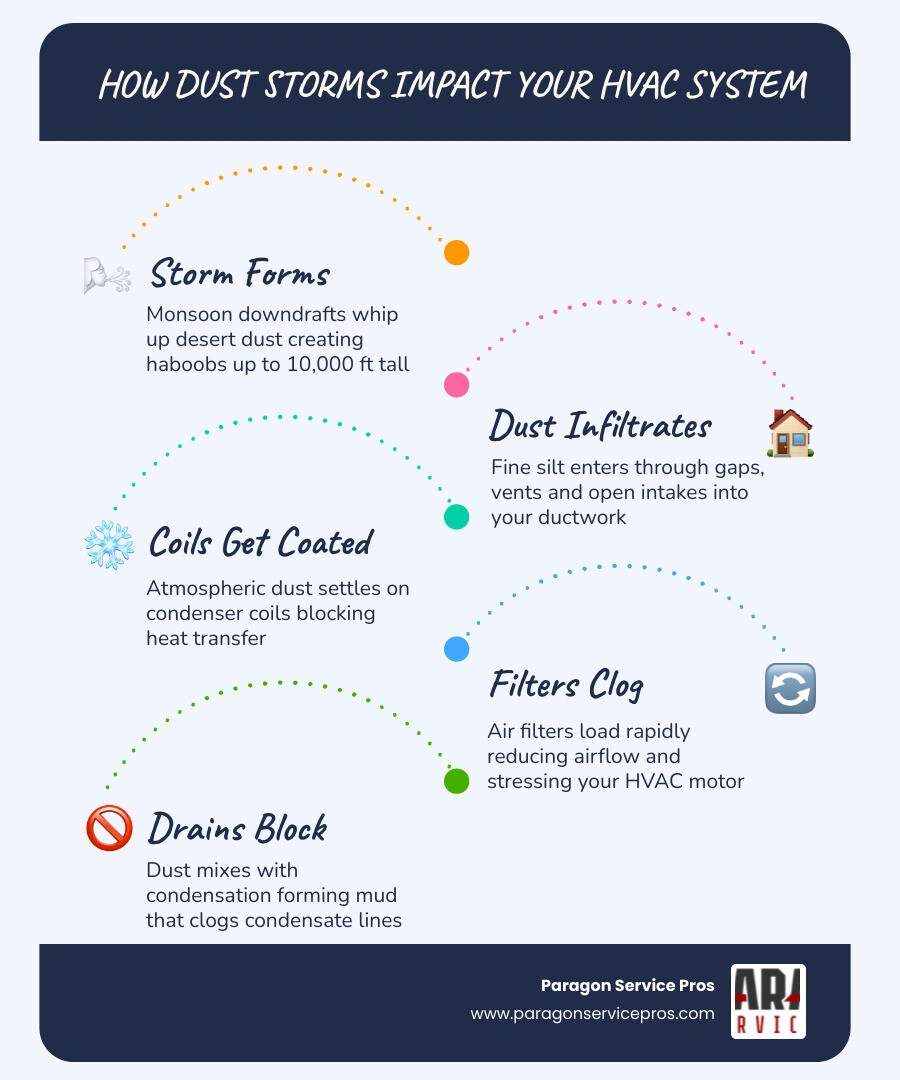
If you live in Mesa, Chandler, Gilbert, or anywhere else in the East Valley, you already know what a haboob looks like rolling in — a towering wall of dust thousands of feet high, moving fast and leaving a mess behind. What you may not realize is the damage happening inside your home while that storm passes. Dust infiltrates ductwork, coats condenser coils, clogs filters, and can even mix with condensation to form mud that blocks your AC's drain lines. Atmospheric dust levels across the Great Plains have nearly doubled since 2000, and the Southwest sees some of the most intense storms in the country. Getting ahead of dust season is not just smart maintenance — it is how you protect your home's comfort and avoid emergency repairs when temperatures are at their worst.
The Importance of Dust Storm Preparedness for Your Home Systems
Living in the desert means sharing our environment with some of the most dramatic weather events in North America. Haboobs—massive, violent dust storms triggered by the strong downdrafts of monsoon thunderstorms—can reach heights of 5,000 to 10,000 feet and travel at highway speeds of over 60 miles per hour. When the National Weather Service (NWS) issues a Dust Storm Warning, it means visibility has dropped to a quarter-mile or less, turning a bright summer afternoon into complete darkness in a matter of minutes.
To understand why proactive prep is so crucial, we have to look at the sheer volume of particulate matter in play. On any given day, scientific models estimate that there are roughly 44 billion pounds (20 teragrams) of dust suspended in Earth's atmosphere. When a localized haboob rolls through Mesa, AZ, it acts like a giant vacuum cleaner in reverse, forcing millions of those tiny, abrasive particles directly against your home.
Without a strategic plan for dust storm preparedness for your home systems, this airborne debris will find every microscopic gap in your home's envelope. Understanding How Arizona Monsoon Season Affects Your HVAC System is the first step in realizing that your air conditioner is the primary target of these storms. The fine silt kicked up by summer winds doesn't just settle on your patio furniture; it works its way into the delicate mechanical and electrical components of your cooling system, leading to rapid wear, decreased efficiency, and sudden mechanical failures.
Essential Steps for Dust Storm Preparedness for Your Home Systems
Preparing your home for these severe weather events starts well before the first dark cloud appears on the horizon. A pre-season professional tune-up is your primary line of defense. During a professional inspection, our technicians clean the outdoor condenser coils, check electrical connections, and verify that the system is operating at peak efficiency.
If your condenser coils are already coated in a light layer of winter and spring dust, a single summer haboob can completely choke out the unit's ability to release heat. This forces the compressor to work twice as hard, driving up your utility bills and risking a system-wide breakdown right when outdoor temperatures exceed 110°F.
Additionally, upgrading to a smart thermostat equipped with indoor air quality sensors can be a game-changer for homeowners in Chandler, AZ. These advanced controls can monitor particulate levels inside your home and alert you if there is a sudden spike, indicating that dust is bypassing your filtration or finding its way through unsealed gaps.
Sealing Entry Points to Prevent Dust Infiltration
When a dust storm strikes, your home must act as a sealed, pressurized capsule. If there are pathways for outdoor air to enter freely, the pressure difference created by high winds will pull fine silt deep into your living spaces.
In Queen Creek, AZ, where newer developments often sit adjacent to open desert fields, sealing entry points is particularly vital. Pay close attention to these often-overlooked areas:
- Dryer Vents: Ensure the exterior damper flap closes tightly when the dryer is not in use. A stuck flap is an open highway for dust to enter your laundry room and circulate into the rest of the house.
- Pet Doors: Flaps on pet doors degrade quickly under the intense Arizona sun. Replace worn, warped, or magnetic seals before the monsoon season starts to prevent wind-driven dust from blowing straight inside.
- Attic Access Panels: Gaps around your attic hatch can allow hot, dusty air from the attic to seep down into your conditioned living space.
- Garage Doors: The large perimeter seal around your garage door is highly susceptible to wear. If you can see daylight around the edges of your closed garage door, dust will easily coat your garage and seep through the interior entry door into your main living areas.
Pre-Season HVAC and Home Sealing Strategies
To keep the desert outside where it belongs, you need to conduct a thorough audit of your home’s exterior seals. Think of this process as winterizing your home, but for dust instead of snow.
Begin by inspecting the weatherstripping around all exterior doors and windows. Over time, the extreme heat in Gilbert, AZ, dries out rubber and foam seals, causing them to crack, compress, and lose their sealing ability. Replace any brittle material with high-quality, weather-resistant silicone or heavy-duty rubber stripping. Apply a fresh bead of exterior-grade caulk around window frames where the frame meets the stucco or siding.
For sliding glass doors, clean the bottom tracks thoroughly. Accumulated dirt in the tracks prevents the door from seating tightly against the frame, leaving a vertical gap that acts as a funnel for wind-blown sand. Install durable door sweeps on all exterior-facing doors to block dust from sweeping under the threshold.
If you want to know exactly how well your home is holding up against outdoor pollutants, consider scheduling a professional assessment. Our Indoor Air Quality Testing Guide Mesa AZ highlights how testing can identify hidden leaks in your ductwork and structural envelope that allow fine particulates to bypass your filters entirely.
To put this level of preparedness into perspective, consider a well-known safety principle from the National Fire Protection Association: two-thirds of all residential fires are caused by improperly maintained fireplaces, chimneys, and wood stoves. The underlying lesson here is that a failure to maintain hidden, air-carrying home systems leads to catastrophic failure. In the desert, neglecting your home's seals and HVAC system before dust season carries a similar risk of costly, stressful, and entirely preventable damage.
Protecting Your HVAC System During an Active Haboob
When a haboob is actively rolling through your neighborhood, your immediate priority shifts from long-term preparation to active defense. If you are at home when a dust storm warning is issued, you must act quickly to protect your mechanical systems.
First, adjust your thermostat settings. If a storm is imminent, the safest move is to turn your HVAC system completely off. If you absolutely must run the system due to extreme, hazardous indoor heat, ensure that it is set to "Recirculation" mode and that any fresh air intake vents are completely closed.
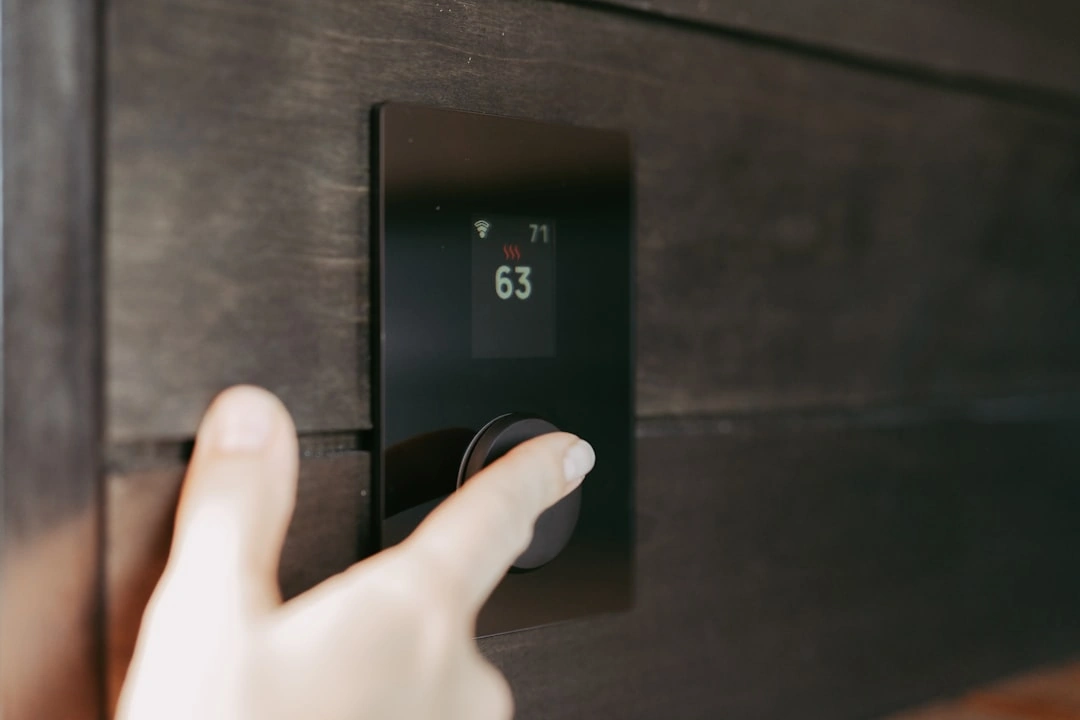
Many modern homes in San Tan Valley, AZ, are built with mechanical ventilation systems that bring fresh outdoor air inside to maintain air quality. During a haboob, however, this "fresh" air is highly contaminated. Running your system in fresh-air intake mode during a dust storm will quickly overload your air filters, fill your ductwork with silt, and compromise your indoor air quality.
Should You Turn Off Your AC During a Dust Storm?
The short answer is: yes, you should turn off your air conditioner during a major dust storm if it is safe to do so.
When your air conditioner runs, the indoor blower motor creates a powerful vacuum effect, pulling air from your rooms through the return vents, passing it over the evaporator coils, and pushing it back out. If your home's envelope has even minor leaks, this negative pressure will pull the outdoor dust-laden air inside through those cracks.
Furthermore, the outdoor condenser unit utilizes a powerful fan to pull air across the condenser coils to release heat. Running this fan during a haboob turns your outdoor unit into a giant dust magnet, forcing heavy debris and abrasive sand through the delicate aluminum fins. This can damage the fan motor bearings and completely cake the coils in mud.
Additionally, monsoon storms often bring sudden lightning strikes and high winds that knock down power lines, leading to rapid electrical surges. To protect your expensive compressor and fan motor from electrical damage in Gold Canyon, AZ, turn the system off at the thermostat. For ultimate peace of mind, we highly recommend installing dedicated HVAC surge protectors to safeguard your equipment from these sudden power fluctuations.
Securing and Covering Outdoor Condenser Units
If you have advanced warning of an approaching storm, take a few minutes to secure your outdoor space. High winds can turn loose yard toys, patio cushions, and tree branches into flying missiles that can dent your AC cabinet or bend the condenser fins. Keep trees and shrubs trimmed back at least two feet from your outdoor unit to maintain proper airflow and prevent branches from scraping against the system.
Some homeowners use specialized, breathable outdoor AC covers to protect their units during dust storms. These covers are designed to keep heavy sand and debris out of the coil fins. However, there is one critical rule you must follow: never run your air conditioner while a cover is installed. Running the system with a cover on blocks all heat release, which will cause the compressor to overheat almost instantly, likely leading to catastrophic mechanical failure. If you use a cover, make it a habit to drape a physical reminder—like a bright ribbon or the cover's storage bag—over your indoor thermostat so you don't accidentally turn the system back on before removing the cover.
Post-Storm Maintenance and Air Filtration Upgrades
Once the wind dies down and the dust settles, your work isn't quite finished. Proper post-storm recovery is essential to ensure that your HVAC system continues to run efficiently throughout the remainder of the summer.
Start by inspecting your outdoor condenser unit. If the coils are coated in a layer of brown dust, they need to be cleaned. With the system powered off at the outdoor disconnect box, use a standard garden hose to gently rinse the coils. Spray from the top down, using a gentle, wide spray pattern.
Never use a pressure washer to clean your AC coils. The high-pressure stream will instantly bend the delicate aluminum fins, permanently restricting airflow and requiring professional combing to repair.
While you are outside, check your system's condensate drain line. When heavy dust mixes with the normal condensation dripping off your indoor evaporator coil, it can create a thick, muddy sludge. If this sludge blocks the drain line, the condensate pan will overflow, potentially causing extensive water damage to your ceilings, drywall, and flooring.
If you suspect that dust has bypassed your filtration and settled deep inside your system, scheduling professional Air Duct Cleaning Services is the best way to restore clean, unrestricted airflow throughout your home.
Managing Air Filters and Upgrading Filtration Systems
Your air filter is the unsung hero of your home’s indoor air quality, especially during the dusty summer months. Understanding the 15 Benefits of Regularly Replacing Your HVAC Filters becomes incredibly obvious after a single Arizona haboob, as a clean filter keeps your system running efficiently, lowers your energy bills, and protects your family's respiratory health.
During dust season, standard fiberglass filters are simply not enough. We recommend upgrading to pleated filters with a MERV (Minimum Efficiency Reporting Value) rating of 11 to 13. Filters in this range are highly effective at capturing fine desert silt, pollen, and mold spores without putting excessive strain on your system's blower motor.
| Filter Type | MERV Rating | Dust Capture Efficiency | Recommended Replacement Frequency (Dust Season) | Best For |
|---|---|---|---|---|
| Standard Fiberglass | MERV 1–4 | Very Low (large particles only) | Every 2 weeks (not recommended) | Basic equipment protection |
| Pleated Synthetic | MERV 8–11 | Moderate to High (captures fine silt) | Every 3 to 4 weeks | Average households |
| High-Efficiency Pleated | MERV 11–13 | Excellent (captures microscopic dust) | Every 2 to 3 weeks | Homes with pets, allergies, or high dust exposure |
| HEPA Filters | MERV 17–20 | Maximum (99.7% of all particulates) | Refer to manufacturer (requires specialized system) | Severe allergies, asthma, and respiratory concerns |
For homeowners seeking the ultimate protection, installing an in-duct air purifier or air scrubber system is an excellent investment. These active purification systems work alongside your filter to neutralize airborne contaminants and cause microscopic dust particles to clump together, making them much easier for your standard filter to trap.
Post-Haboob Dust Storm Preparedness for Your Home Systems
In the days following a major storm in Mesa, AZ, implement a post-haboob checklist to keep your home systems running smoothly:
- Check your indoor air filters immediately. Do not wait for your monthly reminder. A single severe dust storm can load a filter with as much debris as three months of normal operation.
- Conduct biweekly visual checks of your outdoor unit’s coils during the peak of monsoon season. If you see a crust of dirt forming, give it a gentle rinse.
- Wipe down return vents with a damp microfiber cloth. Avoid dry dusting, which simply flings the fine silt back into your indoor air.
- Listen for unusual noises. If your AC starts making squealing, rattling, or grinding sounds after a storm, sand may have penetrated the fan motor bearings. Schedule a professional cleaning right away to prevent the motor from seizing.
Frequently Asked Questions about Dust Storm Preparedness
Navigating Arizona's unique climate can raise a lot of questions for homeowners. Here are some of the most common concerns we hear regarding dust storms and home systems.
How often should I change my air filters during Arizona's monsoon season?
During the quiet winter and spring months, changing your filters every 90 days is usually sufficient. However, during the summer monsoon season (June 15 to September 30), you should check your filters every 2 weeks and plan on replacing them every 3 to 4 weeks.
If a major haboob passes directly over your home, replace the filter immediately after the storm, regardless of how recently it was changed. Running your AC with a filter that is completely choked with fine desert silt restricts airflow, which can cause your indoor evaporator coils to freeze over and potentially burn out your blower motor.
Is it safe to run my AC immediately after a dust storm passes?
Yes, but only after you have performed a quick visual inspection of your outdoor unit. Before turning the system back on at your thermostat:
- Ensure you have removed any protective covers from the outdoor unit.
- Check that the area around the condenser is clear of fallen branches, loose tiles, or wind-blown trash.
- Look closely at the condenser coils. If they are heavily coated in dirt or mud, gently hose them down and let them dry before starting the system.
If you notice weak airflow, warm air blowing from your vents, or strange noises upon startup, shut the system down immediately and call a professional.
How do dust storms affect my HVAC system's condensate drain line?
Your air conditioner's indoor evaporator coil extracts an incredible amount of moisture from your indoor air, which drips into a drain pan and flows outside through a narrow PVC condensate line.
During a dust storm, fine particulate matter bypasses low-quality filters and settles directly onto the wet evaporator coils. As condensation runs down the coils, it washes this dust into the drain pan, creating a thick, muddy sludge. Over time, this mud builds up and completely blocks the drain line, leading to water backups, ceiling damage, and mold growth. Regularly flushing your drain line with water or having a professional clean it during a seasonal tune-up is vital to prevent these messy blockages.
Conclusion
When it comes to surviving the summer in the East Valley, dust storm preparedness for your home systems is your best defense against unexpected breakdowns and poor indoor air quality. By taking proactive steps to seal your home, managing your air filters diligently, and knowing how to handle your HVAC system during an active haboob, you can keep your home comfortable, clean, and safe all summer long.
Don't wait for a towering wall of dust to appear on the horizon before taking action. Protect your investment, preserve your indoor air quality, and keep your family cool. Schedule service with Paragon Service Pros in Mesa, AZ today to ensure your home is fully prepared for whatever the next monsoon season brings!
Keep reading: Home & Energy Savings
Browse every article in Home & Energy Savings or head back to the Learning Center .
Comfort you can count on, all year long.
Same-day service, honest diagnostics, and 24/7 emergency help with no overtime fees. A real Greater Phoenix team is standing by.