
How to Prevent HVAC Damage from Haboobs & Dust Storms
Learn how haboobs and dust storms damage your HVAC and take action to protect your system before the next Arizona monsoon.

Why Haboobs and Dust Storms Are One of the Biggest Threats to Your HVAC System
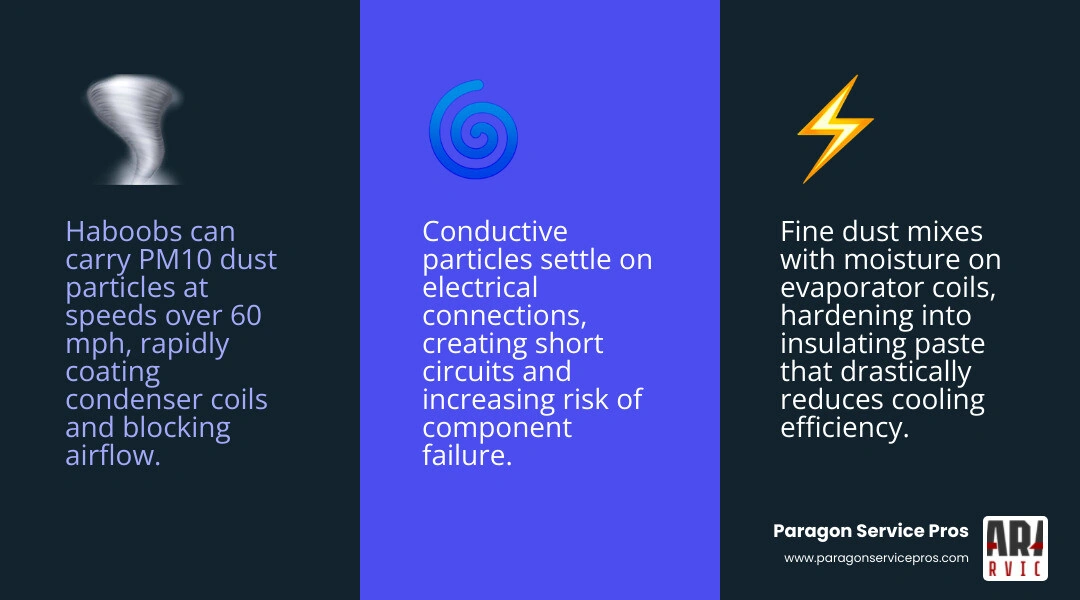
Understanding how haboobs and dust storms damage your HVAC comes down to one core problem: your system is designed to move air — and when that air is loaded with fine desert dust, every component pays a price. Here's a quick look at the key ways dust storms threaten your system:
How haboobs and dust storms damage your HVAC — at a glance:
- Condenser coils get coated in fine particulate, acting like an insulating layer that traps heat and forces the system to overwork
- Air filters can become fully clogged within hours of a single haboob, starving the system of airflow
- Evaporator coils collect dust that mixes with condensation and hardens into a paste, blocking heat transfer
- Blower motors and fan blades accumulate grit that causes imbalance, vibration, and accelerated wear
- Electrical connections collect conductive dust particles that can create short circuits or cause components to fail
- Condensate drain lines get blocked by dust-turned-mud, leading to water backup and potential water damage
If you live in Chandler, Gilbert, Mesa, Queen Creek, or anywhere else in the East Valley, this isn't a rare worst-case scenario — it's a recurring seasonal reality. Phoenix's monsoon season runs from June through September, and with it comes the haboob: a towering wall of desert dust that can reach 5,000 to 10,000 feet high and barrel across the landscape at speeds exceeding 60 mph.
The August 2025 haboob that rolled through the Valley — grounding flights at Sky Harbor and knocking out power to more than 60,000 customers — was a stark reminder of what these storms are capable of. And while the visible damage gets attention, the slow, hidden damage happening inside your HVAC system is what costs Arizona homeowners the most in the long run.
What is a Haboob and Why is it an Arizona Threat?
If you are new to the Sonoran Desert, your first encounter with a haboob can be an awe-inspiring, if slightly terrifying, experience. Derived from the Arabic word habūb (meaning "drifting" or "blowing"), a haboob is not your average windy day. It is an intense, massive wall of dust and debris formed by the collapse of localized thunderstorms.
During our hot summer afternoons, thunderstorms build up over the mountains. As these storm cells collapse, they release powerful downdrafts of cold, heavy air. When this air hits the dry desert floor, it spreads out rapidly in all directions like a giant leaf blower, kicking up loose topsoil, sand, and fine particulate matter. This creates a rolling dust wall traveling at speeds of 50 to 80 mph.
What makes these storms particularly hazardous to your home mechanical systems is the size and composition of the dust. While regular windstorms carry larger sand particles that drop quickly, haboobs carry high concentrations of PM10 (particulate matter under 10 micrometers) and PM2.5 (microscopic particles under 2.5 micrometers). These tiny, airborne particles are light enough to stay suspended in the air for hours, allowing them to penetrate the smallest gaps in your home's exterior and settle deep within your air conditioner.
Understanding How Arizona Desert Climate Affects Your HVAC is crucial for protecting your comfort. The combination of intense summer heat and high-velocity dust means your AC works under a level of environmental stress that systems in other parts of the country simply never face.
How Haboobs and Dust Storms Damage Your HVAC
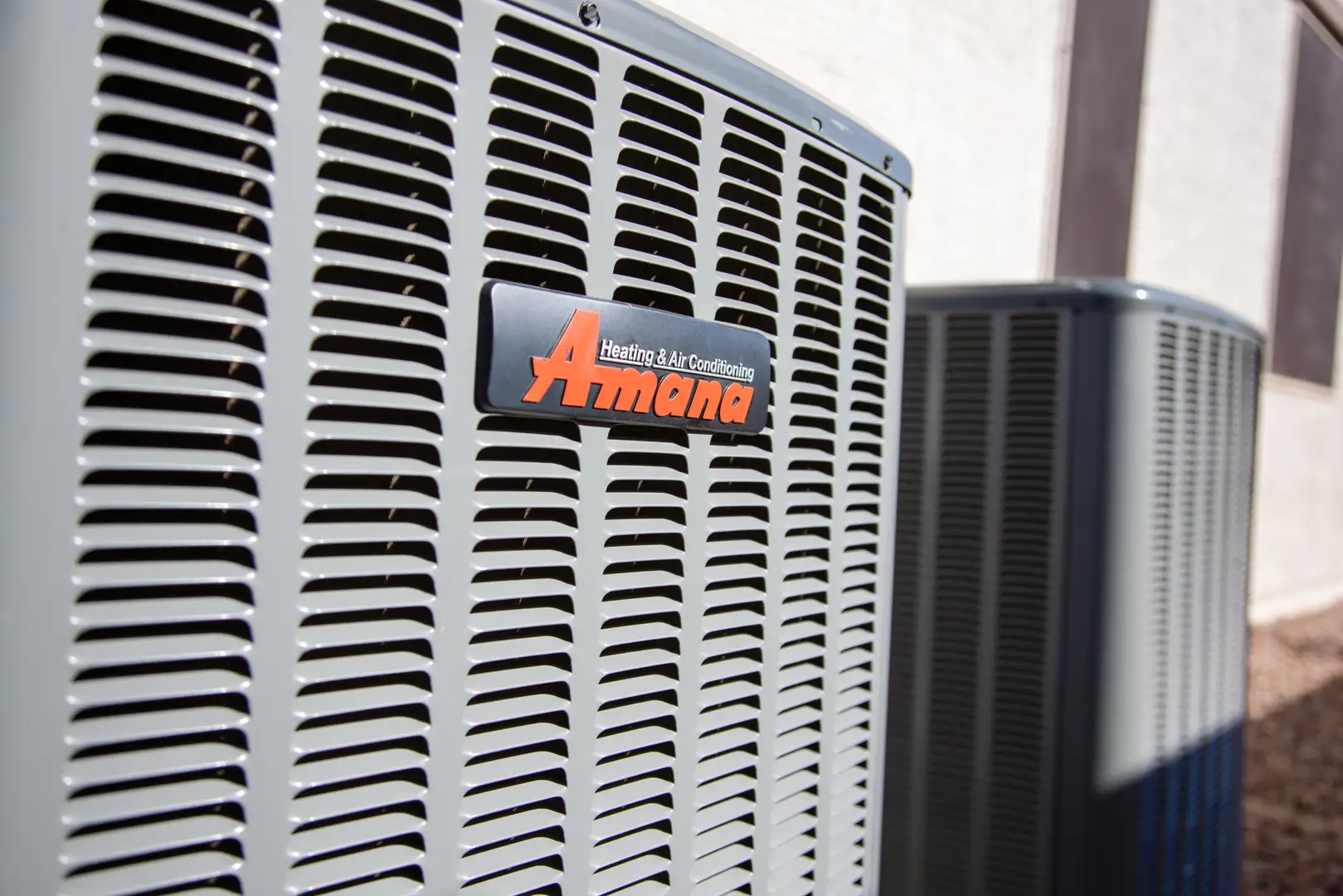
When a haboob rolls through Gilbert, Queen Creek, or Mesa, your outdoor air conditioning unit acts like a giant vacuum cleaner. The condenser fan pulls thousands of cubic feet of air per minute through the delicate aluminum fins of your outdoor coil. When that air is saturated with fine desert silt, the consequences are immediate and severe.
The primary victim of this process is your outdoor condenser coil. The coil's job is to release the heat extracted from your home's indoor air into the outdoors. However, a single major haboob can coat these coils in a thick layer of fine dust, reducing condenser coil airflow by 30% to 40% almost instantly.
This dust layer acts as an insulating blanket. Instead of releasing heat, the coils trap it inside the system. This forces your compressor to run hotter and longer to achieve the same cooling effect, driving up your utility bills and putting your system at risk of overheating. In severe cases, a fully clogged condenser coil from dust will cause the AC unit to overheat and trip the circuit breaker, leaving you without cooling in the middle of a triple-digit summer day. If your system is struggling, professional AC Coil Cleaning is often the first step required to restore safe operation.
The Mechanics of How Haboobs and Dust Storms Damage Your HVAC
Beyond the obvious clogging of coils, the mechanics of how haboobs and dust storms damage your HVAC involve deeper, highly destructive physical processes:
- Abrasive Wear from Caliche Silt: Sonoran Desert soil contains caliche, a hardened deposit of calcium carbonate. When ground into a fine silt and blown at 60 mph, it acts like liquid sandpaper. This grit enters the bearings of your outdoor fan motor, grinding away lubrication and causing mechanical friction, squealing noises, and premature motor failure.
- Electrical Contact Failure: Fine dust easily penetrates the seams of outdoor electrical disconnect boxes and contactor covers. When dust builds up on the contactors (the electrical switches that turn your compressor and fan on), it can prevent them from making a clean connection. Alternatively, the dust can cause the contactors to stick or "fuse" shut, forcing your compressor to run non-stop until it burns out.
- Short Circuits: Some desert dust contains conductive mineral particles. When these settle on control boards or electrical terminals, they can create unintended conductive paths, leading to short circuits, fried control boards, and sudden system failure.
These mechanical vulnerabilities are highly amplified by the intense How Desert Temperature Swings Affect Your HVAC, which already push electrical components to their thermal limits.
Indoor Air Quality and How Haboobs and Dust Storms Damage Your HVAC
While the outdoor unit bears the brunt of the physical wind, your indoor air quality and indoor HVAC components are also highly vulnerable.
During a haboob, the air pressure dynamics around your home change. High winds push dust through tiny gaps in window frames, door seals, and attic vents. If your return air ducts have minor leaks, the negative pressure of your system will pull this dusty air directly out of your attic or walls and into the HVAC system.
This massive influx of dust can clog a standard 1-inch air filter within hours. Once a filter is completely overloaded, the system's blower motor has to work much harder to pull air through it, creating high static pressure. Under this pressure, air will find the path of least resistance, often bypassing the filter entirely through small gaps around the filter rack.
Once dust bypasses the filter, it lands on your indoor blower wheel and the wet evaporator coil. Your evaporator coil is constantly covered in condensation as it removes humidity from your indoor air. When fine desert dust hits this wet coil, it mixes with the water to create a thick, cement-like mud paste. This paste hardens inside the tiny spaces between the coil fins, permanently restricting airflow and preventing heat transfer.
To keep your family safe and breathe clean air after a major storm, consulting an Indoor Air Quality Gilbert AZ Guide can help you select the right filtration upgrades to keep fine particulates out of your living space.
Step-by-Step Guide: Protecting Your HVAC Before, During, and After a Storm
Protecting your home comfort system from the harsh Arizona monsoons requires a proactive approach. You cannot control when a haboob forms, but you can control how well-prepared your home is to withstand it. If your system is already showing signs of struggle, check out AC Not Cooling Properly What to Check to troubleshoot immediate issues.
Pre-Storm Preparation and Sealing
The best defense against dust infiltration is a tight home envelope. Take these steps before monsoon season peaks in June:
- Seal the Envelope: Inspect the weatherstripping around all exterior doors and windows. Replace any cracked or worn seals. Use high-quality outdoor caulk to seal gaps around outdoor vents, plumbing penetrations, and dryer vents.
- Install Door Sweeps: Ensure all exterior doors have tight-fitting, heavy-duty door sweeps to block ground-level dust from blowing under your doors.
- Clear the Area: Maintain a clean 2-foot clearance around your outdoor AC unit. Trim back low-hanging tree branches, bushes, and weeds that could blow into the unit or restrict airflow during high winds.
- Consider Protective Hardware: If you live on the edge of town (such as the undeveloped desert fringes of Queen Creek or San Tan Valley), ask your technician about installing louvered hail guards or specialized mesh screens. These deflect wind-blown debris and reduce the direct impact of heavy dust on your condenser coils.
During the Storm: Recirculation vs. Shutdown
When you see a wall of brown dust approaching on the horizon, take immediate action:
- Turn Your HVAC System Off: We highly recommend turning your thermostat to the "OFF" position during an active haboob. Running your AC during a storm forces the outdoor fan to pull high concentrations of dust directly into the coils, and forces the indoor blower to pull dust into your filters. Leaving the system off for 30 to 45 minutes until the main dust cloud passes will save you hours of cleanup later.
- Close Fresh Air Intakes: If you have a ventilation system that pulls in fresh outdoor air, ensure it is switched off or set to closed/recirculation-only mode.
- Use Surge Protectors: Monsoon storms are accompanied by intense lightning and localized power grid fluctuations. Ensure your HVAC system is protected by a dedicated outdoor surge protector installed at your electrical disconnect box to prevent fried control boards and compressors.
Post-Storm Cleanup and Maintenance Checklist
Once the storm has passed and the dust has settled, do not simply turn your AC back on and forget about it. Follow this checklist to ensure your system is clean and safe to operate:
| Step | Action | Why It Matters | DIY vs. Pro |
|---|---|---|---|
| 1 | Visual Inspection | Check for fallen branches, debris, or damage around the outdoor unit. | DIY |
| 2 | Rinse Condenser Coils | Gently wash down the outdoor coils with a garden hose using low pressure (never a pressure washer). | DIY |
| 3 | Check Air Filter | Inspect your indoor filter immediately. Replace it if it has a visible layer of gray dust. | DIY |
| 4 | Check Condensate Drain | Verify water is flowing freely from your drain line and not backing up. | DIY / Pro |
| 5 | Deep Duct & Coil Clean | Schedule professional cleaning if dust has bypassed the filter or entered your ductwork. | Professional |
If a massive amount of dust has entered your home, your ductwork may need a thorough cleaning to prevent recirculating those fine particulates. For local advice, refer to our Air Duct Cleaning Gilbert AZ Guide to restore your system's indoor air quality.
The Long-Term Impact of Dust Infiltration on System Lifespan
While a single haboob can cause an immediate system shutdown, the cumulative, long-term impact of desert dust is what truly shortens the lifespan of Arizona HVAC systems.
While the national average lifespan for a residential air conditioning system is 15 to 20 years, in Phoenix and the East Valley, that lifespan often drops to just 10 to 15 years. This accelerated aging is directly linked to dust exposure, extreme summer temperatures, and high operational demand (with systems running 18+ hours a day).
When your system operates with even a minor layer of dust on the coils or a partially clogged filter:
- Energy consumption increases: The system must run longer cycles to cool your home, noticeably raising your monthly utility bills.
- Compressor strain rises: The compressor is the heart of your AC. Running at elevated temperatures due to dirty coils degrades its internal oil, leading to mechanical friction and, eventually, premature compressor failure.
- Blower motor burnout: Pulling air through dirty filters and ductwork puts constant strain on your indoor fan motor, leading to overheating and electrical failures.
Ignoring the signs of dust accumulation is a recipe for an expensive mid-summer breakdown. Keep an eye out for these 11 Signs Your AC Needs Professional Maintenance to catch problems before they lead to permanent system damage.
Frequently Asked Questions About Desert Dust Storms & AC Care
Should I turn off my AC during a haboob?
Yes. We strongly recommend turning your thermostat to the "OFF" position during an active dust storm. Running your system during a haboob forces the outdoor unit to act like a high-powered vacuum, pulling heavy, abrasive dust directly into the condenser coils and electrical components. Keeping the system off for the 30 to 60 minutes it takes for the storm to pass protects your equipment from severe clogging and mechanical strain.
How often should I change my air filter during monsoon season?
During the peak monsoon months of June through September, you should check your air filter at least every two weeks. While a standard filter might last 30 to 90 days in the winter, a single major haboob can completely clog a filter in a matter of hours. We recommend upgrading to a pleated MERV 11 or MERV 13 filter during the summer to capture fine desert dust, provided your system's fan can handle the airflow restriction. For a deeper look at keeping your home's air lines clear in Mesa, check out our Air Duct Cleaning Mesa AZ Guide.
Can I hose down my outdoor AC unit after a dust storm?
Yes, but you must do it safely. First, turn off the power to your AC at the thermostat. Use a standard garden hose with a gentle spray nozzle — never use a pressure washer, as high-pressure water will bend the delicate aluminum fins of your condenser coil, permanently restricting airflow. Spray the coils from the top down and at an angle to wash the dust out of the fins. If the dust has mixed with rain and turned into a hard, baked-on mud crust, you will need a professional technician to clean it with specialized, self-foaming coil cleaners.
Conclusion
Living in the East Valley means accepting that haboobs and dust storms are a natural part of our beautiful desert environment. However, letting these storms ruin your comfort and shorten your AC's life is entirely preventable. By taking simple protective steps — like shutting down your system during storms, checking filters frequently, and sealing your home's exterior — you can protect your investment and enjoy reliable, efficient cooling all summer long.
At Paragon Service Pros, we specialize in helping homeowners in Chandler, Gilbert, Gold Canyon, Mesa, Queen Creek, and San Tan Valley keep their air conditioning systems running flawlessly through our intense monsoon seasons. Whether you need a proactive seasonal checkup, a professional coil wash, or emergency repairs after a major storm, our team is here to deliver clean workmanship, transparent service, and fast scheduling.
Keep reading: Home & Energy Savings
Browse every article in Home & Energy Savings or head back to the Learning Center .
Comfort you can count on, all year long.
Same-day service, honest diagnostics, and 24/7 emergency help with no overtime fees. A real Greater Phoenix team is standing by.