
What to Expect During an Emergency Service Call: The Complete Guide
Learn what to expect during an emergency service call with our complete guide covering HVAC crises, technician arrival, diagnostics, and same-day repairs.

What to Expect During an Emergency Service Call Before the Technician Pulls Up
What to expect during an emergency service call is something every Arizona homeowner deserves to know before a crisis hits — not while sweating through a Chandler summer with a failed AC or shivering through a rare East Valley cold snap with a broken furnace.
When your HVAC system fails at the worst possible moment, the uncertainty of not knowing what happens next can feel just as overwhelming as the breakdown itself. Here is a quick overview of what the process typically looks like:
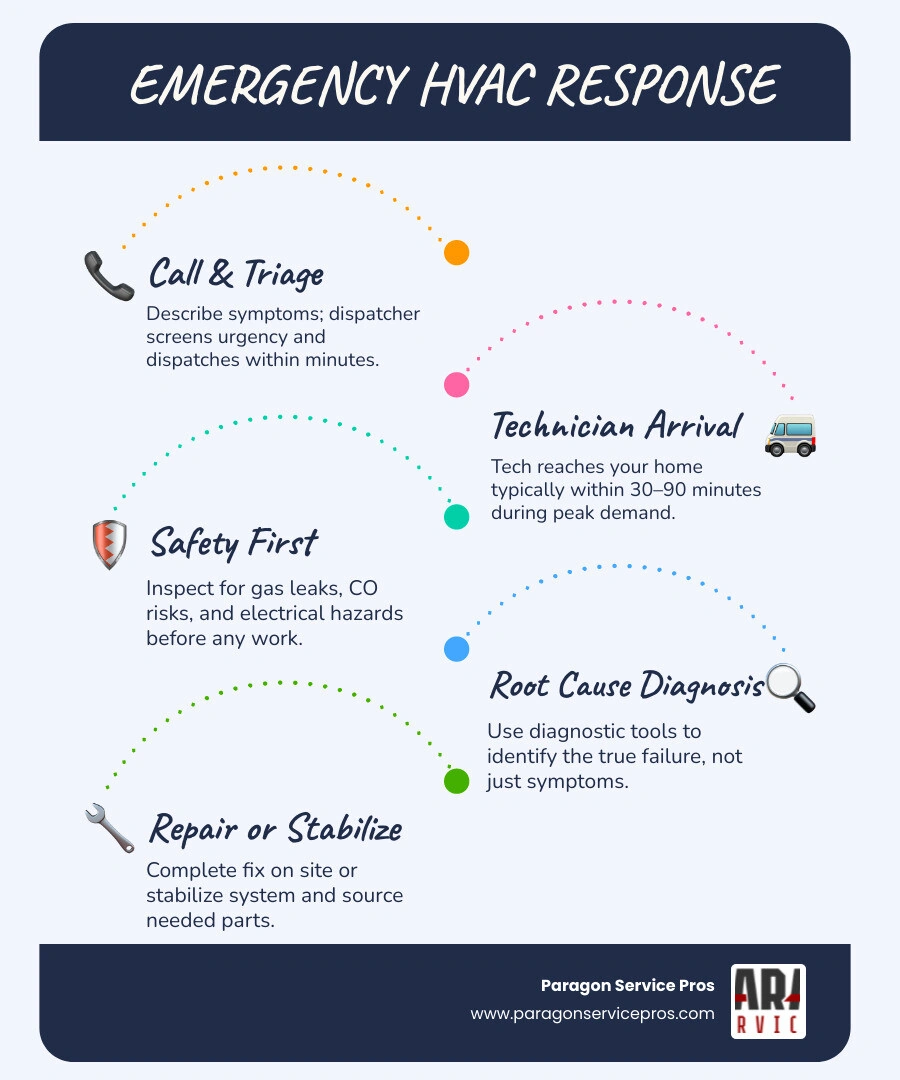
- You call and describe your symptoms — a dispatcher screens the situation to determine urgency and priority.
- A technician is dispatched — response typically happens within 30 to 90 minutes depending on demand and location.
- Safety checks come first — the technician inspects for gas leaks, carbon monoxide risks, and electrical hazards before anything else.
- Diagnosis and root cause analysis — tools are used to find not just the symptom, but the actual cause of the failure.
- Repair or stabilization decision — the technician either completes a full fix on the spot or stabilizes the system if parts need to be sourced.
- Testing and verification — the system is run through a full cycle to confirm safe operation before the technician leaves.
- Documentation and guidance — you receive a record of the work performed and recommendations to prevent future issues.
Over 60% of HVAC emergencies happen during peak seasons — exactly when technicians are most in demand and wait times can stretch. Knowing what to expect ahead of time helps you stay calm, act fast, and make smarter decisions when it counts most.
This guide walks you through every stage of an emergency HVAC service call — from the first phone call to the final system test — so you are never caught off guard.
Explore more about what to expect during an emergency service call:
- emergency hvac repair tips for the phoenix east valley homeowners
- how to prevent hvac emergencies with maintenance
- when an hvac failure is a true emergency
Identifying a True HVAC Crisis vs. a Routine Repair
Not every system hiccup requires a late-night emergency dispatch. Understanding the difference between a minor annoyance and a full-blown emergency can save you a lot of unnecessary stress. A routine issue is something that can comfortably wait until regular business hours — think of a slightly noisy fan, minor temperature imbalances between rooms, or a smart thermostat that is struggling to connect to your Wi-Fi.
A true emergency, however, involves immediate safety risks, threats to your home's structure, or a complete loss of heating or cooling during extreme weather conditions. Roughly 70% of homeowners experience some form of HVAC breakdown during high-demand periods, and telling these two categories apart is the first step in protecting your household. For a deep dive into how we classify these situations, check out our guide on When an HVAC Failure is a True Emergency.
Extreme Temperature Risks in Arizona
In the Phoenix East Valley, extreme weather is not just uncomfortable — it can be downright dangerous. When outdoor temperatures climb well past 100°F in places like Chandler, AZ, indoor temperatures in a home without air conditioning can reach life-threatening levels within a matter of hours. This poses a major heatstroke risk, especially for vulnerable family members like infants, the elderly, or pets.
If your air conditioning fails completely during a scorching summer day, this is never a "wait until Monday" situation. It is a critical safety hazard that requires immediate professional intervention. If you find yourself in this situation, you can read about our localized rapid-response solutions in our Emergency AC Repair Chandler guide.
Hazardous Odors and System Sounds
Your nose and ears are often the first line of defense when detecting a dangerous HVAC failure. If your heating system or air conditioner starts making loud mechanical noises — such as metal-on-metal screeching, heavy banging, or rapid clicking — it often signals an impending catastrophic mechanical failure.
Worse yet are hazardous odors. A strong smell of rotten eggs near your furnace points to a natural gas leak, while a fishy or chemical burning smell indicates melting wires or failing electrical components. These issues present immediate fire or carbon monoxide hazards. If you experience any of these red flags, shut down your system immediately and review our Emergency HVAC Repair Tips for the Phoenix East Valley Homeowners to keep your family safe while help is on the way.
What to Expect During an Emergency Service Call: Step-by-Step
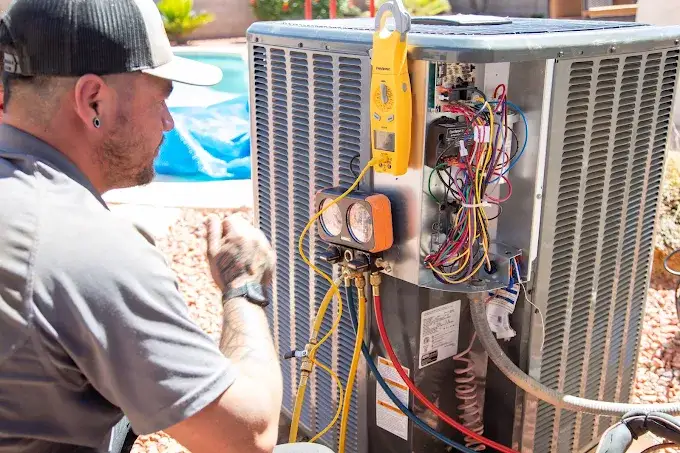
When an emergency technician arrives at your home, they do not just start swapping out parts at random. A professional emergency service call follows a highly structured, step-by-step process designed to ensure safety, accuracy, and efficiency under pressure. By knowing exactly what the technician is doing at any given moment, you can feel confident that your home is in good hands. To understand how we prioritize rapid scheduling to restore your comfort, you can read about the Advantages of Same Day Service and Emergency Support.
Initial Triage: What to Expect During an Emergency Service Call Intake
The emergency service process actually begins the moment you place the phone call. Think of the customer service representative or dispatcher as an emergency room triage specialist. They will ask you a series of specific questions to assess the severity of the situation.
You should be prepared to describe:
- The exact symptoms your system is showing (e.g., blowing warm air, completely dead, making a loud grinding sound).
- Any safety indicators (such as carbon monoxide detector alerts or unusual smells).
- The current indoor temperature and whether there are high-risk individuals in the home.
This screening allows us to prioritize our dispatches so that those in immediate danger receive help first. For a closer look at how this communication works in real-time, refer to our 24 Hour AC Repair Chandler Guide.
On-Site Diagnostics: What to Expect During an Emergency Service Call Inspection
Once the technician arrives at your home, the physical inspection begins. A qualified professional will always perform a safety check before diving into technical diagnostics. This includes checking for gas leaks, testing for carbon monoxide, and scanning for electrical faults that could pose a shock or fire hazard.
After ensuring the work environment is safe, the technician will use advanced diagnostic tools — like multimeters, pressure gauges, and thermal imaging cameras — to perform a comprehensive root cause analysis. They do not just look at the broken part; they look at why it failed to prevent a recurring breakdown. If your furnace is the culprit during a chilly winter evening, you can learn more about this visual and technical diagnostic process in our Emergency Furnace Service overview.
Stabilization vs. Permanent Repair Decisions
One of the most critical moments of an emergency visit is deciding how to resolve the issue. If the broken component is a common part — like a capacitor, contactor, or standard thermostat — the technician can usually perform a permanent repair immediately using the fully stocked inventory in their service vehicle.
However, if your system has suffered a major failure (such as a burnt-out compressor or a cracked heat exchanger) and specialized parts are required, a permanent fix may have to wait. In these scenarios, the technician’s primary goal shifts to temporary stabilization. This might involve safely bypassing a non-essential control to provide temporary heating or cooling, or helping you arrange alternative comfort solutions while the permanent parts are sourced. In severe cases, a full replacement may be the safest and most practical path forward. You can read about how we handle these major system failures in our guide on Emergency Furnace Replacement in Queen Creek AZ.
How to Prepare Your Home for the Technician's Arrival
While you wait for the technician to pull into your driveway, there are several easy steps you can take to make the visit faster, safer, and more efficient. Taking a few minutes to prepare your home ensures the technician can get straight to work, saving valuable time during a stressful outage. For more practical advice on preparing for a rapid heater repair, see our Emergency Furnace Repair Gilbert AZ Guide.
Clearing Access Paths and Securing Pets
Technicians need quick, unimpeded access to both your indoor and outdoor HVAC components. You can help by clearing a direct walking path from your entryway to your indoor air handler, furnace, or thermostat.
- Move any clutter, furniture, or storage boxes out of the way.
- Ensure there is a clear, two-foot clearance around your outdoor condenser unit by trimming back overgrown weeds or removing patio items.
- Secure your pets in a quiet, closed room. Emergency visits can involve loud noises, open doors, and heavy tools, which can stress your furry family members and create safety hazards for the technician.
For Queen Creek residents, you can find localized tips on keeping your system areas accessible in our Emergency Furnace Maintenance Queen Creek AZ Tips article.
Basic Troubleshooting Checks to Perform First
Before the technician arrives, it is always a good idea to perform a few basic troubleshooting checks. Believe it or not, roughly 40% of emergency HVAC calls stem from simple, non-mechanical issues that can be resolved in minutes.
Before calling, or while waiting, check the following:
- The Thermostat: Are the batteries dead? Is it set to "Cool" or "Heat" instead of "Off"?
- The Circuit Breaker: Has the breaker tripped? If so, try resetting it once. If it trips again immediately, leave it off to prevent electrical damage.
- The Air Filter: Is the filter completely clogged with dust? A heavily restricted filter can choke system airflow, causing your AC coils to freeze over or your furnace to overheat and shut down.
If you are looking for a complete checklist of things to inspect before scheduling a visit in Mesa, browse through our Emergency Furnace Repair Mesa AZ Guide.
Timeline Factors: How Long Does an Emergency HVAC Visit Take?
When your home is uncomfortably hot or cold, every minute feels like an hour. Homeowners naturally want to know how long the technician will be working. On average, most emergency HVAC repairs are completed within 1 to 3 hours once the technician is on-site. However, the exact timeline depends on several factors, including the complexity of the diagnosis, the availability of replacement parts, and the current weather conditions.
During peak seasons, severe heat waves can cause high demand across the entire East Valley, which can impact response times. For Gold Canyon residents facing an unexpected AC breakdown, you can learn more about how we manage these high-demand situations in our guide, Gold Canyon's AC SOS Finding 24/7 Same Day Service When You Need It Most.
To give you a clearer idea of what to expect, here is a breakdown of typical repair times for common HVAC components:
| HVAC Component | Typical Repair Time | Description |
|---|---|---|
| AC Capacitor | 30 – 45 Minutes | A very common electrical failure; easily swapped from truck stock. |
| Thermostat Replacement | 45 – 60 Minutes | Involves mounting and wiring a new digital or smart thermostat. |
| Refrigerant Leak & Recharge | 1 – 2 Hours | Requires locating the leak, repairing it, and recharging the system. |
| Blower Motor | 2 – 4 Hours | A more complex mechanical replacement involving the indoor unit fan. |
| Compressor Replacement | 4 – 6 Hours | A major repair requiring recovery of refrigerant and extensive brazing. |
Preventing Future HVAC Emergencies in the Phoenix East Valley
The absolute best emergency service call is the one you never have to make. While our team is always ready to assist when things go wrong, we would much rather help you avoid the stress of a sudden breakdown entirely. By taking a proactive approach to your heating and cooling health, you can protect your home's comfort and keep your system running smoothly year-round. For Mesa residents looking to keep their heating systems in top shape before winter arrives, check out our Emergency Furnace Maintenance Mesa AZ Guide.
The Power of Proactive Maintenance Programs
Investing in a regular HVAC maintenance program is the single most effective way to prevent unexpected breakdowns. Homeowners who prioritize scheduled maintenance are 50% less likely to experience a total system failure. Even better, members of dedicated maintenance programs experience 73% fewer emergency calls than those who skip annual service.
Regular checkups do more than just prevent emergencies; they also keep your monthly utility bills in check. A clean, well-calibrated HVAC system operates 15% to 20% more efficiently than a neglected one. Over time, this consistent care can double your system's lifespan, helping a quality heat pump or AC unit last 15 to 20 years instead of failing prematurely in as little as 8 to 10 years. If your system is already showing signs of irreversible wear, you can read about your options in our detailed guide on Emergency Furnace Replacement in Queen Creek AZ.
Frequently Asked Questions about Emergency HVAC Repairs
Is no air conditioning considered a true emergency in Arizona?
Yes, absolutely. In the Phoenix East Valley, outdoor temperatures regularly exceed 100°F during the summer. Without functional air conditioning, indoor spaces can quickly become dangerous heat traps. This poses a severe risk of heat exhaustion and heatstroke, especially for children, seniors, and pets. We treat complete cooling failures in extreme heat as high-priority emergencies.
What should I do if I smell gas or burning odors from my heater?
If you smell a strong odor of natural gas (which smells like rotten eggs) or notice a chemical burning smell, act immediately. Turn off your HVAC system at the thermostat or breaker, evacuate your home, and call 911 or your local gas utility from a safe distance outside. Once the area has been cleared by emergency personnel, contact us to perform a thorough safety inspection and repair.
Can I run my AC if I suspect the coils are frozen?
No. If you notice ice forming on your outdoor refrigerant lines or indoor coil, turn off the cooling mode immediately but set your thermostat fan setting to "On." This allows the ice to melt safely without running the compressor. Running an air conditioner with frozen coils can cause liquid refrigerant to flood back into the compressor, leading to catastrophic and costly mechanical failure.
Conclusion
Navigating an unexpected heating or cooling failure can be incredibly stressful, but knowing what to expect during an emergency service call helps put you back in control. From the initial triage call to the final safety verification checks, every step of our process is designed to restore your home's comfort as quickly and safely as possible.
At Paragon Service Pros, we prioritize your family's peace of mind with complete transparency, clean workmanship, and same-day scheduling tailored to the unique climate of the Phoenix East Valley. Do not wait out the heat or freeze through the night. Book your professional HVAC repair today and let our experienced, local team restore your comfort.
Keep reading: Home & Energy Savings
Browse every article in Home & Energy Savings or head back to the Learning Center .
Comfort you can count on, all year long.
Same-day service, honest diagnostics, and 24/7 emergency help with no overtime fees. A real Greater Phoenix team is standing by.