
An Essential Guide to HVAC's Impact on Appraisals
Learn how HVAC condition affects home appraisals in Chandler, Gilbert, and Mesa AZ—protect your equity with this essential guide.

Why How HVAC Condition Affects Home Appraisals Can Cost You Thousands in Arizona
Understanding how HVAC condition affects home appraisals is one of the most important things you can do before selling, refinancing, or applying for a HELOC — especially in the desert heat of Chandler, AZ and Gilbert, AZ, where a working cooling system isn't a luxury, it's a necessity.
Here's a quick summary of what you need to know:
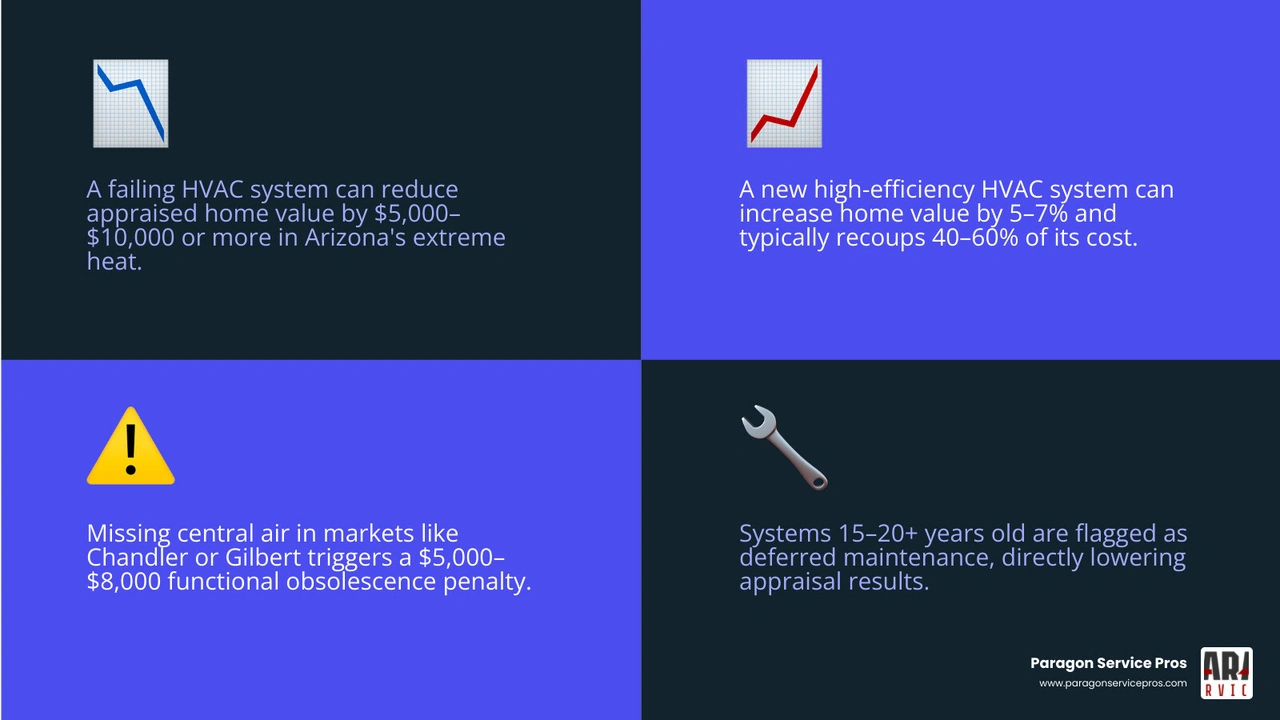
- A failing or non-functional HVAC system can reduce your appraised value by $5,000–$10,000 or more
- A new or upgraded system can increase appraised value by approximately 5–7%
- Missing central air in a market where it's expected can trigger a $5,000–$8,000 functional obsolescence penalty
- Systems 15–20+ years old are commonly flagged as deferred maintenance by appraisers
- High-efficiency systems (SEER2 18+, AFUE 95%+) can justify positive appraisal adjustments
- HVAC replacement typically recoups 40–60% of its cost in added home value
- Government-backed loans (FHA, VA, USDA) require a functional heating and cooling source — a broken system can stall or block loan approval
Most homeowners focus on kitchen countertops or fresh paint before an appraisal. But your heating and cooling system may quietly be the biggest financial wildcard in the entire process. Appraisers evaluate HVAC as part of your home's core physical condition — right alongside the roof, plumbing, and electrical systems. That means a neglected or aging unit doesn't just make buyers nervous. It can directly reduce the number an appraiser puts on paper.
In Arizona's extreme climate, where summer temperatures routinely exceed 110°F, the stakes are even higher. Central air conditioning isn't optional here — it's a baseline expectation in every market from Mesa to Queen Creek. When your system falls short of that standard, appraisers notice.
This guide walks you through exactly what appraisers look for, which HVAC issues hurt your value most, and what you can do right now to protect your home equity.
How HVAC Condition Affects Home Appraisals: The Appraiser's Checklist
When an appraiser steps onto your property, they aren't looking at your home through the eyes of a potential buyer who might be distracted by beautiful staging. They are looking at it through a lens of risk, functionality, and longevity.
Appraisers evaluate your heating, ventilation, and air conditioning system using three primary criteria:
- Physical Condition: Is the system clean, well-maintained, and free of visible damage? Or is it covered in rust, surrounded by overgrown weeds, and making strange rattling noises?
- Functional Utility: Does the system actually do its job? Can it adequately cool and heat the entire square footage of the home to a comfortable, safe temperature?
- Remaining Useful Life (RUL): How much longer is this system expected to run before it needs a complete replacement?
To answer these questions, appraisers don't just guess. They will locate your indoor air handler and your outdoor condenser unit to inspect the manufacturer data plates. These metal plates contain the brand, model number, and serial number.
By decoding these serial numbers through industry databases, the appraiser can verify the exact year and month the equipment was manufactured. If your system is approaching or has crossed the 15-to-20-year mark, it will likely be categorized as "deferred maintenance." In the eyes of a lender, this means a major, expensive replacement is looming, which immediately impacts the overall condition rating of your property.
How HVAC Condition Affects Home Appraisals During Walkthroughs
During the physical walkthrough, the appraiser performs a basic functional test. They will walk over to your thermostat, turn on the air conditioning or heat, and verify that the system responds correctly. They will feel the vents to ensure cold or warm air is actually blowing.
They also look at the smaller, visible details that hint at how well the home has been cared for. One of the biggest "canaries in the coal mine" for an appraiser is a dirty air filter. If they pull off a vent cover and find a heavily clogged, dusty filter, it signals to them that the entire system—and potentially other hidden areas of the home—has suffered from maintenance neglect.
Consistently replacing your filters does much more than keep the appraiser happy; it protects your equipment from premature wear. You can read more about why this simple chore matters so much in our guide on the 15 Benefits of Regularly Replacing Your HVAC Filters.
Red Flags That Lower Appraised Value
Several specific HVAC issues can act as immediate red flags, forcing the appraiser to make downward adjustments to your home's valuation:
- Phased-Out Refrigerants (R-22): If your air conditioner was manufactured before 2010, there is a very high chance it uses R-22 refrigerant (often known as Freon). Because the EPA has completely phased out R-22, repairing these older units has become incredibly expensive and difficult. Appraisers view R-22 systems as having virtually zero remaining useful life, often flagging them for immediate replacement.
- Visible Rust and Corrosion: Severe rust on the outdoor condenser coils or a rusted-out drain pan under your indoor unit indicates moisture issues and advanced wear.
- Unpermitted Installations: If you had a new system installed but failed to pull the required municipal permits, the appraiser may flag the addition as illegal or unpermitted. This can delay your appraisal or force you to obtain retroactive permits before a loan can close.
Staying informed about these industry shifts is crucial. To understand how recent environmental regulations affect your current or future system, check out our breakdown of What You Need to Know About the 2025 Shift in HVAC Refrigerants and Efficiency Standards.
Regional Climate Expectations and Functional Obsolescence
Appraisal standards are highly regional. In some cooler parts of the country, missing air conditioning is perfectly normal and won't hurt a home's value. But here in the East Valley of Arizona—including Mesa, AZ and Queen Creek, AZ—the desert heat makes central air conditioning an absolute baseline market expectation.
If a home in our area lacks a fully functional central AC system and instead relies on window units, the appraiser will apply a penalty for functional obsolescence. Window units are considered personal property, not real property, because they can be easily unplugged and removed.
Relying on them in a neighborhood where central air is the standard can trigger a value penalty of $5,000 to $8,000. The home is simply seen as lacking a core piece of equipment necessary to make it safely habitable.

Financial Impact: Value Protection vs. Value Creation
When thinking about home improvements, it helps to divide projects into two categories: value protection and value creation.
A kitchen remodel with high-end quartz countertops is value creation—it adds a luxury feature that makes buyers say "wow" and can boost your home's asking price. An HVAC system, however, is primarily about value protection.
Lenders and appraisers view heating and cooling as a core functional system, much like your roof or foundation. If your HVAC system is in excellent, working order, it protects your home's baseline equity, ensuring you don't receive heavy deductions.
That said, upgrading an old, struggling system to a modern, high-efficiency unit does create measurable value. A new HVAC system can boost your appraised value by 5% to 7%, while also making your home incredibly attractive to energy-conscious buyers. To learn more about how a system upgrade translates directly into equity, read our detailed article on How a New HVAC System Increases Home Value.
How HVAC Condition Affects Home Appraisals for Refinancing and HELOCs
If you are applying for a Home Equity Line of Credit (HELOC) or refinancing your mortgage, the appraisal is the gatekeeper of your borrowing power. Lenders use the appraised value to calculate your Loan-to-Value (LTV) ratio. If your LTV is too high, you may be denied the loan or stuck with a much higher interest rate.
A failing or end-of-life HVAC system can easily trigger a $5,000 to $10,000 "deferred maintenance" deduction. If you are trying to squeeze every bit of available equity out of your home for a refinance, that deduction can shrink your borrowing cushion significantly.
Furthermore, if you are utilizing government-backed financing like FHA, VA, or USDA loans, the requirements are even stricter. These programs have Minimum Property Standards (MPS) designed to ensure the home is safe, sound, and secure. Under these guidelines, the home must have a safe, reliable, and permanently installed heating and cooling source capable of maintaining comfortable living conditions. A non-functional system will cause the appraisal to be marked "subject to repair," meaning the lender will completely halt the loan approval process until the system is professionally repaired or replaced.
Efficiency Ratings and Appraisal Adjustments
Not all new HVAC systems are created equal in the eyes of an appraiser. A standard, builder-grade system will keep your value neutral, but a high-efficiency system can justify a positive appraisal adjustment.
Appraisers look closely at efficiency metrics like SEER2 (Seasonal Energy Efficiency Ratio 2) and AFUE (Annual Fuel Utilization Efficiency) for furnaces. Modern heat pumps, which provide both heating and cooling with incredible efficiency, are viewed very favorably in our region.
If you want to understand what these technical numbers mean for your monthly bills and your home's value, check out our guide on Understanding SEER Ratings: What They Mean for Your AC and Heating System. Additionally, if you have an older heating system, you can learn about the financial perks of upgrading in our article on Energy Efficiency Matters: The Benefits of Upgrading Your Old Furnace.
Here is a quick look at how different system conditions typically impact an appraisal:
| HVAC System Status | Appraisal Impact | Estimated Value Adjustment |
|---|---|---|
| High-Efficiency (SEER2 18+, Heat Pump) | Positive Adjustment / Premium | +$1,000 to +$3,000+ |
| Standard Modern System (Under 10 years old) | Neutral / Baseline | No adjustment (Expected standard) |
| Aging System (15-20+ years old, working) | Deferred Maintenance Flag | -$3,000 to -$6,000 |
| Failing / Non-Functional System | Severe Penalty / Loan Hold | -$5,000 to -$10,000+ (Subject to repair) |
| Missing Central AC (Arizona Market) | Functional Obsolescence | -$5,000 to -$8,000 |
Preparing Your Heating and Cooling System for an Appraisal
If you have an appraisal scheduled for your home in San Tan Valley, AZ or Gold Canyon, AZ, you shouldn't just cross your fingers and hope for the best. There are several proactive steps you can take to ensure your HVAC system presents as a major asset rather than a liability.
First, run through this quick pre-appraisal checklist:
- Test the System: Turn on both the heating and cooling cycles via your thermostat 24 hours before the appraisal to ensure everything runs smoothly.
- Change the Air Filters: Put in a fresh, clean filter so the appraiser sees a well-maintained system the moment they open the intake grate.
- Clear the Condenser: Head outside and clear away any dead weeds, leaves, or desert debris from around your outdoor condenser unit. Ensure there is at least two feet of clear space around it.
- Clean the Equipment: Wipe down any heavy dust or dirt from the outdoor unit's metal casing and ensure the concrete pad it sits on is level and stable.
A clean, clear system shows the appraiser that you take homeownership seriously. For more tips on keeping your system running at peak performance, read our guide on Maximizing Energy Efficiency: Tips for Your AC Unit.
Creating an HVAC Portfolio for the Appraiser
Appraisers are busy professionals who value hard evidence over verbal promises. Don't just tell them that your system is "new" or "runs great." Instead, hand them a professional "HVAC Portfolio" when they arrive.
Your portfolio should include:
- Installation Invoices: Showing the exact date of installation, the brand, and the model numbers.
- Permit Records: Proof that the system was legally installed and passed local municipal inspections.
- Warranty Information: Documentation showing if the manufacturer's warranty is transferable to a new homeowner.
- Service History Logs: Invoices or receipts from regular professional maintenance visits, proving the system has been cared for year after year.
Having this paperwork ready removes all guesswork, making it incredibly easy for the appraiser to justify a higher condition rating for your property.
Strategic Upgrades and Rebates
If your system is older but you aren't ready for a full replacement, minor upgrades can still make a big impression. Installing a smart thermostat, for example, is a relatively low-cost project that provides a great visual cue to appraisers and buyers that the home is modernized and energy-conscious.
If you do decide to replace an aging system before selling or refinancing, you can offset your investment by taking advantage of local and federal incentives. To see what savings are available for your area, check out our resources on Arizona Energy Rebates for HVAC Upgrades and Federal Tax Credits for Heat Pump Upgrades.
Frequently Asked Questions About HVAC and Appraisals
Can a non-functional AC unit cause a loan denial?
Yes, absolutely. For standard conventional loans, a broken AC unit will result in a lower appraisal value, which can ruin your loan-to-value ratio and cause the lender to pull back. For government-backed loans like FHA, VA, or USDA, a working heating and cooling system is a strict safety and habitability requirement. If the system is broken, the appraiser will flag the property, and the loan will be put on hold until the system is repaired or replaced and re-inspected.
Does a window unit count toward my home's appraised value?
Generally, no. Appraisers only value "real property," which includes built-in, permanent fixtures. Because window air conditioners are considered "personal property" that can be easily removed by the seller, they do not add value to an appraisal. Furthermore, if window units are the only source of cooling in an Arizona home, the appraiser will likely apply a functional obsolescence penalty because the property lacks the permanent central system expected in our local market.
How old does an HVAC system need to be before it hurts my appraisal?
While a system's physical condition and functionality are the most important factors, the "danger zone" for age typically begins around the 15-year mark. In Arizona's harsh climate, systems work incredibly hard and can age faster than those in milder states. Once a system crosses 15 to 20 years of age, appraisers will inspect it very closely and may flag it as deferred maintenance, which can result in a downward value adjustment.
Protect Your Arizona Home Equity with Paragon Service Pros
Your heating and cooling system is the heart of your home’s comfort—and one of its most valuable physical assets. Whether you are preparing to sell your home in Chandler, refinancing in Gilbert, or applying for a HELOC in Mesa, ensuring your HVAC system is in peak condition is one of the smartest financial moves you can make.
At Paragon Service Pros, we help Arizona homeowners protect their comfort, their energy bills, and their home equity. From regular professional tune-ups that keep your maintenance log spotless to seamless, permitted system replacements, our team delivers the transparency and quality workmanship you deserve.
Don't let an aging or neglected AC system drag down your home's hard-earned value. Schedule an HVAC Replacement with Paragon Service Pros today to ensure your home is fully prepared to pass any appraisal with flying colors!
Keep reading: Home & Energy Savings
Browse every article in Home & Energy Savings or head back to the Learning Center .
Comfort you can count on, all year long.
Same-day service, honest diagnostics, and 24/7 emergency help with no overtime fees. A real Greater Phoenix team is standing by.