
How to Stay Safe in a Heating or Cooling Emergency
Learn how to stay safe during a heating or cooling emergency with expert safety steps for extreme temperatures and HVAC failures.

When Your Heat or AC Fails: What Every Arizona Homeowner Needs to Know First
Knowing how to stay safe during a heating or cooling emergency could be the difference between a stressful few hours and a genuinely dangerous situation — especially in the Phoenix East Valley, where summer temperatures routinely push past 110°F and a failed AC unit can become a health threat within hours.
Here are the most important immediate steps to take:
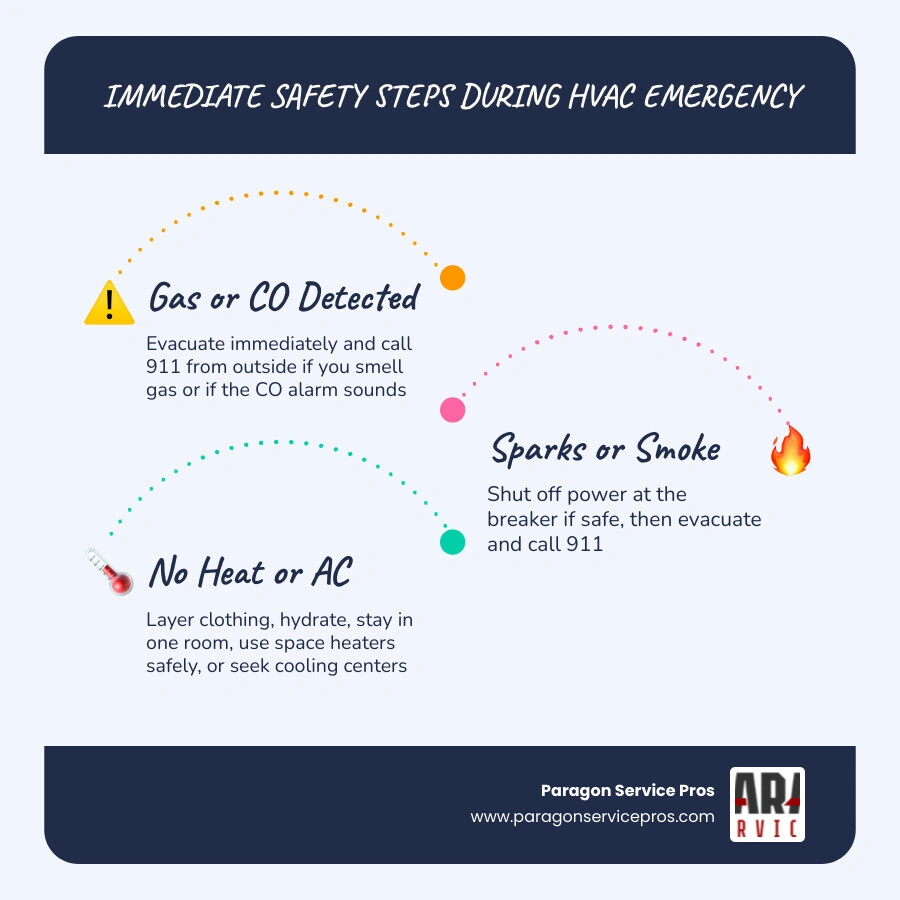
- Smell gas or rotten eggs? Evacuate everyone immediately, move at least 100 feet from the home, and call 911 from outside. Do not touch any switches.
- Carbon monoxide alarm sounding? Get everyone out now and call 911. Do not re-enter until cleared by emergency responders.
- See sparks, smoke, or smell burning plastic? Shut off power at the main breaker if it is safe to do so, then evacuate and call 911.
- No heat in freezing temps? Layer clothing, gather in one room, use a UL-listed space heater safely, and call for professional HVAC service.
- No AC in extreme heat? Move to the coolest room, close blinds, stay hydrated, and seek a public cooling center if indoor temps exceed 90°F.
- No immediate hazard? Check your thermostat settings, circuit breaker, and air filter before calling for help — about 25% of perceived emergencies are resolved by these simple steps.
Extreme heat kills more people each year than any other weather event in the United States, and about 70% of homeowners experience an HVAC breakdown during peak seasons — exactly when they need their systems most. In Arizona's desert climate, that statistic is not just a number. It is a real risk that can affect your family, your pets, and your neighbors.
Whether your furnace goes out on a rare cold night in Mesa or your AC quits during a July heat advisory in Chandler, having a clear plan before the emergency happens makes all the difference.
Quick how to stay safe during a heating or cooling emergency definitions:
- emergency hvac repair tips for the phoenix east valley homeowners
- when an hvac failure is a true emergency
How to Stay Safe During a Heating or Cooling Emergency: Triage Your Situation
When your home’s climate control system fails, your first instinct might be to panic. However, taking a deep breath and performing a quick mental triage of the situation can keep you safe and save you unnecessary stress. In many cases, a system failure is a frustrating inconvenience. In other cases, it is a life-threatening emergency.
Understanding the difference helps you decide whether to shelter in place, attempt basic troubleshooting, or evacuate your home immediately. To help you navigate these critical moments, we look at the situation through the lens of When an HVAC Failure is a True Emergency. Knowing when to make that urgent call ensures your family stays protected, and taking advantage of the Advantages of Same Day Service and Emergency Support can restore your peace of mind before indoor conditions deteriorate.
Immediate Safety Steps for Life-Threatening Hazards
Some HVAC failures come with immediate physical warning signs that require you to leave your home without delay. If you encounter any of the following hazards, do not stop to pack belongings or attempt to fix the system yourself:
- Gas Leaks (Rotten Egg Odor): Natural gas is naturally odorless, so utility companies add a chemical called mercaptan to give it a distinct "rotten eggs" smell. If you smell this inside your home, evacuate immediately. Do not flip light switches, use your phone, or start your car near the home, as a single spark can ignite the gas. Once you are at least 100 feet away, call 911 and your gas utility provider.
- Carbon Monoxide (CO) Alarms: Carbon monoxide is a colorless, odorless, and tasteless gas produced by incomplete combustion in gas furnaces. If your CO detector sounds, treat it as a life-or-death situation. Evacuate everyone, including pets, into the fresh air immediately and call 911. Symptoms of CO poisoning include dull headaches, dizziness, nausea, weakness, and confusion.
- Smoke, Sparks, or Burning Smells: If you see smoke coming from your registers, see sparks flying from your indoor or outdoor unit, or smell burning plastic or electrical components, turn off your system at the thermostat or main electrical panel if it is safe to do so. Evacuate the house and call 911 immediately.
How to Stay Safe During a Heating or Cooling Emergency: Inconvenience vs. Emergency
If there are no immediate hazards like gas or smoke, you need to determine if your situation is an urgent emergency or a non-critical inconvenience. This depends largely on outdoor weather advisories, current indoor temperatures, and who lives in your home.
We generally classify these situations using specific temperature and health thresholds:
- The Comfort Inconvenience: If the outdoor temperature is a mild 75°F and your AC stops working, your home may get slightly warm, but it does not pose an immediate health risk. This situation can typically wait for a standard service appointment during regular business hours.
- The Weather-Critical Emergency: If outdoor temperatures are soaring past 105°F during an Arizona summer heatwave, or dropping below freezing on a winter night, a total system failure is a true emergency. Without intervention, indoor temperatures will quickly reach dangerous levels.
- The Vulnerability Factor: An otherwise manageable temperature shift can become a major emergency if your household includes infants, elderly family members, pregnant women, or individuals with chronic medical conditions. For these vulnerable groups, staying safe during a heating or cooling emergency means getting professional help on the way immediately.
For localized advice on managing these situations in our unique desert climate, check out our comprehensive guide on Emergency HVAC Repair Tips for the Phoenix East Valley Homeowners.
Surviving the Deep Freeze: Winter Heating Crisis Management
While Arizona is famous for its blistering summers, winter nights in the Phoenix East Valley can catch homeowners off guard. Temperatures in Gilbert, Mesa, and Queen Creek can drop into the 30s and even below freezing. If your furnace fails during a winter cold snap, your home can lose heat rapidly.

When your heating system fails, acting quickly to preserve indoor warmth is essential. Our team provides reliable Emergency Furnace Service to get your system back online, but while you wait for a technician to arrive, you must take steps to keep your family warm. If you live in Mesa, you can also consult our Emergency Furnace Repair Mesa AZ Guide for targeted local recommendations.
Safe Temporary Heating and Insulation Tips
To keep your home warm without a central furnace, you need to trap as much heat as possible and use temporary heating sources safely.
- Isolate a "Warm Room": Pick one central room in the house to gather your family. Close the doors to all other rooms, closets, and hallways to concentrate your body heat and any temporary heat sources in a smaller space.
- Block Drafts: Roll up towels and place them at the base of exterior doors. Hang heavy blankets or quilts over windows and drafty doorways to prevent cold air from seeping in.
- Layer Up: Put on thermal undergarments, sweaters, warm socks, and hats. Body heat escapes quickly from your head, so wearing a beanie indoors makes a massive difference.
- Use Space Heaters Safely: If you use electric space heaters, follow the 3-foot rule: keep them at least three feet away from furniture, curtains, bedding, and anything flammable. Always plug space heaters directly into the wall outlet, never into an extension cord or power strip, and turn them off when you go to sleep. Never use your gas oven, stovetop, or outdoor grill to heat your home, as this introduces a severe risk of fire and fatal carbon monoxide poisoning.
Your Emergency Temperature Kit Checklist
Keep these essential items in an easily accessible location so you are always prepared for a winter heating failure:
- Flashlights and extra batteries (avoid candles due to fire risks)
- Heavy wool blankets or sleeping bags
- Warm winter clothing (beanies, gloves, thermal layers)
- Bottled drinking water (at least one gallon per person per day)
- Non-perishable, high-calorie snacks
- A fully charged portable power bank for your cell phone
- A UL-listed electric space heater with automatic tip-over shut-off
Preventing Frozen Pipes During a Heating Failure
When indoor temperatures drop during a severe cold snap, your plumbing is at risk. Frozen pipes can crack and burst, leading to catastrophic water damage once they thaw.
To protect your home while your heating system is down, follow these simple prevention steps:
- Drip the Faucets: Turn on your faucets to a very slow, warm drip. Moving water is much harder to freeze, and letting the faucet drip relieves pressure within the pipes, preventing them from bursting even if the water inside does freeze.
- Open Cabinet Doors: Keep the cabinet doors under your kitchen and bathroom sinks wide open. This allows what little warm air is left in your home to circulate around the plumbing.
- Insulate Exposed Pipes: If you have exposed pipes in unconditioned spaces like garages or crawlspaces, wrap them in foam pipe insulation or even old towels.
For residents in Gilbert facing these freezing conditions, our Emergency Furnace Repair Gilbert AZ Guide offers excellent localized insights on keeping both your heating system and your home's infrastructure safe.
Beating the Heat: Summer Cooling Emergency Strategies
An AC failure in the middle of a Phoenix East Valley summer is not just uncomfortable — it can quickly escalate into a medical crisis. When outdoor temperatures exceed 110°F, indoor temperatures in a closed home can climb past 90°F in a matter of hours.
During a summer cooling failure, your primary goal is to keep your body temperature down while waiting for professional help. If you find yourself in this situation in Chandler, reach out for Emergency AC Repair Chandler to restore your home's cooling as fast as possible.
How to Stay Safe During a Heating or Cooling Emergency in Extreme Heat
To survive a summer AC outage safely, you must understand how your body reacts to heat and know when your cooling strategies are actually working against you.
- Recognize Heat Illnesses: Monitor everyone in your home for signs of heat exhaustion and heat stroke. Heat exhaustion symptoms include heavy sweating, pale or clammy skin, a fast and weak pulse, muscle cramps, dizziness, headache, and nausea. If these symptoms appear, move the person to a cooler area, apply cool, wet cloths, and have them sip water. If symptoms progress to heat stroke — marked by a body temperature above 103°F, red, hot, dry skin (no sweating), a rapid, strong pulse, confusion, or loss of consciousness — call 911 immediately. Heat stroke is a life-threatening medical emergency.
- Understand Fan Limitations: Electric fans are great for circulating air, but they do not cool the air temperature. When indoor temperatures rise above 90°F, blowing hot air across your skin can actually accelerate dehydration and increase heat stress. Do not rely on fans as your primary cooling source in an extremely hot house.
- Stay Hydrated: Drink plenty of water before you even feel thirsty. Avoid sugary, caffeinated, or alcoholic beverages, as they contribute to dehydration.
- Cool Your Body Directly: Take cool showers or baths, or drape cool, wet towels over your neck, forehead, and underarms to bring your core body temperature down.
Protecting Vulnerable Household Members and Pets
Infants, the elderly, and pets are particularly susceptible to extreme heat because their bodies cannot regulate temperature as efficiently as healthy adults.
- Infants and Children: Never leave infants or young children in warm rooms. Dress them in loose, lightweight clothing and monitor them closely for lethargy or flushed skin.
- Seniors: Check on elderly family members or neighbors frequently. Ensure they have access to plenty of water and a cool environment.
- Pets: Dogs and cats do not sweat like humans; they rely on panting to cool down. Keep your pets indoors, provide plenty of fresh, cool water, and never leave them in a room without proper ventilation. That hot pavement and asphalt can severely burn your pet's paws, so avoid outdoor walks during the heat of the day.
If your home becomes unsafely hot, do not hesitate to seek shelter at a public cooling center, local library, or shopping mall until your cooling system is repaired.
Basic Troubleshooting Before Calling for Professional Help
Before you make an emergency service call, it is always a good idea to perform a few basic, safe checks. Around 25% of all HVAC service calls are resolved by simple adjustments that you can easily do yourself.
To keep your system running smoothly and prevent unexpected failures, regular maintenance is key. If you are in Mesa, our Emergency Furnace Maintenance Mesa AZ Guide is a helpful resource. For those in Queen Creek, we recommend checking out our Emergency Furnace Maintenance Queen Creek AZ Tips to keep your heating system in peak condition.
To help you understand what you can safely handle on your own versus when it is time to call in our professional team, review the comparison table below:
| DIY Troubleshooting Step | Why It Matters | Professional HVAC Task | Why It Requires a Pro |
|---|---|---|---|
| Check Thermostat Batteries & Settings | A dead battery or wrong mode setting (e.g., "Heat" instead of "Cool") can make your system seem completely broken. | Refrigerant Leak Detection & Repair | Handling chemical refrigerants requires specialized EPA certification and tools to prevent environmental and physical harm. |
| Inspect Circuit Breakers | A power surge can trip the breaker. Reset it once. If it trips again immediately, leave it off and call us. | Electrical Component Replacement | Replacing bad capacitors, contactors, or wiring involves high-voltage risks that can cause severe injury if mishandled. |
| Replace Dirty Air Filters | A clogged filter restricts airflow, which can cause your AC coil to freeze or your furnace heat exchanger to overheat and shut down. | Heat Exchanger Inspection & Repair | A cracked heat exchanger can leak deadly carbon monoxide into your home and must be inspected and replaced by a professional. |
| Clear Outdoor Unit Debris | Leaves, dirt, and weeds blocking your outdoor condenser unit restrict heat transfer, causing the system to work harder and shut down. | Compressor & Motor Replacement | These heavy, complex mechanical components require precise calibration and professional installation to ensure system safety. |
Frequently Asked Questions about HVAC Emergencies
What is the very first thing I should do if I smell rotten eggs near my furnace?
If you smell a rotten egg odor near your furnace, you must assume there is a natural gas leak. Evacuate your home immediately. Do not turn any lights on or off, do not unplug any appliances, and do not use your cell phone or garage door opener inside the house, as any small electrical spark could trigger an explosion. Get everyone (including pets) at least 100 feet away from the property, and then call 911 and your local gas utility provider. Do not return to the home until emergency officials have declared it safe.
Why shouldn't I rely on electric fans when my home is over 90°F?
When the indoor temperature rises above 90°F, the air is hotter than your body's natural skin temperature. At this point, blowing hot air directly over your skin behaves like a convection oven — it actually transfers heat to your body rather than cooling you down. This process accelerates sweat evaporation and speeds up dehydration, significantly increasing your risk of heat exhaustion or heat stroke. Instead of relying on fans, use cool water on your skin, drink plenty of fluids, and seek an air-conditioned space.
When is a heating failure considered a true emergency in Arizona?
While winter in Arizona is generally mild, a heating failure becomes a true emergency when outdoor temperatures drop below 40°F, especially if your household includes vulnerable residents like infants, the elderly, or individuals with chronic medical conditions. Additionally, if your furnace failure is accompanied by a carbon monoxide alarm, a gas smell, or burning odors, it is an immediate safety emergency.
If your system is older and experiencing frequent breakdowns during these cold spells, you may want to explore our Emergency Furnace Replacement Gilbert AZ Tips or read about our services for Emergency Furnace Replacement in Queen Creek AZ to find a reliable, long-term solution.
Conclusion
Knowing how to stay safe during a heating or cooling emergency is an essential part of protecting your home and family. By understanding how to triage a crisis, perform basic troubleshooting, and protect vulnerable family members, you can navigate any unexpected HVAC breakdown with confidence.
The single best way to prevent a heating or cooling emergency is through regular, proactive maintenance. Investing in seasonal tune-ups makes your system 50% less likely to break down when you need it most, while keeping it running up to 15% to 20% more efficiently.
At Paragon Service Pros, we are dedicated to keeping our neighbors in Chandler, Gilbert, Gold Canyon, Mesa, Queen Creek, and San Tan Valley safe and comfortable all year round. Whether you need a seasonal check-up to prevent winter worries or require fast, professional HVAC Repair to beat the summer heat, our clean, transparent, and expert team is here to help. Contact us today to schedule your service and keep your home's comfort system in peak condition!
Keep reading: Heating & Furnaces
Browse every article in Heating & Furnaces or head back to the Learning Center .
Comfort you can count on, all year long.
Same-day service, honest diagnostics, and 24/7 emergency help with no overtime fees. A real Greater Phoenix team is standing by.