
Spring Cleaning for Your Lungs and Your HVAC
Master your spring air filter replacement guide: Beat Arizona dust & allergies, boost HVAC efficiency with step-by-step tips!

Why Spring Is the Most Important Time to Replace Your Home's Air Filter
A spring air filter replacement guide is exactly what Arizona homeowners need right now. As April 2026 brings rising pollen counts, desert dust, and the first real push of HVAC use before summer, your air filter is working harder than ever — and if it's been sitting in place since fall, it's likely already struggling.
Here's a quick overview of what spring air filter replacement involves:
- Turn off your HVAC system at the thermostat or power switch
- Locate your filter — usually at the return air vent or inside the air handler cabinet
- Check the size printed on the old filter's frame
- Remove the old filter and dispose of it carefully
- Insert the new filter with the airflow arrow pointing toward the furnace or air handler
- Restore power and confirm the system is running normally
For most Arizona homes, filters should be checked monthly and replaced every 30 to 60 days — more often if you have pets, allergies, or live near dusty desert terrain.
Spring is the toughest season for your indoor air. Pollen surges, dust stirs up after months indoors, and your HVAC kicks back into high gear. A clogged filter can't trap new allergens — it may actually push them back into your living spaces. The good news is that replacing your filter is one of the simplest, most effective maintenance tasks you can do yourself in under 15 minutes.
This guide covers everything: how to choose the right filter for Arizona's spring allergens, step-by-step replacement instructions, tips for window units and car cabin filters, and when to call a professional.
Why You Need a Spring Air Filter Replacement Guide

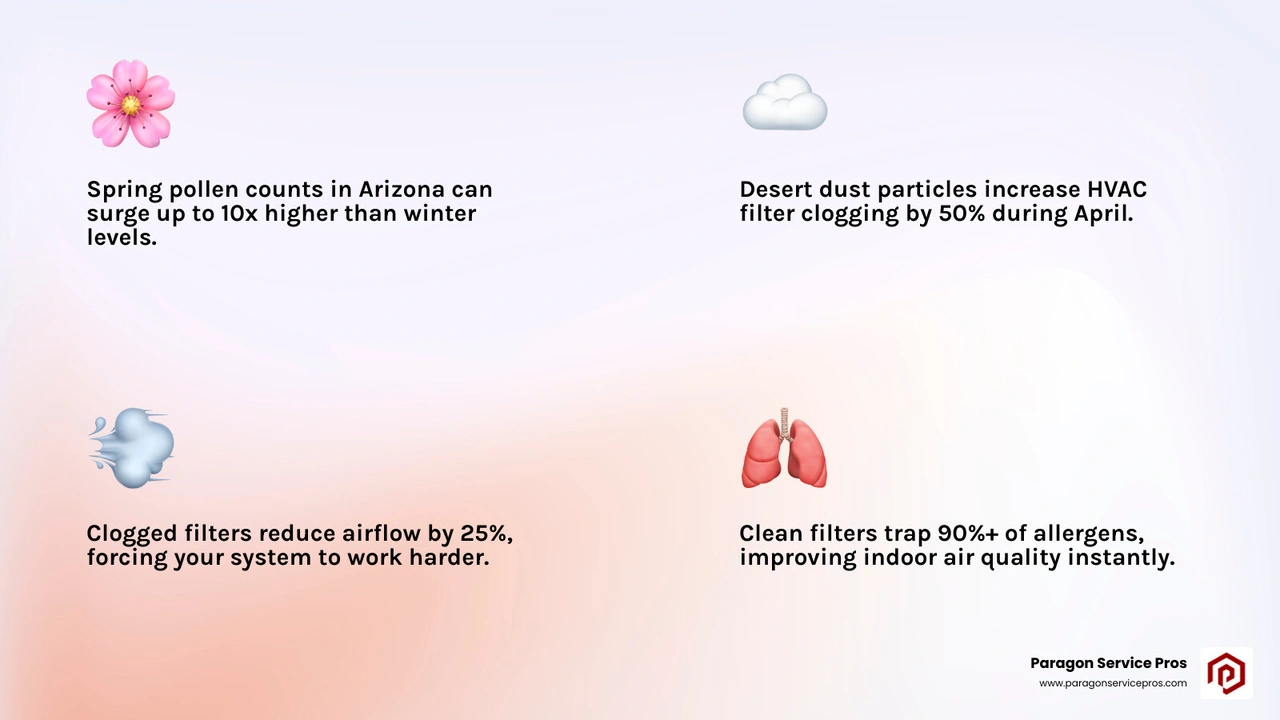
In places like Chandler and Mesa, spring isn't just about blooming wildflowers; it’s about the massive surge in pollen and desert dust that hitches a ride on every breeze. When you open your windows to enjoy the April 2026 weather, those particles find their way into your home and, eventually, your HVAC system.
Without a reliable spring air filter replacement guide, your system can quickly become a bottleneck for air quality. A clogged filter does more than just let dust settle on your coffee table; it restricts airflow, forcing your air conditioner to work twice as hard to move air through the house. This extra strain can significantly shorten the lifespan of your expensive equipment.
By following a regular replacement schedule, you tap into 15 Benefits of Regularly Replacing Your HVAC Filters, including:
- Enhanced Airflow: Your system breathes easier, which means you stay cooler.
- Energy Savings: A clean filter can help lower your monthly utility bills by reducing the workload on the blower motor.
- System Longevity: Reducing strain prevents premature breakdowns of internal components like the compressor or fan motor.
- Allergen Control: High-quality filters trap the microscopic triggers that cause spring sneezing fits.
Think of your air filter as the primary defense for your home. As we transition into the hotter months, Seasonal HVAC Maintenance: Preparing Your System for Year-Round Comfort becomes essential. In the East Valley, where dust is a constant companion, neglecting this simple task is like trying to run a marathon while breathing through a thick wool blanket.
Selecting the Best Filter for Arizona’s Spring Allergens
Not all filters are created equal, especially when you’re dealing with Arizona’s unique environmental challenges. When you look at the frame of a filter, you’ll see a MERV (Minimum Efficiency Reporting Value) rating. This rating, ranging from 1 to 16 for residential use, tells you how effectively the filter traps particles.
For most families in Gilbert or Queen Creek, finding the "sweet spot" is key. If the MERV rating is too low (like a MERV 1-4 fiberglass filter), it only catches large lint and dust bunnies, letting pollen and bacteria sail right through. If it’s too high (MERV 14+), it might restrict airflow so much that it damages an older HVAC system.
Understanding Your Options
- Fiberglass/Non-Pleated Filters: These are the inexpensive, flat filters. We generally recommend avoiding these during spring because they need to be changed every 30 days and offer very little protection against allergens.
- Pleated Filters: These have ridges that provide a larger surface area to trap particles. They are the gold standard for residential use and can last up to 90 days in ideal conditions, though we recommend checking them every 30 days during an Arizona spring.
- HEPA-Style Filters: These offer the highest level of filtration but often require professional modification to your HVAC system to handle the significant pressure drop they cause.
| Filter Type | MERV Rating | What It Traps | Best Use Case |
|---|---|---|---|
| Basic Fiberglass | 1 - 4 | Large lint, dust bunnies | Minimal protection |
| Standard Pleated | 5 - 8 | Dust mites, mold spores, pollen | General use in AZ |
| High-Efficiency | 9 - 12 | Lead dust, flour, pet dander | Allergy sufferers |
| Superior Pleated | 13 - 16 | Bacteria, smoke, microscopic allergens | Maximum IAQ |
For most Arizona homes, a MERV 8 to MERV 11 filter provides an excellent balance of filtration and airflow. It’s one of the Essential Maintenance Tips for Your Heating and Cooling System to ensure your filter matches your specific needs, especially if you have pets or suffer from severe seasonal allergies.
Step-by-Step Instructions for Your Spring Air Filter Replacement Guide
Ready to get your hands a little dusty? Replacing your filter is a quick DIY win. Before you start, you need to find where your filter lives. In Arizona homes, it’s usually in one of two places:
- The Return Air Register: This is the large grate on your wall or ceiling.
- The Air Handler Cabinet: This is the large metal box (usually in a closet, attic, or garage) that houses the blower motor.
Preparation
First, you must identify the correct size. Look at your old filter; the dimensions (e.g., 20x25x1) should be printed on the side. This is the "nominal size." If the size isn't there, use a tape measure to get the length, width, and thickness.
Safety is paramount. Always turn off your HVAC system at the thermostat before opening the filter housing. This prevents the system from sucking in unfiltered air — or your fingers — while the filter is removed.
As you prepare for the heat, ask yourself: Is Your AC Ready for Spring? Top Tips for a Successful Tune-Up. Changing the filter is the first step in that process.
Executing Your Spring Air Filter Replacement Guide Steps
Once you have your new filter and the power is off, follow these steps:
- Access the Filter: Unscrew the latches on your return grate or slide open the door on your air handler.
- Observe the Old Filter: Before you pull it out, look for the "Airflow" arrow. It should be pointing toward the HVAC unit (the furnace or the blower).
- Remove and Inspect: Gently slide the old filter out. If it’s gray, fuzzy, or you can’t see light through it, it’s definitely time for a change.
- Clean the Area: Use a damp microfiber cloth or a vacuum attachment to wipe away any dust buildup on the grate or inside the housing. This prevents "blow-by," where dust bypasses the new filter.
- Insert the New Filter: Slide the new filter in. Crucial Tip: Ensure the arrow on the new filter points in the same direction as the old one (toward the system). Installing it backward makes the system work harder and reduces efficiency.
- Seal and Secure: Close the grate or cabinet door. Make sure the latches click into place.
- Restore Power: Turn the system back on at the thermostat.
This simple routine is a cornerstone of Seasonal Air Conditioning Preparation Tips for Optimal Performance.
Final Tips for Your Spring Air Filter Replacement Guide
To make maintenance even easier, consider these modern solutions:
- Smart Filters: Some newer filters come with sensors that sync to an app on your phone, notifying you exactly when airflow is restricted enough to require a change.
- Subscription Services: Many retailers offer automated deliveries. This is a great "set it and forget it" way to ensure you always have a fresh filter ready for the first of the month.
- Visual Checks: Don't just rely on the calendar. In San Tan Valley or Gold Canyon, a single dust storm can clog a "3-month" filter in a matter of days.
- The "Trash Bag" Trick: When removing a very dusty filter, have the new filter's plastic packaging or a trash bag ready. Slide the old filter directly into the bag to prevent spreading dust throughout your home.
While DIY replacement is great, nothing beats a professional AC Annual Service to ensure the rest of your system — like the coils and condensate lines — is as clean as your new filter.
Maintenance for Window Units and Car Cabin Filters
While central HVAC is the star of the show, don't forget the other filters that keep you comfortable.
Window AC Units
If you use a window unit in a workshop or guest room, these often have washable, reusable filters.
- Unplug the unit.
- Remove the front cover to access the mesh filter.
- Vacuum off the heavy dust.
- Wash it in the sink with warm, soapy water.
- Important: Let it air dry completely before reinstalling. A damp filter is a breeding ground for mold.
Car Cabin Air Filters
Did you know your car has an HVAC filter too? It’s called the cabin air filter, and spring is the perfect time to change it.
- The Benefit: Statistics show that replacing a clogged air filter can improve acceleration by up to 11% and boost gas mileage by 10%.
- The Frequency: Most manufacturers suggest a change every 12,000 to 15,000 miles.
- DIY Tip: In many vehicles, like a Kia or Jeep, the filter is located right behind the glove box. Swapping it out takes less than 15 minutes and ensures you aren't breathing in road exhaust and desert pollen while driving through Mesa.
Properly maintaining these smaller systems is just as vital as your Winter Prep Checklist: AC Repair and Maintenance for your main home system.
Frequently Asked Questions about Spring Air Filter Maintenance
How often should I change my filter in Arizona?
In Arizona's dusty environment, we recommend checking your filter every 30 days. While some pleated filters claim to last 90 days, the high volume of dust in areas like Gilbert and San Tan Valley often necessitates a change every 1 to 2 months. If you have multiple pets or suffer from heavy allergies, stick to a strict 30-day schedule. Regular AC Maintenance starts with this simple habit.
What are the signs my filter needs immediate replacement?
Keep an eye out for these red flags:
- Visible Dust: If the filter looks gray or has a thick layer of lint.
- Reduced Airflow: If the air coming from your vents feels weaker than usual.
- Rising Bills: An unexplained spike in your energy bill often means the system is struggling against a clogged filter.
- Musty Smells: If you notice a "dusty" or "old" smell when the AC kicks on.
- Frequent Sneezing: If your allergy symptoms flare up specifically when you’re indoors.If you notice these along with other issues, check our guide on 11 Signs Your AC Needs Professional Maintenance.
Can I use a high MERV filter in an older system?
Be cautious here. High MERV filters (13+) are thicker and denser. In an older system, the blower motor might not be strong enough to pull air through that dense material. This creates a "pressure drop" that can cause the evaporator coil to freeze or the motor to burn out. If you want to upgrade your filtration, it’s best to have a professional consultation to ensure your system can handle the load.
Conclusion
Taking control of your home’s air quality doesn’t have to be complicated. By following this spring air filter replacement guide, you’re protecting your family’s health and your wallet. Whether you’re in Chandler, Gilbert, Mesa, Queen Creek, San Tan Valley, or Gold Canyon, a clean filter is your first line of defense against the Arizona elements.
At Paragon Service Pros, we prioritize your comfort and satisfaction. We believe in complete transparency and quality workmanship in every job we do. If you’ve changed your filter but your system still feels sluggish, or if you want the peace of mind that comes with a professional inspection, we’re here to help.
Don’t let the spring dust win. Keep your system running efficiently and your indoor air fresh all season long. For expert assistance with your HVAC Maintenance or any cooling needs, reach out to us today!
Keep reading: Indoor Air Quality
Browse every article in Indoor Air Quality or head back to the Learning Center .
Comfort you can count on, all year long.
Same-day service, honest diagnostics, and 24/7 emergency help with no overtime fees. A real Greater Phoenix team is standing by.