
Beginner's Guide to HVAC Maintenance Plans
Discover what does an HVAC maintenance plan include for Arizona homes and learn how bi-annual tune-ups boost efficiency and prevent breakdowns.

What an HVAC Maintenance Plan Includes — and Why It Matters for Arizona Homeowners
What does an HVAC maintenance plan include is one of the most important questions you can ask before signing a service agreement. Here is a quick breakdown of what a standard plan typically covers:
- Seasonal tune-ups — two professional visits per year (spring for cooling, fall for heating)
- Multi-point inspection — up to 30 separate checks per visit, taking 60–90 minutes
- Coil cleaning — evaporator and condenser coils cleaned to restore efficiency
- Refrigerant level check — verified and documented to protect your compressor
- Thermostat calibration — tested and adjusted for accurate temperature control
- Electrical safety checks — connections tightened, voltage and amperage measured
- Condensate drain flushing — cleared to prevent water damage and mold growth
- Heat exchanger inspection — checked for cracks that could cause carbon monoxide leaks
- Filter service — inspected and replaced to maintain healthy airflow
- Written service report — documented proof of care for warranty compliance
- Priority scheduling — members typically get faster response times
- Repair discounts — reduced labor rates on any needed repairs
Think of an HVAC maintenance plan the way you think of routine oil changes for your car. You stay ahead of problems on a predictable schedule instead of scrambling when something breaks — often on the hottest day of a Mesa summer or the coldest January night in Gilbert.
In the Arizona desert, where cooling systems run hard for months on end, skipping this kind of preventive care is a risk most homeowners cannot afford. A neglected HVAC system can lose roughly 5% of its operating efficiency every single year — and up to 95% of major breakdowns can be prevented with regular tune-ups.
This guide walks you through every component of a professional maintenance agreement so you know exactly what you are paying for and what to expect.
Understanding the Basics: Maintenance Plans vs. Warranties
When you buy a home or install a new air conditioner in Chandler or Queen Creek, you will hear a lot of terms thrown around: manufacturer warranties, home warranties, and maintenance plans. It is easy to get them confused, but they serve completely different purposes. Relying on warranties alone without a maintenance plan can leave you with unexpected repair bills and a system that fails years before its time.
A manufacturer warranty is your safety net against factory defects. If a major component like your compressor or heat exchanger fails prematurely due to a manufacturing error, the maker of your system covers the cost of the replacement part. However, there is a major catch: these warranties almost never cover the cost of labor, and they require documented proof of annual professional maintenance to remain valid. If you cannot prove your system was serviced regularly, the manufacturer can—and often will—deny your claim.
A home warranty is a separate service contract you buy (or receive during a home sale) that covers various home systems when they break down. While they sound convenient, home warranties are reactive. They do not prevent your AC from breaking down on a 115-degree July afternoon; they only help manage the fallout after it happens. Furthermore, home warranty companies often require service fees for every visit and may use the cheapest available parts or contractors.
An HVAC maintenance plan is a proactive agreement between you and a trusted local contractor. Instead of waiting for a breakdown, we schedule regular visits to clean, inspect, calibrate, and optimize your system. This proactive approach keeps your system running efficiently, catches minor issues before they turn into costly emergencies, and provides the documentation you need to keep your manufacturer warranty fully intact.
| Feature | Manufacturer Warranty | Home Warranty | HVAC Maintenance Plan |
|---|---|---|---|
| Primary Focus | Defective parts replacement | Reactive breakdown coverage | Proactive prevention & efficiency |
| Labor Costs Covered | No (typically parts only) | Sometimes (minus service fees) | Included in scheduled tune-up visits |
| Required Maintenance | Must be performed annually | Often required to approve claims | This is the service that fulfills the requirement |
| Perks Included | None | None | Priority scheduling, repair discounts |
| Goal | Protect against factory errors | Limit financial risk of failure | Extend lifespan & lower monthly bills |
Investing in a structured plan ensures your equipment runs safely and efficiently while protecting your wallet from sudden, catastrophic failures. For a deeper look at whether this investment makes sense for your household, read our detailed guide on Annual HVAC Maintenance: Is It Worth It?
What Does an HVAC Maintenance Plan Include?
A comprehensive maintenance plan is not just a quick visual inspection and a filter swap. True preventive care is a highly technical process. When our certified technicians visit your home in San Tan Valley or Gold Canyon, they follow a rigorous multi-point checklist designed to evaluate every mechanical and electrical component of your system.
A standard maintenance visit typically takes about one to two hours. During this time, the technician focuses on several core areas:
- Thermostat Calibration: We test your thermostat to ensure it is communicating accurately with your heating and cooling systems. A miscalibrated thermostat can cause your system to short-cycle (turn on and off too quickly), which wastes energy and places unnecessary strain on vital components.
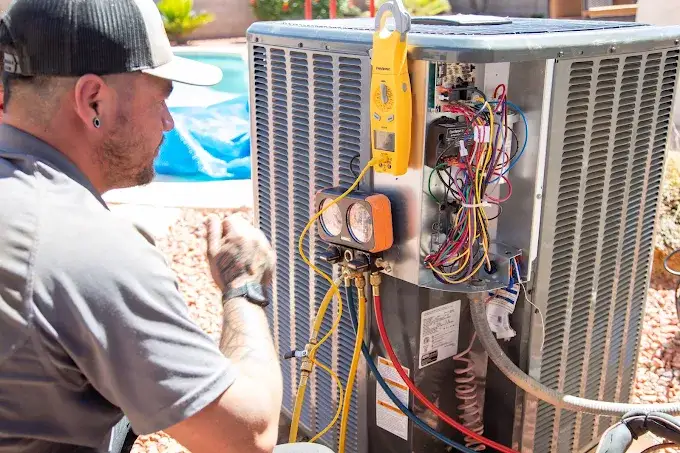
- Electrical Connections and Safety Controls: Loose electrical connections are a leading cause of emergency service calls and can even pose a fire hazard. We inspect and tighten all wiring connections, measure voltage and amperage draws on motors, and test safety shut-off controls to ensure your system operates safely.
- Airflow and Blower Calibration: Proper airflow is critical to your home comfort. We inspect the blower assembly, calibrate the blower motor, and check the condition of the blower belt (if applicable) to ensure air is moving efficiently through your ductwork.
- System Cleaning: Dust and dirt are the natural enemies of your HVAC system. We clean away debris from key internal areas, which helps prevent friction, overheating, and premature wear on moving parts.
By keeping these foundational components clean and calibrated, we set your system up for success. To learn more about what you can do between our visits to keep things running smoothly, check out our Essential Maintenance Tips for Your Heating and Cooling System.
What does an hvac maintenance plan include for cooling systems?
When we transition into the hot spring and summer months, our focus shifts entirely to making sure your air conditioner can handle the intense desert heat. A cooling-specific tune-up is designed to optimize heat transfer and keep your home ice-cold when the outdoor temperatures soar.
Here is what is typically included in the cooling portion of your maintenance plan:
- Condenser and Evaporator Coil Cleaning: Your AC cools your home by absorbing indoor heat and releasing it outside. Dirty coils act like an insulating blanket, forcing your system to work much harder to transfer heat. Cleaning dirty coils can reduce energy consumption by up to 15% and restore lost cooling capacity.
- Refrigerant Level Verification: Low refrigerant levels indicate a leak. We measure refrigerant pressures using precise super-heat and sub-cool calculations. Running an AC with incorrect refrigerant levels can permanently damage the compressor—the expensive "heart" of your cooling system.
- Condensate Drain Line Flushing: As your AC cools the air, it also removes moisture. This moisture collects in a condensate pan and drains away. Over time, algae and sludge can build up in the drain line, leading to clogs. We flush the drain line to prevent water from backing up and causing serious water damage to your ceilings or floors.
- Compressor and Capacitor Testing: The capacitor acts like a battery that gives your compressor the boost it needs to start up. If your AC stutters when turning on, the capacitor may be failing. We test these electrical components to catch weak parts before they leave you stranded on a weekend without cooling.
To ensure your cooling system is fully prepared for the next summer heatwave, explore our professional AC Service Plans.
What does an hvac maintenance plan include for heating systems?
While Arizona is famous for its heat, winter nights in places like Gold Canyon and Queen Creek can get surprisingly chilly. When the temperatures drop, you need to know your heating system will run reliably and, most importantly, safely.
During the fall heating check, our technicians focus heavily on safety and combustion efficiency:
- Heat Exchanger Inspection: In a gas furnace, the heat exchanger is the metal chamber where gas is burned to create heat. If this metal cracks due to years of expanding and contracting, dangerous carbon monoxide gas can leak into your home's breathing air. We inspect the heat exchanger thoroughly for any signs of rust, corrosion, or microscopic cracks.
- Carbon Monoxide and Safety Testing: We electronically monitor for carbon monoxide during the heating cycle and test all safety limit switches. These switches are designed to shut the furnace down automatically if it begins to overheat.
- Burner Assembly Cleaning: Dirty burners can lead to incomplete combustion, which wastes gas and produces higher levels of carbon monoxide. We clean and adjust the burners to ensure a clean, efficient, bright blue flame (a yellow flame is a major warning sign of dirty burners or poor combustion).
- Ignition and Fuel Line Checks: We test the ignition system (whether it is a pilot light or electronic igniter) to ensure reliable startup, and we inspect all gas valves and connectors for secure, leak-free operation.
For complete peace of mind before the winter chill sets in, consider setting up a dedicated AC Maintenance Agreement that covers both your heating and cooling seasons.
Why Bi-Annual Service is Essential for Arizona Climates
If you live in a milder climate, a single annual HVAC visit might suffice. But here in the East Valley—including Chandler, Gilbert, Mesa, Queen Creek, and San Tan Valley—our extreme weather demands a bi-annual schedule.
Our cooling systems do not just run; they sprint for six to eight months out of the year. This intense operational load accelerates wear and tear. Scheduling a spring AC tune-up (typically in March or April) ensures your system is clean, lubricated, and structurally sound before the triple-digit temperatures arrive.
Similarly, a fall heating visit (typically in September or October) prepares your system for the winter. This is especially critical for homes utilizing heat pumps. Because a heat pump works year-round—providing cooling in the summer and reversing its cycle to provide heat in the winter—it never gets a true "off-season." A bi-annual maintenance cadence is the only way to keep a heat pump operating efficiently and prevent premature compressor failure.
Furthermore, our desert environment is filled with dust, pollen, and monsoonal debris. Outdoor condenser units can easily become choked with dirt, which restricts airflow and drives up your utility bills. Regular seasonal visits keep this debris from choking your system.
Ready to get your home prepared for the changing seasons? Read our guide on Seasonal HVAC Maintenance: Preparing Your System for Year-Round Comfort.
Key Benefits of Enrolling in a Professional Agreement
Enrolling in an HVAC maintenance plan is not an extra expense; it is a smart strategy that pays for itself in several key areas:
- Substantial Energy Savings: A dirty, neglected HVAC system has to work overtime to keep your home comfortable, which can increase your energy use by 15% or more. Regular professional maintenance can improve your system’s operating efficiency by 15% to 25%, keeping your utility bills as low as possible.
- Extended Equipment Lifespan: Replacing an HVAC system is a major home investment. Well-maintained systems routinely last 15 to 20 years, whereas neglected systems often fail prematurely around the 10-to-12-year mark. Spending a small amount on preventive care can add an extra 5 to 8 years of life to your equipment.
- Fewer Costly Breakdowns: There is nothing worse than an unexpected AC breakdown in the middle of a July heatwave. Up to 95% of major HVAC failures can be prevented through regular, timely tune-ups. Catching a weak capacitor or a slightly worn belt during a routine visit prevents a sudden, inconvenient shutdown later.
- Priority Scheduling and Member Perks: When the summer heat hits, HVAC companies get flooded with emergency calls. As a maintenance plan member, you skip to the front of the line with priority scheduling. Plus, most plans offer discounted rates on any repairs that do become necessary.
Discover how regular maintenance translates directly into household savings by reading our article on 11 Reasons Annual HVAC Maintenance Saves You Money.
DIY Maintenance Tasks vs. Professional Service
While a professional maintenance plan covers the complex, technical aspects of your system, there are several simple tasks you should perform to support your system's health:
- Replace Your Air Filters Regularly: This is the single most important task you can do. Check your filters monthly and replace them every 30 to 90 days (more often if you have pets or suffer from allergies). Clogged filters restrict airflow, which can cause your evaporator coils to freeze and increase your energy bills.
- Maintain Outdoor Unit Clearance: Keep shrubs, plants, and outdoor storage at least two feet away from your outdoor condenser unit. Your system needs room to breathe so it can release heat efficiently.
- Keep Return Vents Clear: Ensure your indoor return air vents are not blocked by furniture, drapes, or toys. Restricted airflow strains the blower motor.
- Change Thermostat Batteries: Replace your thermostat batteries annually to prevent your system from shutting down unexpectedly due to a dead thermostat.
Any task that requires opening the electrical cabinets, handling refrigerant, or checking gas lines must be left to a licensed professional. Handling refrigerant legally requires EPA Section 608 certification, and working with high-voltage electricity or gas valves carries significant safety risks.
To understand how professional safety checks protect your family and home, read our guide on How to Prevent HVAC Emergencies with Maintenance.
Frequently Asked Questions about HVAC Maintenance Plans
How long does a typical HVAC maintenance visit take?
A standard, thorough HVAC maintenance visit typically takes about 60 to 90 minutes per system. During this time, the technician is actively working through a comprehensive multi-point checklist—cleaning coils, testing electrical components, measuring airflow, and verifying safety controls. If a company claims to perform a "complete tune-up" in 15 minutes, they are likely only performing a quick visual check and changing the filter, which does not provide the deep preventive care your system needs.
Will skipping professional maintenance void my manufacturer warranty?
Yes, in almost all cases. Major HVAC manufacturers require documented proof of annual professional maintenance to keep their parts warranties valid. If a major component like your compressor fails within the warranty period, the manufacturer will often ask for service records before approving the replacement part. Enrolling in a maintenance plan ensures you have a continuous, documented service history to protect your investment.
How do basic, mid-tier, and premium maintenance plans differ?
Maintenance plans are typically structured in tiers to match different household needs and budgets:
- Basic Plans: These typically include your two seasonal tune-up visits (one spring, one fall), basic filter replacement, and a written system report.
- Mid-Tier Plans: In addition to the seasonal visits, mid-tier plans often include perks like priority scheduling, discounts on repair labor and parts, and waived diagnostic trip charges during emergencies.
- Premium Plans: These comprehensive plans may include advanced services like annual chemical coil cleaning, loyalty rewards that accumulate toward a future system replacement, and extended labor warranties on any repairs performed.
Conclusion
Your heating and cooling system is the heart of your home's comfort, especially here in the challenging Arizona desert. Protecting that investment requires more than just calling for help when something breaks down. By understanding what does an hvac maintenance plan include, you can make an informed decision to keep your system running at peak efficiency, lower your monthly energy bills, and avoid stressful summer breakdowns.
At Paragon Service Pros, we are dedicated to providing Chandler, Gilbert, Mesa, Queen Creek, and San Tan Valley homeowners with unmatched comfort, complete transparency, and quality workmanship.
Ready to stop worrying about your heating and cooling system and start enjoying year-round peace of mind? Explore our comprehensive Maintenance Plan options today and let our family take care of yours!
Keep reading: Maintenance & Tune-Ups
Browse every article in Maintenance & Tune-Ups or head back to the Learning Center .
Comfort you can count on, all year long.
Same-day service, honest diagnostics, and 24/7 emergency help with no overtime fees. A real Greater Phoenix team is standing by.