
How Often Should You Service Your HVAC: 4 Key Tips
Learn how often should you service your HVAC with 4 key tips for Arizona homeowners to boost efficiency and prevent breakdowns.

How Often Should You Service Your HVAC — And Why It Matters for Arizona Homeowners
How often should you service your HVAC is one of the most important questions you can ask as a homeowner in the East Valley — and the answer is simpler than you might think:
Quick Answer: Recommended HVAC Service Frequency
| System Type | Recommended Frequency | Best Timing |
|---|---|---|
| Central AC | Once per year (minimum) | Spring (March–May) |
| Gas Furnace | Once per year (minimum) | Fall (September–November) |
| Heat Pump | Twice per year | Spring and Fall |
| Older Systems (10+ years) | Twice per year | Spring and Fall |
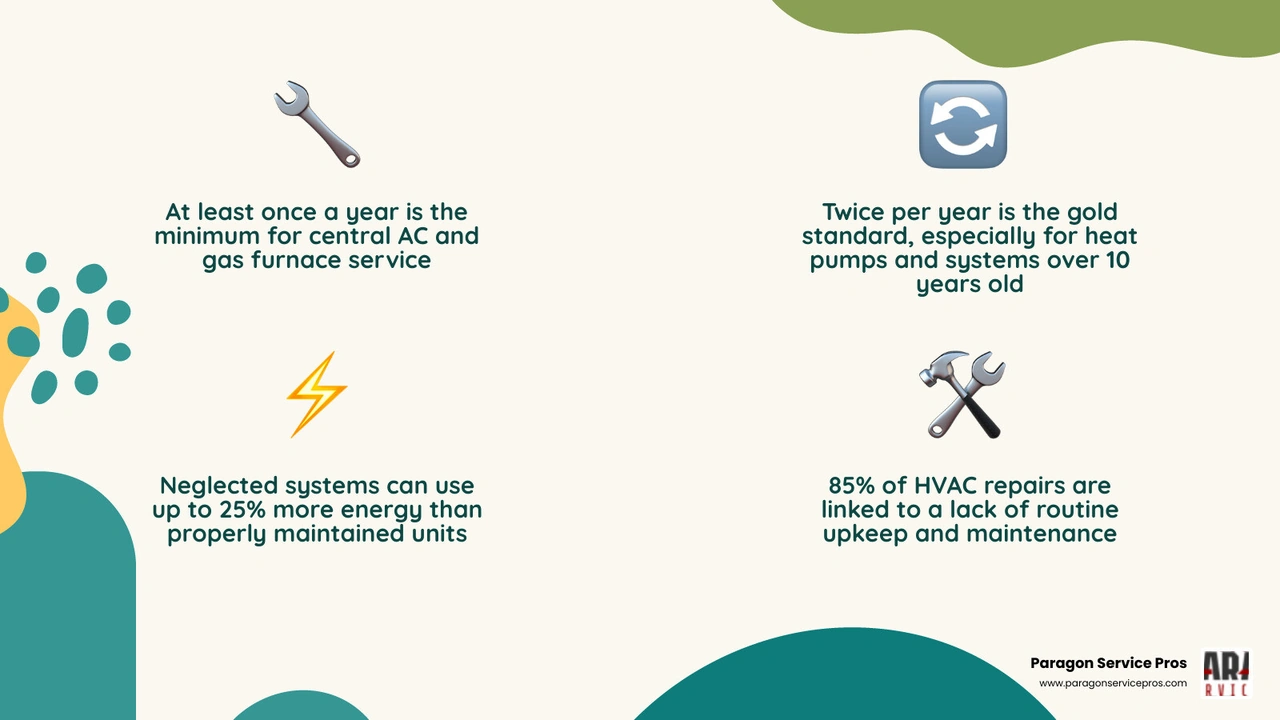
Most experts agree: at least once a year, but twice a year is the gold standard — once in spring before the cooling season, and once in fall before the heating season. If you have a heat pump or an older system, biannual service isn't optional — it's essential.
Here's why this matters more than most homeowners realize. A neglected HVAC system can use up to 25% more energy than one that's properly maintained. On top of that, 85% of HVAC repairs are linked to a simple lack of routine upkeep. That's not a small risk — especially in the Arizona desert, where your system works harder and longer than almost anywhere else in the country.
Think of it the way you think about oil changes for your car. You wouldn't skip them and hope for the best. Your HVAC system is no different — except the consequences of a breakdown in a Chandler or Mesa summer can be a lot more uncomfortable than a car stall.
This guide walks you through exactly how often to schedule service, what affects that frequency, what a professional tune-up covers, and what you can do yourself between visits to keep your system running strong.
How Often Should You Service Your HVAC System?
When you want to keep your home comfortable year-round, understanding the ideal maintenance timeline is your first line of defense. While the general baseline is to have a professional technician look at your heating and cooling equipment at least once a year, this recommendation can change based on the specific type of equipment you have.
For homeowners with a split system—meaning a separate central air conditioner and a gas furnace—each component requires its own dedicated annual inspection. This translates to two separate service visits per year: one in the spring to prep the AC, and one in the fall to ensure the furnace is safe and ready for cooler desert nights.
If you are wondering whether this routine is truly necessary, you are not alone. Many homeowners ask, is Annual HVAC Maintenance: Is It Worth It? The short answer is yes. Investing in regular tune-ups keeps your utility bills lower, prevents expensive emergency breakdowns, and ensures your system achieves its full potential lifespan of 15 to 20 years. Without regular attention, that lifespan can easily drop to just 10 to 12 years.
Why Twice-Yearly Service is the Gold Standard for How Often Should You Service Your HVAC
While some regions of the country can get away with a casual, once-a-year checkup, Arizona’s extreme climate demands a more proactive approach. Scheduling service twice a year—once in the spring and once in the fall—is the ultimate gold standard for system reliability.
During our blistering summers, air conditioners in communities like Gilbert and Queen Creek run almost continuously for months on end. This intense workload places an incredible amount of stress on electrical components, fan motors, and compressors. By scheduling a spring cooling tune-up, you ensure that hidden issues, such as a failing capacitor or a minor refrigerant leak, are caught and resolved before they cause a complete system failure in July.
Similarly, a fall heating inspection prepares your system to transition smoothly to the winter months. Even though our winters are mild, a gas furnace that has sat idle all summer can present serious safety hazards, including carbon monoxide leaks from a cracked heat exchanger. Utilizing a proactive approach like Seasonal HVAC Maintenance: Preparing Your System for Year-Round Comfort ensures your home remains a safe, comfortable sanctuary regardless of the outdoor temperature.

How Often Should You Service Your HVAC Based on System Type and Age
Not all heating and cooling systems are created equal, and their maintenance schedules should reflect their design, workload, and age.
- Heat Pumps: Because heat pumps handle both heating and cooling duties, they run 365 days a year. This dual-season operation means they accumulate wear and tear twice as fast as single-purpose systems. For heat pumps, biannual servicing is an absolute requirement to maintain efficiency and protect the compressor.
- Older Systems (10+ Years): As your system ages, its mechanical components naturally begin to wear down. Capacitors lose their charge, fan belts fray, and electrical connections can loosen due to constant thermal expansion and contraction. If your system is over a decade old, switching to a strict twice-yearly inspection schedule is the best way to extend its life by an extra 3 to 5 years.
- Usage Intensity: If you have a large household, keep your thermostat set very low in the summer, or have multiple indoor pets, your system is working harder than average. High usage intensity requires more frequent professional oversight to keep performance high.
To help you visualize these differences, refer to the table below:
| System Age & Type | Recommended Annual Visits | Primary Focus Areas |
|---|---|---|
| New Central AC & Furnace (< 5 years) | 2 (1 Spring, 1 Fall) | Cleaning, safety checks, maintaining manufacturer warranty |
| Older Central AC & Furnace (10+ years) | 2 to 3 (Spring, Fall, Mid-Summer) | Electrical component testing, monitoring wear, checking safety controls |
| Heat Pump (Any Age) | 2 (Spring and Fall) | Reversing valve operation, refrigerant charge, outdoor coil cleaning |
| Heavy-Use / Pet-Friendly Homes | 2 (Spring and Fall) | Deep coil cleaning, airflow optimization, duct integrity checks |
Implementing these targeted strategies, along with other Essential Maintenance Tips for Your Heating and Cooling System, will keep your utility bills low and ensure your system runs smoothly.
4 Key Tips for Timing and Managing Your HVAC Service
Managing your HVAC system doesn't have to be complicated. To get the most value out of your system, follow these four essential tips for timing and managing your professional services.
Tip 1: Align Your Service with Seasonal Transitions
Timing is everything when it comes to scheduling your professional tune-ups. The best time to schedule your cooling service is during the spring shoulder season (March through May), well before the first heatwave hits. Likewise, heating maintenance is best scheduled in the early fall (September through November).
Scheduling during these transition windows offers several distinct advantages:
- Better Technician Availability: HVAC companies are incredibly busy during the peak of summer and winter handling emergency repair calls. Booking in the spring or fall gives you first pick of convenient appointment times.
- Controlled Testing Conditions: It is much easier and safer for a technician to thoroughly test and calibrate your system when outdoor temperatures are moderate.
- Peace of Mind: You can turn on your system with confidence on the first hot day of the year, knowing it has already been certified as ready for action.
Before you schedule, review these tips on Is Your AC Ready for Spring? Top Tips for a Successful Tune-Up. Once winter winds down, you can also benefit from a thorough Post-Winter HVAC Inspection: What to Check to address any lingering issues before the spring heat arrives.
Tip 2: Account for Arizona’s Unique Desert Climate
Living in the East Valley—whether you are in Chandler, Gilbert, Mesa, or San Tan Valley—means our HVAC systems face environmental challenges that homeowners in other parts of the country never have to deal with.
The desert air carries a high concentration of fine dust, sand, and pollen. This airborne debris quickly coats the outdoor condenser coils, acting as an insulating blanket that traps heat inside the unit. When coils are dirty, your system has to work much harder to release heat, which can reduce cooling efficiency by up to 40%.
Furthermore, our extreme summer temperatures mean your AC might run for 12 to 18 hours a day. This relentless operation accelerates the depletion of lubricating oils in the motor and places extreme stress on the electrical contacts. When determining how often should you service your hvac, our local desert climate pushes the recommendation firmly toward twice-yearly professional visits to wash away desert dust and verify electrical integrity.
Tip 3: Keep Up with Essential DIY Tasks Between Visits
While professional servicing is irreplaceable, there are several simple maintenance tasks you can perform yourself to support your system between visits. Taking a few minutes each month to complete these tasks will keep your system running efficiently and prevent premature wear.
- Check and Replace Air Filters: This is the single most important DIY task. In Arizona, standard 1-inch filters should be inspected monthly and replaced every 1 to 3 months. If you have pets or suffer from allergies, you may need to replace them even more frequently. For a detailed breakdown of filter types and schedules, check out our guide on How Often Should You Change Your HVAC Air Filter.
- Maintain Outdoor Unit Clearance: Ensure there is at least a 2-foot clear zone around your outdoor condenser unit. Trim back any bushes, weeds, or desert landscaping that could restrict airflow.
- Clear the Condensate Drain Line: Algae and dust can build up in your AC’s drain line, leading to clogs and water damage inside your home. Pouring a cup of plain white vinegar down the condensate drain line once a month during the summer can prevent these blockages.
- Monitor Thermostat Performance: Keep an eye on your thermostat to ensure it is displaying accurate temperatures and the batteries are fresh.
Tip 4: Protect Your Warranty and Prevent Emergencies
Did you know that skipping your annual professional maintenance could actually void your manufacturer's warranty? It’s true. Most major HVAC manufacturers require documented proof of regular professional maintenance to honor parts warranties. If a major component like your compressor fails, the manufacturer may deny your claim if you cannot show that the system was serviced annually by a licensed professional.
Beyond warranty protection, routine maintenance is your best shield against unexpected system failures. Because 85% of HVAC repairs stem from a lack of routine upkeep, investing in regular maintenance is the ultimate way to keep your home comfortable and safe. Learn more about How to Prevent HVAC Emergencies with Maintenance to keep your household running smoothly through our hottest seasons.
What is Included in a Professional HVAC Tune-Up?
When a professional technician from Paragon Service Pros arrives at your home for a scheduled service visit, they perform a comprehensive multi-point inspection that goes far beyond what a homeowner can do. A typical professional tune-up takes about 60 to 90 minutes and includes a thorough evaluation of your system's mechanical, electrical, and airflow components.
Here is a look at what is typically included in a professional HVAC service visit:
- Electrical Connections Check: The technician will inspect and tighten all electrical connections. Loose connections can cause unsafe operation, damage system controls, and shorten the lifespan of major components.
- Refrigerant Level Evaluation: Operating with too little or too much refrigerant can damage your compressor and reduce cooling efficiency by 10% to 20%. The technician will measure refrigerant pressure and inspect the lines for signs of leaks.
- Coil Cleaning: Both the indoor evaporator coil and the outdoor condenser coil will be inspected and cleaned. Keeping these coils clean is essential for proper heat transfer and can improve cooling efficiency by up to 40%.
- Condensate Drain Line Flushing: The technician will inspect the condensate pan and flush the drain line to clear out any algae, dust, or debris that could cause water to back up into your home.
- Moving Parts Lubrication: Properly lubricating fans and motors reduces friction, lowers energy consumption, and prevents premature wear on moving parts.
- Thermostat Calibration: The technician will verify that your thermostat is reading accurately and communicating correctly with your heating and cooling units.
- Safety Controls Testing: All safety shut-off systems and limit switches will be tested to ensure the system shuts down safely in the event of an emergency or malfunction.
To make managing this schedule simple and cost-effective, many homeowners choose to enroll in an AC Maintenance Agreement. These agreements typically provide pre-scheduled biannual visits, priority service, and discounts on repairs, taking the guesswork out of your home maintenance routine.
Red Flags: Signs Your System Needs Immediate Attention
Even with regular maintenance, systems can occasionally experience issues. It is important to know the warning signs that indicate your HVAC system needs professional attention right away. Do not wait for your next scheduled tune-up if you notice any of the following red flags:
- Weak or Restricted Airflow: If you feel very little air coming out of your registers, or if some rooms are significantly warmer than others, there may be an issue with your blower motor, a heavily clogged filter, or a leak in your ductwork.
- Unusual or Loud Noises: While all systems make some noise, sudden squealing, grinding, banging, or rattling sounds are clear signs of mechanical trouble. A loose belt, failing motor bearing, or unbalanced fan blade should be addressed immediately before it causes further damage.
- Frequent Cycling: If your system is turning on and off rapidly (short-cycling), it is placing extreme stress on the compressor and using an excessive amount of energy. This can be caused by thermostat issues, dirty coils, or an oversized unit.
- Spiking Utility Bills: A sudden, unexplained jump in your monthly energy costs is a strong indicator that your system has lost efficiency and is working much harder than it should to keep your home cool.
- Foul Odors: Musty smells when the system turns on can indicate mold growth inside the ductwork or on the evaporator coil. Burning smells can point to overheating electrical components or motor issues.
If you notice any of these signs, acting quickly can save you from a complete system breakdown. Discover the 11 Reasons Annual HVAC Maintenance Saves You Money and see how addressing minor issues early protects your budget.
Frequently Asked Questions About HVAC Maintenance
Is annual servicing really necessary if my system runs fine?
Yes, annual servicing is absolutely necessary. HVAC systems are complex mechanical units that naturally experience wear and tear during operation. Because they lack a "check engine" light, minor issues like a failing capacitor, slightly low refrigerant, or a dirty evaporator coil can exist for months without causing a complete breakdown.
However, during this time, the system will run less efficiently, consume more energy, and place extra strain on the compressor. Annual preventive maintenance catches these hidden issues early, protecting your system from sudden failures and keeping your energy bills low.
How often do heat pumps need to be serviced compared to standard ACs?
Because heat pumps provide both heating and cooling, they operate year-round. While a standard air conditioner only runs during the warm months, a heat pump runs 365 days a year to keep your home comfortable.
This continuous workload means heat pumps accumulate wear twice as fast as single-purpose systems. For this reason, heat pumps should be serviced twice a year—once in the spring and once in the fall—without exception.
Can I skip professional maintenance if I change my filters regularly?
While changing your air filters regularly is the most important DIY task you can perform, it cannot replace professional maintenance.
Standard filter changes do not address internal electrical components, refrigerant levels, motor lubrication, or safety control testing. Working with high-voltage electricity and pressurized refrigerant requires specialized training, diagnostic tools, and certification. Professional technicians possess the expertise to safely inspect and calibrate these critical components, ensuring your system operates safely and at peak efficiency.
Conclusion
Determining how often should you service your hvac is a vital step toward protecting your home comfort and your financial investment. While annual servicing is the absolute minimum standard, scheduling twice-yearly tune-ups in the spring and fall is the gold standard for maintaining efficiency, preventing expensive emergency repairs, and extending your system's lifespan by several years.
At Paragon Service Pros, we are dedicated to keeping East Valley homes comfortable through every season. Whether you live in Chandler, Gilbert, Gold Canyon, Mesa, Queen Creek, or San Tan Valley, our friendly team is here to provide top-quality workmanship, complete transparency, and same-day service.
Don't wait for the next extreme weather event to test your system. Keep your home comfortable and efficient by scheduling your professional HVAC Maintenance with us today!
Keep reading: Home & Energy Savings
Browse every article in Home & Energy Savings or head back to the Learning Center .
Comfort you can count on, all year long.
Same-day service, honest diagnostics, and 24/7 emergency help with no overtime fees. A real Greater Phoenix team is standing by.