
How to Prevent HVAC Emergencies With Maintenance in 5 Easy Steps
Learn how to prevent HVAC emergencies with maintenance in 5 easy steps for reliable comfort in Mesa, AZ.

Why Knowing How to Prevent HVAC Emergencies With Maintenance Could Save You This Summer in Mesa, AZ
How to prevent HVAC emergencies with maintenance comes down to five consistent habits that most Arizona homeowners overlook until their system quits on the hottest day of July. The good news? Most breakdowns are not sudden. They build slowly from skipped tune-ups, clogged filters, and ignored warning signs — and they are almost entirely avoidable.
Here is a quick answer if you need it fast:
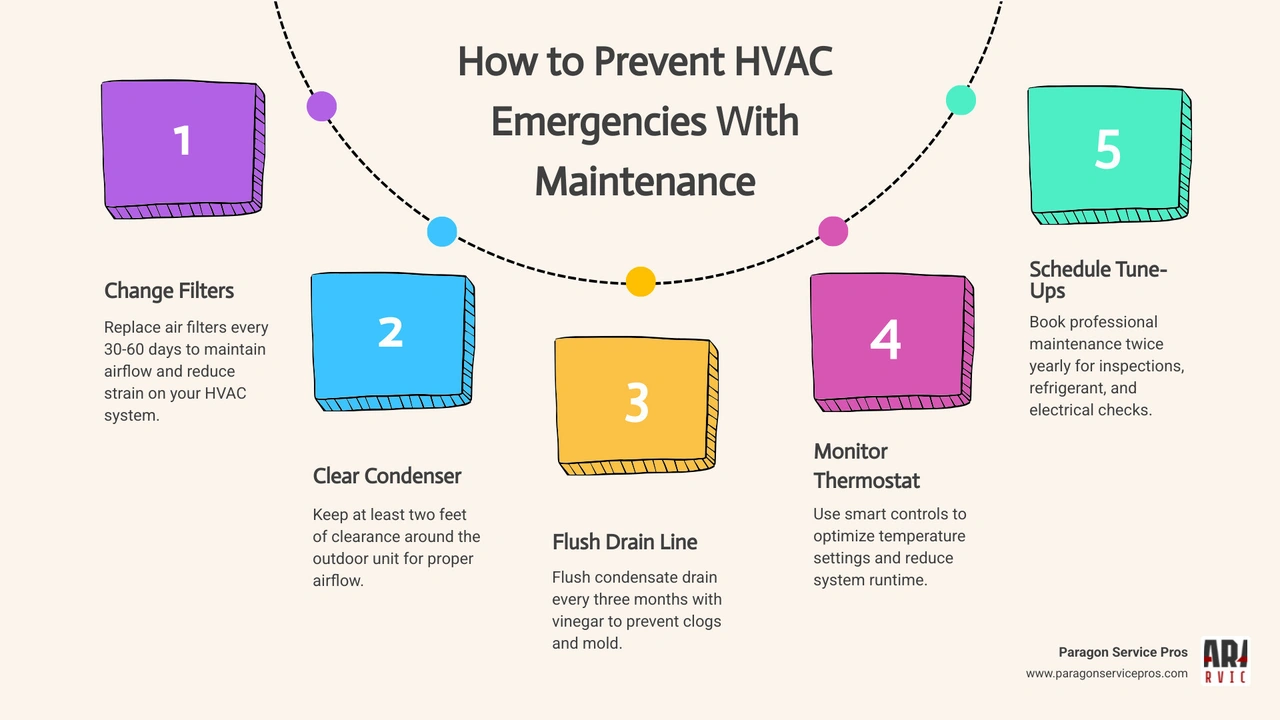
- Change air filters every 30 to 60 days (more often with pets or desert dust)
- Keep the outdoor condenser clear with at least two feet of clearance
- Flush the condensate drain line every three months
- Monitor your thermostat and consider upgrading to a smart model
- Schedule professional tune-ups twice a year — spring for cooling, fall for heating
Research consistently shows that homeowners who follow a regular maintenance routine are 50% less likely to face an unexpected breakdown — and consistent care can cut the risk of costly HVAC failures by as much as 95%. In the East Valley, where summer temperatures regularly push systems to their limits for months at a time, that kind of reliability is not a luxury — it is a necessity.
In the sections below, Paragon Service Pros walks you through each step in plain language so you can protect your home's comfort before an emergency forces your hand.
Basic how to prevent hvac emergencies with maintenance vocab:
- emergency hvac repair tips for the phoenix east valley homeowners
- when an hvac failure is a true emergency
What Constitutes an HVAC Emergency vs. Routine Repair?
When your heating and cooling system acts up in the middle of a hot Arizona afternoon, it is easy to panic and assume the worst. However, understanding the difference between a routine repair issue and a true, safety-threatening emergency is crucial for managing your home and your budget.
A routine repair is a minor issue that, while inconvenient, does not pose an immediate threat to your safety, health, or the structural integrity of your home. For example, if your air conditioner is running but blowing slightly less cool air than normal, or if you hear a faint, occasional squeak from your indoor blower fan on a mild 85°F spring day, you need a repair — but you do not need to call for immediate emergency service. You can easily schedule a standard appointment during normal business hours.
On the other hand, a true HVAC emergency is any situation that poses an immediate threat to your family’s health, safety, or property. In places like Mesa, Gilbert, and Chandler, AZ, extreme summer heat is a legitimate health hazard. If your air conditioner completely fails when outdoor temperatures soar past 110°F, this is a true emergency — especially for households with infants, elderly relatives, or individuals with chronic health conditions.
Other clear-cut HVAC emergencies include:
- Gas Smells or Carbon Monoxide Alerts: If you smell natural gas (a rotten-egg odor) near your furnace or if your carbon monoxide detector sounds, this is a life-threatening emergency. Evacuate your home immediately and call your gas utility provider and emergency services.
- Electrical Hazards: If you see sparks, smell burning plastic or sulfur from your vents, or if your system keeps tripping your main electrical breaker, shut off the power at your electrical panel immediately. These are severe fire hazards.
- Active, Severe Water Leaks: A clogged condensate drain pan can overflow, sending gallons of water directly into your ceiling, drywall, or flooring, causing thousands of dollars in structural damage and mold growth.
To help you distinguish between the two, we have put together this comparison table:
| Scenario | Routine Repair | True HVAC Emergency |
|---|---|---|
| Outdoor Temperature | Mild (70°F to 90°F) | Extreme Heat (100°F+) or Freezing Cold |
| System Status | Running but inefficient; minor temperature differences | Complete system failure; zero airflow or zero cooling |
| Safety Hazards | None | Burning smells, sparks, natural gas odors, or carbon monoxide alerts |
| Water Damage | Minor condensation on lines | Active, heavy water leaking into ceilings or floors |
| Noises | Occasional minor squeak or rattle | Loud grinding, shrieking, or heavy metallic banging |
By keeping up with Essential Maintenance Tips for Your Heating and Cooling System, you can catch the minor issues before they escalate into the scary, stressful emergency category.
How to Prevent HVAC Emergencies with Maintenance in 5 Steps
Preventing a catastrophic system failure does not require you to become a certified HVAC technician. Instead, it is about establishing a proactive routine. Most emergency service calls we receive in Queen Creek and San Tan Valley could have been completely avoided if a few simple, low-cost maintenance tasks had been performed earlier in the year.
By taking charge of your system’s health, you protect your comfort, keep your utility bills low, and ensure your system lasts as long as possible. In fact, there are 11 Reasons Annual HVAC Maintenance Saves You Money, ranging from lowering your monthly energy consumption to keeping your manufacturer warranty valid.

Let’s dive into the five easy steps you can take starting today to keep your home comfort system running flawlessly.
Step 1: Change Air Filters Regularly to Prevent HVAC Emergencies with Maintenance
If you only do one thing for your heating and cooling system, let it be this: change your air filters.
Think of your air filter as your system’s lungs. When a filter becomes packed with Arizona desert dust, pet dander, and hair, it creates severe airflow restriction. Your system has to work twice as hard to pull air through that dirty barrier. Imagine trying to run a marathon while breathing through a tiny cocktail straw — that is exactly what your blower motor goes through when your filter is clogged.
This restriction causes a dangerous chain reaction:
- Without proper airflow, the cold refrigerant circulating through your indoor evaporator coil cannot absorb heat.
- The temperature of the coil drops below freezing, causing the condensation on the coil to turn to ice.
- Your system's coils freeze over completely, blocking all airflow and potentially sending liquid refrigerant back to your outdoor compressor, which can destroy this incredibly expensive component.
To avoid this, check your air filter every 30 days. If it looks gray, fuzzy, or dusty, replace it immediately. For standard homes in Chandler and Mesa, a replacement every 60 days is common, but if you have pets, allergies, or live near active construction in growing areas like San Tan Valley, you will want to replace it every 30 days.
When buying filters, pay attention to MERV ratings (Minimum Efficiency Reporting Value). For most residential systems, a filter rated between MERV 8 and MERV 11 is the sweet spot. It captures dust, pollen, and pet dander without restricting airflow. Avoid ultra-restrictive MERV 13+ filters unless your system has been specifically designed or modified by a professional to handle them.
Step 2: Keep the Outdoor Condenser Unit Clear
Your outdoor condenser unit is responsible for releasing the heat absorbed from inside your home out into the open air. To do this efficiently, it needs a continuous, unobstructed supply of fresh air.
Unfortunately, our desert landscaping can get in the way. Overgrown shrubs, weeds, fallen leaves, and decorative rocks can block the unit's metal fins. When airflow is restricted around the condenser, the heat cannot escape. This forces the compressor to run hotter and longer, dramatically increasing its energy consumption and putting immense strain on its electrical capacitors.
Make it a habit to inspect your outdoor unit monthly. Maintain at least a two-foot clearance zone around the entire perimeter of the outdoor unit, and keep at least five feet of clear space above it. Trim back any bushes, trees, or desert plants.
Additionally, Arizona wind and dust storms (haboobs) can coat the condenser coils in a thick layer of dirt, acting like an insulating blanket. During your monthly check, gently rinse the outdoor coils with a garden hose on a low-pressure setting to wash away the accumulated dust. Never use a pressure washer, as the high force will bend the delicate aluminum fins and block airflow permanently.
Step 3: Clear the Condensate Drain Line
As your air conditioner cools your home, it also dehumidifies the air. The moisture in the air condenses on the indoor evaporator coil and drips down into a drain pan, where it flows out of your home through a dedicated PVC condensate drain line.
Because this dark, warm PVC pipe is constantly filled with water, it is the perfect breeding ground for algae, mold, and slime. Over time, this biological gunk builds up and creates a stubborn clog. When the water has nowhere to go, it backs up.
If your system has an emergency float switch installed, the backed-up water will trigger the switch and shut your system down completely to prevent water damage. While this saves your ceilings from ruin, it leaves you without cooling on a hot afternoon. If you do not have a safety switch, that water will overflow the pan and leak directly into your home's ceiling, walls, or floors, resulting in expensive structural repairs.
Preventing this is incredibly simple: pour one cup of distilled white vinegar down your condensate drain line access port once every three months. The natural acidity of the vinegar kills the algae and mold before it can form a clog, keeping the drain line clear and free-flowing.
Step 4: Monitor Thermostat Settings and Upgrade to Smart Controls
Your thermostat is the brain of your entire comfort system. If it is miscalibrated, running on dying batteries, or programmed incorrectly, it can cause your system to "short cycle" (turning on and off rapidly). Short cycling puts massive wear and tear on your compressor and electrical contactors, leading to premature component failure.
Upgrading to a modern smart thermostat is one of the smartest preventive steps you can take. These devices do far more than just let you adjust the temperature from your phone. They offer:
- Filter Change Reminders: No more guessing when your filter was last replaced; your thermostat will alert you based on actual system runtime.
- System Performance Alerts: Many smart models track how long your system runs to achieve your desired temperature. If your system runs for hours without making progress, the thermostat can send an alert to your phone, warning you of a potential issue before a total breakdown occurs.
- Reduced System Strain: You can program smart setbacks so your system doesn't work overtime when you are away, reducing wear and tear during peak afternoon heat.
Step 5: Schedule Professional Tune-Ups to Prevent HVAC Emergencies with Maintenance
While DIY steps are incredibly valuable, there are critical components of your heating and cooling system that require specialized tools and technical expertise to inspect. This is where professional maintenance comes in.
During a professional tune-up, a licensed technician performs deep-level diagnostics that go far beyond surface cleaning. This includes:
- Testing Electrical Components: Checking the amp draw of motors and measuring the capacitance of your capacitors. Capacitors are like temporary batteries that start your motors; they degrade over time, especially in extreme Arizona heat. Catching a weak capacitor during a spring tune-up is a quick, simple fix that prevents a sudden emergency breakdown in July.
- Checking Refrigerant Levels: Your AC is a closed system that does not "use up" refrigerant. If levels are low, it means there is a leak. Running a system with low refrigerant strains the compressor and can cause it to burn out.
- Tightening Electrical Connections: Corroded or loose wires can cause electrical shorts, system failures, or even electrical fires.
To understand why this service is so essential, read more about How Often Should You Schedule an AC Tune-Up? Expert Tips and Insights to keep your system in peak condition.
Seasonal Maintenance Checklists for the Arizona Climate
Living in the Arizona desert means our comfort systems face unique environmental challenges. From the intense summer heat to the sudden temperature drops on winter nights, your system works incredibly hard.
A "one-size-fits-all" approach to maintenance doesn't work here. To keep your home safe and comfortable year-round, you need a targeted, seasonal strategy. Following a seasonal checklist ensures your system is always prepared for the upcoming weather shift. Learn more by reading Seasonal HVAC Maintenance: Preparing Your System for Year-Round Comfort.
Spring AC Preparation in Mesa, AZ
Before the blistering summer heat arrives in Mesa, Chandler, or Gilbert, your air conditioner needs a thorough spring tune-up. Scheduling this service in March or April ensures your system is primed and ready to handle the heavy workload of May through September.
Your spring AC preparation checklist should include:
- Deep Coil Cleaning: Rinsing the outdoor condenser coils and inspecting the indoor evaporator coil for dust and debris buildup.
- Refrigerant Charge Verification: Ensuring your system has the exact amount of refrigerant required by the manufacturer for maximum cooling efficiency.
- Electrical Inspection: Testing electrical contactors, capacitors, and wire connections to prevent sudden start-up failures.
- Blower Motor Lubrication: Checking and lubricating moving parts to minimize friction and prevent motor burnouts.
To get your home ready for the heat, check out our guide on Spring AC and HVAC Maintenance.
Fall Heating and Furnace Maintenance
While we are famous for our heat, winter nights in the East Valley can get surprisingly chilly, with temperatures regularly dipping into the 40s and 30s. Before you flip your thermostat from "cool" to "heat" in October or November, a professional furnace check is essential for both comfort and safety.
If you have a gas furnace, safety is the primary concern. A cracked heat exchanger can allow toxic, odorless carbon monoxide gas to leak directly into your indoor air supply. A professional fall inspection ensures your system is completely safe to operate.
Your fall heating checklist should include:
- Heat Exchanger Inspection: Checking for microscopic cracks or rust spots using specialized cameras.
- Burner Assembly Cleaning: Removing dust and soot from the burners to ensure clean, efficient combustion.
- Ignition and Pilot Light Testing: Verifying that the furnace ignites reliably and safely.
- Carbon Monoxide Testing: Using calibrated sensors to ensure no harmful gases are escaping into your home.
For a complete breakdown of heating safety and care, refer to our Furnace Maintenance Mesa AZ Complete Guide and our handy Furnace Maintenance Company Guide Mesa AZ.
The Value of Professional Maintenance Agreements
Remembering to schedule your spring and fall tune-ups can be tough when life gets busy. That is why many homeowners choose to enroll in a professional maintenance plan.
A professional agreement takes the guesswork out of system care. Not only do we handle the scheduling reminders for you, but members also enjoy incredible perks like priority scheduling. If your system ever experiences an issue during a peak-season heat wave, being a maintenance member puts you at the front of the line for service.
Consider protecting your system and your peace of mind by exploring our AC Maintenance Agreement or signing up for a comprehensive Maintenance Plan.
Frequently Asked Questions About Preventing HVAC Emergencies
What are the most common warning signs of an impending HVAC breakdown?
Your HVAC system will almost always try to communicate with you before it fails completely. The most common warning signs of an impending breakdown include:
- Strange Noises: Squealing, grinding, metallic scraping, or loud banging noises indicate loose belts, failing motor bearings, or a damaged compressor.
- Short Cycling: If your system turns on and off every few minutes without completing a full cooling cycle, it is overheating, experiencing electrical issues, or suffering from restricted airflow.
- Weak Airflow: If you feel barely any air coming out of your register vents, your blower motor may be failing, your filter is clogged, or your ductwork has collapsed.
- Unexplained Utility Bill Spikes: A sudden, significant increase in your monthly energy bill without a change in usage indicates your system is working much harder than it should due to dirty coils, low refrigerant, or failing components.
How often should I change my air filters in Arizona?
In the East Valley, our environment is much dustier than other parts of the country. As a general rule:
- Check your filter every 30 days.
- Replace standard 1-inch filters every 30 to 60 days.
- If you have pets, smokers, or family members with severe allergies, stick to a strict 30-day replacement cycle.
- During the mild spring and fall months when your system is barely running, you can often stretch this to 90 days, but always perform a visual check first.
When should I call a professional instead of attempting a DIY fix?
While changing a filter or clearing weeds away from your outdoor unit are excellent DIY tasks, you should always call a professional for:
- Refrigerant Issues: Handling refrigerant requires specialized licensing under EPA Section 608. Never attempt to add refrigerant yourself.
- Electrical Problems: High-voltage electrical components can cause severe shocks, injuries, or fires if handled incorrectly.
- Gas Smells or Furnace Combustion Issues: Working with gas lines and combustion venting requires expert training to prevent carbon monoxide poisoning and gas explosions.
- Diagnostic Failures: If you have checked your breaker and your air filter but your system still won't turn on, call a licensed technician with the diagnostic tools to pinpoint the problem safely.
Conclusion
Your home’s heating and cooling system is a quiet hero, working tirelessly day and night to keep your family safe and comfortable in the challenging Arizona climate. By investing just a little bit of time into consistent DIY care and partnering with a trusted professional for seasonal tune-ups, you can virtually eliminate the stress, heat, and unexpected expenses of sudden system breakdowns.
At Paragon Service Pros, we prioritize your comfort, safety, and peace of mind. Our team of experienced, licensed professionals is dedicated to providing honest, transparent, and top-tier maintenance and repair services across Chandler, Gilbert, Gold Canyon, Mesa, Queen Creek, and San Tan Valley, AZ.
Don't wait for the heat to catch you off guard. Take control of your home comfort today and Schedule expert HVAC repair in Mesa, AZ with Paragon Service Pros or book your next preventative maintenance tune-up!
Keep reading: Maintenance & Tune-Ups
Browse every article in Maintenance & Tune-Ups or head back to the Learning Center .
Comfort you can count on, all year long.
Same-day service, honest diagnostics, and 24/7 emergency help with no overtime fees. A real Greater Phoenix team is standing by.