
Ultimate Checklist for Best Air Filter for Your Home
Find the best air filter for your home with this ultimate checklist covering ratings, maintenance, and Arizona-specific tips.

Why Finding the Best Air Filter for Your Home Matters More Than You Think
Choosing the best air filter for your home is one of the simplest things you can do to protect both your family's health and your HVAC system — especially here in the Arizona desert, where dust storms, pollen, and dry air make indoor air quality a year-round concern.
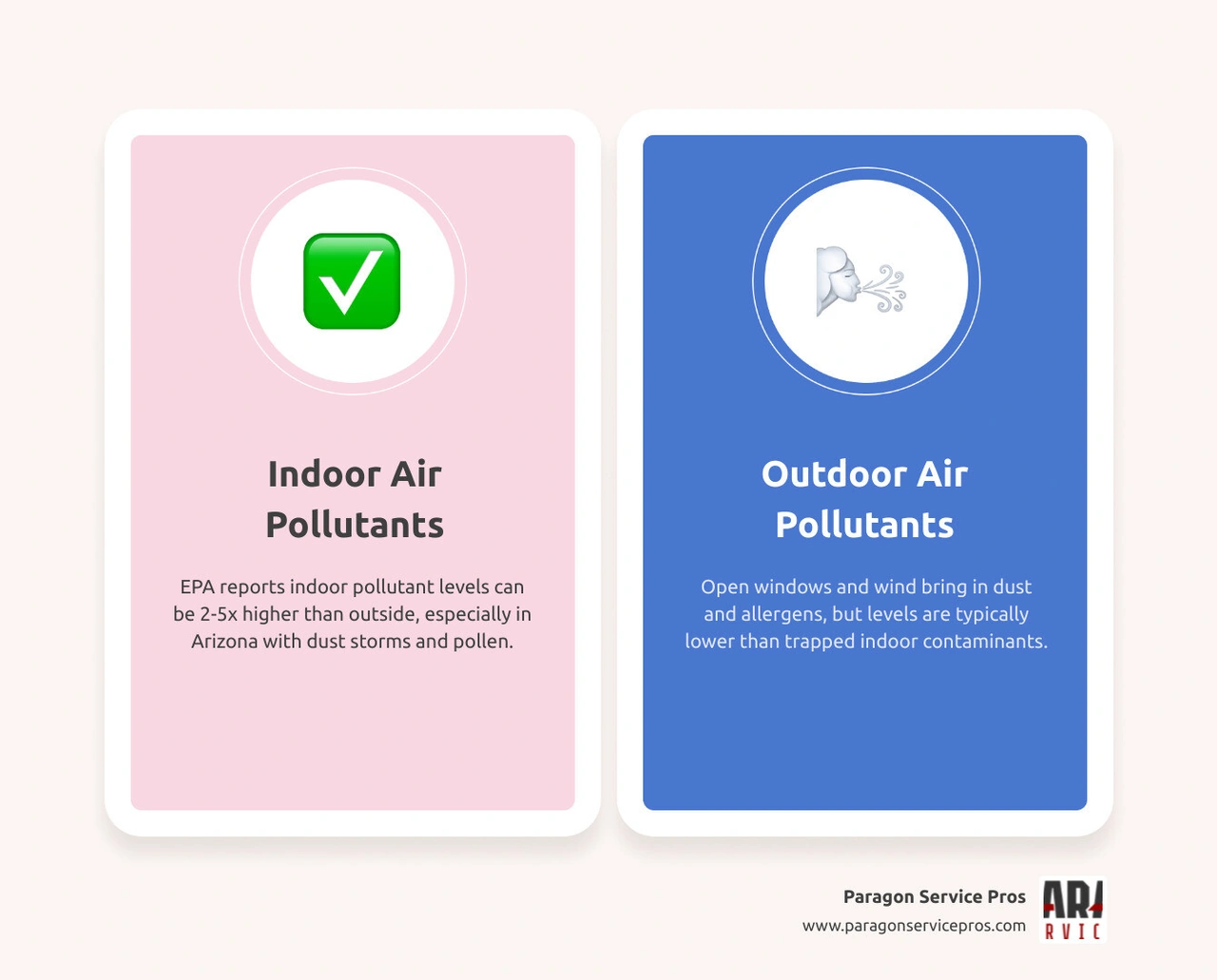
According to the EPA, indoor air pollutant concentrations can be two to five times higher than outdoor levels. That means the air inside your Mesa, Gilbert, or Queen Creek home could actually be harder on your lungs than the air outside — even on a windy day.
Here's a quick look at the top filter choices for most Arizona homeowners:
Best Air Filters for Your Home at a Glance:
- Best overall: MERV 13 pleated filter (balances filtration and airflow for most systems)
- Best for allergies: MERV 11-13 (captures pollen, mold spores, and fine particles)
- Best for pets: MERV 11 or higher with activated carbon (traps dander and odors)
- Best for most budgets: MERV 8 pleated filter (solid everyday protection)
- Best for low-maintenance: 4- or 5-inch thick filter (lasts significantly longer than 1-inch)
- Best for tech-savvy homeowners: Smart filter with app-based replacement alerts
The right filter depends on your household needs, your HVAC system's design, and how often you're willing to swap it out. In the sections below, we cover everything you need to make a confident choice.
How to Choose the Best Air Filter for Your Home
Finding the best air filter for your home is about striking a delicate balance. Your HVAC system needs to breathe easily to run efficiently, but it also needs to trap airborne contaminants before they circulate through your living spaces.
When you choose a filter, you are choosing how to manage two competing forces: filtration efficiency and airflow resistance.
A filter with microscopic openings will trap tiny particles like bacteria and smoke, but it also forces your HVAC blower motor to work harder to push air through. If the resistance is too high, your system's efficiency drops, energy bills climb, and you risk overheating or damaging the compressor. Conversely, a cheap fiberglass filter allows air to glide through effortlessly but does almost nothing to clean your indoor air, leaving your cooling coils vulnerable to dust buildup.
To keep your system running smoothly while maintaining healthy air, check out our comprehensive Indoor Air Quality Gilbert AZ Guide for localized tips on managing desert dust and seasonal allergens.
Understanding MERV, MPR, and FPR Ratings
When shopping for the best air filter for your home, you will quickly encounter a confusing alphabet soup of rating systems. Different manufacturers and retailers use different scales to measure filter performance. Understanding how these ratings compare is crucial to getting the filtration level you actually need.
- MERV (Minimum Efficiency Reporting Value): This is the industry standard developed by ASHRAE (American Society of Heating, Refrigerating and Air-Conditioning Engineers). Rated on a scale from 1 to 20, MERV measures a filter's ability to capture particles between 0.3 and 10 microns. Most residential systems perform best with filters in the MERV 8 to 13 range.
- MPR (Microparticle Performance Rating): Developed by 3M for Filtrete filters, this rating focuses specifically on the filter's ability to capture the tiniest microparticles (0.3 to 1.0 micron), which include bacteria, viruses, and smoke. MPR ratings typically range from 300 to 2800.
- FPR (Filter Performance Rating): This is a proprietary rating system used by Home Depot for the brands they sell. It ranks filters on a scale from 1 to 12 based on a weighted formula: 60% is based on the capture rate of large particles, 30% on small particles, and 10% on the weight gain of the filter over its lifetime.
Many high-quality filters utilize an electrostatic charge within their synthetic fibers. This charge acts like a magnet, pulling tiny airborne pollutants out of the air stream without restricting airflow as severely as mechanical-only filtration.
| MERV Rating | MPR Rating (3M) | FPR Rating (Home Depot) | Primary Contaminants Captured | Ideal Household Use |
|---|---|---|---|---|
| MERV 8 | MPR 300 - 600 | FPR 4 - 5 | Dust, lint, pollen, dust mites | Standard homes without pets or severe allergies |
| MERV 11 | MPR 1000 - 1200 | FPR 6 - 7 | Pet dander, mold spores, car emissions | Homes with pets or mild allergy sufferers |
| MERV 13 | MPR 1500 - 1900 | FPR 8 - 9 | Bacteria, virus carriers, smoke, smog | Highly recommended for superior health protection |
| MERV 14+ | MPR 2200 - 2800 | FPR 10 | Ultrafine particles, deep smoke, odors | Extreme sensitivities (verify system compatibility) |
Selecting the Best Air Filter for Your Home Based on Thickness
Filter thickness plays a massive role in how well your system filters air and how often you have to replace the media. Most standard homes are built with slots designed for 1-inch filters, but thicker options offer significant advantages.
- 1-Inch Filters: These are the most common and affordable filters. However, because they have a limited surface area, they clog quickly and must be replaced every 30 to 90 days.
- 4-Inch and 5-Inch Filters: Thicker filters feature deep, heavy pleats. This design drastically increases the overall surface area of the filter media. Because of this extra space, they can hold much more dust and debris before airflow is restricted. Thicker filters generally filter particles out of the air better and require replacement less often compared to the most common 1-inch thick filters, lasting anywhere from 6 to 12 months.
If your home currently uses a 1-inch filter, you cannot simply force a 4-inch filter into the slot. Doing so requires a professional ductwork retrofit to install a dedicated media cabinet. While this requires an upfront modification, many homeowners find that the convenience of changing filters just once or twice a year makes retrofitting well worth the effort.
Key Factors for Allergy Sufferers and Pet Owners
If you share your home with furry companions or struggle with seasonal allergies, your air filtration needs are much higher than average. Standard filters will fail to capture the microscopic triggers that cause sneezing, watery eyes, and respiratory discomfort. To understand how airborne irritants behave in local homes, read our detailed Indoor Air Quality Testing Chandler Guide to learn about identifying invisible indoor pollutants.
Why MERV 11 to 13 is the Best Air Filter for Your Home with Allergies
For allergy relief, a MERV 11 or MERV 13-rated furnace filter is highly recommended. These capture fine allergens, pollen, pet dander, and smoke that lower-rated filters may miss entirely.
While a MERV 8 filter is perfectly fine for catching large clumps of dust and lint, it allows microscopic pollen grains, mold spores, and dander to pass right through the pleats and recirculate back into your living spaces. Upgrading to a MERV 11 or MERV 13 filter ensures that these smaller, more irritating particles are trapped on the first pass through your HVAC system, providing noticeable relief from asthma and allergy triggers.
Solutions for Pet Dander and Smoke Odor
Pets bring joy to our lives, but they also bring a constant stream of hair, dander, and outdoor allergens. Similarly, cooking fumes, wildfire smoke, and seasonal dust storms can leave lingering odors inside your home.
Standard pleated filters can capture physical dander particles, but they cannot stop gaseous pollutants or odors. For comprehensive relief, consider filters that incorporate a layer of activated carbon or charcoal. Activated carbon works through adsorption, chemically binding odor molecules and volatile organic compounds (VOCs) to its surface.
To keep your home smelling clean and feeling healthy, check out our expert guides on Pet Dander Removal and Smoke Odor Removal.
Maintenance and Replacement Frequency in Arizona
Living in the East Valley means dealing with a unique desert climate. Our intense summer heat, frequent haboobs (dust storms), and high pollen counts mean our HVAC systems work harder and get dirtier much faster than systems in other parts of the country.
How Often to Replace Your Filter
Most furnace air filters should be replaced every 1 to 3 months. However, homes with pets, allergy concerns, or heavy system use during the scorching summer months often need more frequent replacements to prevent restricted airflow and system strain.
Regularly swapping out your filter does more than just clean your air—it keeps your entire heating and cooling system running at peak performance. For a complete breakdown of why this simple task is so critical, read about the 15 Benefits of Regularly Replacing Your HVAC Filters.
Several local factors will directly dictate your filter's lifespan:
- Number of pets: More paws mean more fur and dander clogging the filter pleats.
- Local dust levels: Homes in newer developments or near open desert terrain in San Tan Valley or Queen Creek accumulate dust faster.
- System run time: During June, July, and August, your AC runs almost constantly, accelerating dust accumulation.
- Filter thickness: A 1-inch filter needs monthly checks, while a 4-inch media filter can easily go 6 months or more.
- Household health needs: If someone has severe asthma, filters must be changed more frequently to keep air pristine.
Signs Your Filter Needs Immediate Replacement
Don't wait for your calendar to tell you when to change your filter. Your home and your HVAC system will drop clear hints when the filter has reached its capacity:
- Visible gray dust buildup: If the filter media looks dark, gray, or caked with dirt, replace it immediately.
- Weak airflow from vents: If the air coming out of your registers feels weaker than usual, a clogged filter is likely choking the system.
- Unexplained rise in energy bills: When a filter is clogged, the blower motor consumes more electricity to move the same amount of air.
- Excessive dust on furniture: If you find yourself dusting your tabletops every couple of days, your filter is likely saturated and letting dust bypass.
If you suspect your home's air is still dirty despite regular filter changes, professional diagnostics can help. Take a look at our Indoor Air Quality Testing Guide Mesa AZ and our Gold Canyon Air Quality Testing Guide to learn how we pinpoint hidden airborne issues.
Sizing and HVAC System Compatibility
Using the wrong size filter is almost as bad as using no filter at all. If a filter is too small, air will simply slip around the gaps—a problem known as "filter bypass"—meaning dirty air bypasses the filter entirely and deposits dust directly onto your sensitive HVAC components.
Finding the Right Dimensions
When buying a replacement, look at the edge of your current filter. You will see two sets of numbers: the nominal size (e.g., 20x25x1) and the actual size (e.g., 19.5 x 24.5 x 0.75).
The nominal size is the rounded public label used for quick shopping, while the actual size represents the precise physical measurements of the filter frame. Always buy based on the exact nominal dimensions specified by your system manufacturer to ensure a snug, secure fit.
For those interested in how air quality standards and testing protocols compare across different regions, you can read our guides on Indoor Air Quality Testing American Fork UT and the Bluffdale UT Air Quality Testing Guide to see how professional indoor air testing is conducted.
Smart Filters vs. Traditional Filters
Smart home technology has officially made its way to air filters. Smart filters feature built-in, low-energy Bluetooth sensors that monitor changes in air pressure and airflow.
- Traditional Filters: You rely on static calendar reminders (e.g., "change every 30 days"). This can lead to replacing filters too early (wasting money) or too late (straining your system).
- Smart Filters: These track actual usage and pressure drops. The sensor sends an alert directly to your smartphone when the filter is genuinely dirty and needs to be changed.
While smart filters offer unparalleled convenience, they do carry a higher price tag. For most homeowners, setting a recurring calendar alert on their phone or signing up for a automated delivery subscription is a highly cost-effective alternative.
Frequently Asked Questions About Home Air Filtration
What thickness of air filter is best for most homes?
A 1-inch thick filter is the standard for most residential HVAC systems because most homes are built with narrow filter slots. However, if your system can accommodate them—or if you choose to retrofit your system with a media cabinet—a 4-inch or 5-inch filter is superior. Thicker filters provide better overall filtration, cause less airflow restriction, and only need to be replaced every 6 to 12 months.
What are the top-rated air filters according to independent testing?
Pleated polyester and electrostatic filters consistently rank as the top performers in independent laboratory testing. Brands like Filtrete (specifically their MPR 1900 and MPR 1600 lines) are highly rated because they use electrostatically charged synthetic fibers to capture tiny microparticles (like bacteria and smoke) while maintaining exceptionally high airflow rates that won't strain your system.
What happens if an air filter is installed backwards?
Installing an air filter backwards restricts airflow and reduces its structural integrity. Air filters are designed to be directional; they have a sturdy wire mesh or cardboard support backing on one side to keep the filter from collapsing under the pressure of the system's return air. If installed backwards, the air pressure can cause the filter to bow, buckle, or collapse into the blower fan, potentially causing severe mechanical damage. Always make sure the printed arrow points in the direction of the airflow (toward the furnace or air handler unit).
Conclusion
Finding the best air filter for your home is a simple but incredibly powerful way to protect your family's health and prolong the life of your heating and cooling system. Whether you opt for a budget-friendly MERV 8 filter, an allergy-busting MERV 13, or a long-lasting 4-inch media filter, regular replacement is the absolute key to success.
At Paragon Service Pros, we are dedicated to keeping your home comfortable, clean, and energy-efficient year-round. If you need help choosing the right filter size, retrofitting your system for a thicker media filter, or scheduling a seasonal system tune-up, our team of friendly, local professionals is here to help.
Keep your cooling system running efficiently all summer long—Schedule professional AC maintenance today with Paragon Service Pros!
Keep reading: Indoor Air Quality
Browse every article in Indoor Air Quality or head back to the Learning Center .
Comfort you can count on, all year long.
Same-day service, honest diagnostics, and 24/7 emergency help with no overtime fees. A real Greater Phoenix team is standing by.