
A Practical Guide to How Ductless Systems Work
Discover how ductless systems work for heating and cooling with zoned comfort and energy efficiency in Arizona homes.

How Ductless Systems Work for Heating and Cooling: A Quick Answer
How ductless systems work for heating and cooling comes down to one simple idea: moving heat, not making it. Instead of pushing air through ducts, a ductless mini-split uses refrigerant lines to transfer heat between an indoor air handler and an outdoor compressor unit — no ductwork required.
Here is the basic process at a glance:
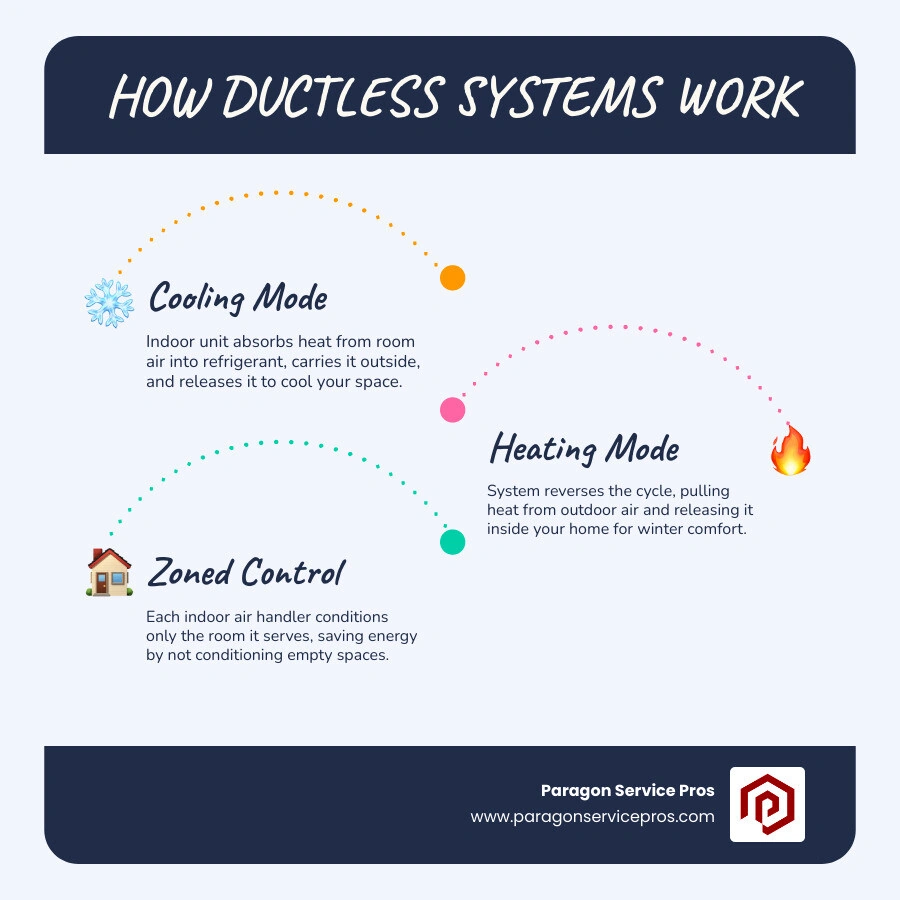
- Cooling mode - The indoor unit absorbs heat from your room air into refrigerant, carries it outside, and releases it outdoors, leaving your space cooler.
- Heating mode - The system reverses the cycle, pulling heat from the outdoor air and releasing it inside your home.
- Zoned control - Each indoor air handler conditions only the room it serves, so you are not wasting energy on empty spaces.
- No ducts needed - Refrigerant travels through a small conduit that passes through a roughly 3-inch hole in the wall, connecting the indoor and outdoor units.
- Year-round comfort - One system handles both heating and cooling, and modern units can operate in temperatures well below freezing.
If you own a home in Chandler, Gilbert, Mesa, Queen Creek, Gold Canyon, or San Tan Valley, AZ, and you are thinking about a more efficient way to heat and cool your space — especially a room addition, garage, or older home without existing ductwork — ductless mini-splits are worth understanding before you make any decisions.
Ductless systems have actually been around since 1959, when Mitsubishi first introduced them in Japan to solve a very practical problem: small urban homes with no room for ductwork. That same logic applies to a lot of Arizona homes today, where attic temperatures can soar past 140°F and running ducts through unconditioned spaces can drain more than 30% of your system's energy before conditioned air ever reaches a room.
The sections below walk you through exactly how these systems work, what types are available, and how to get the most out of one in the Arizona heat.
What is a Ductless HVAC System and How Does it Differ from Central Air?
To understand how ductless systems work for heating and cooling, we first need to look at what they are. A ductless HVAC system, often called a "mini-split," is a heating and cooling setup that does exactly what the name suggests: it operates without the need for large, bulky metal ductwork running through your attic or crawlspace.
In a traditional central air system, a single large indoor unit (usually in a closet or attic) pushes air through a complex network of ducts. In contrast, a ductless system uses small indoor air handlers mounted directly in the rooms you want to cool or heat. These handlers are connected to an outdoor condenser via thin refrigerant line sets.
When we look at a Central AC vs Ductless Mini Split Comparison, the differences in efficiency and installation become clear. Because there are no ducts, you avoid the energy loss associated with leaks—which can account for more than 30% of energy consumption in a typical home.
| Feature | Ductless Mini-Split | Traditional Ducted System |
|---|---|---|
| Noise Level | Whisper-quiet (as low as 19-25 dB) | Audible air rushing and duct "clangs" |
| Space Required | Minimal; small wall/ceiling units | Significant; requires attic/wall space for ducts |
| Energy Efficiency | High (Up to 35 SEER2) | Moderate (Typically 15.2 to 25 SEER2) |
| Temperature Control | Independent room-by-room zoning | Single thermostat for the whole house |
The Core Components of a Mini-Split
A ductless system is a marvel of engineering, condensed into a few sleek components. According to our Ductless Mini Split Guide, the system relies on four primary parts:
- Indoor Air Handler: This contains the evaporator coils and a quiet blower fan. It’s the part you see on your wall or ceiling that delivers the conditioned air.
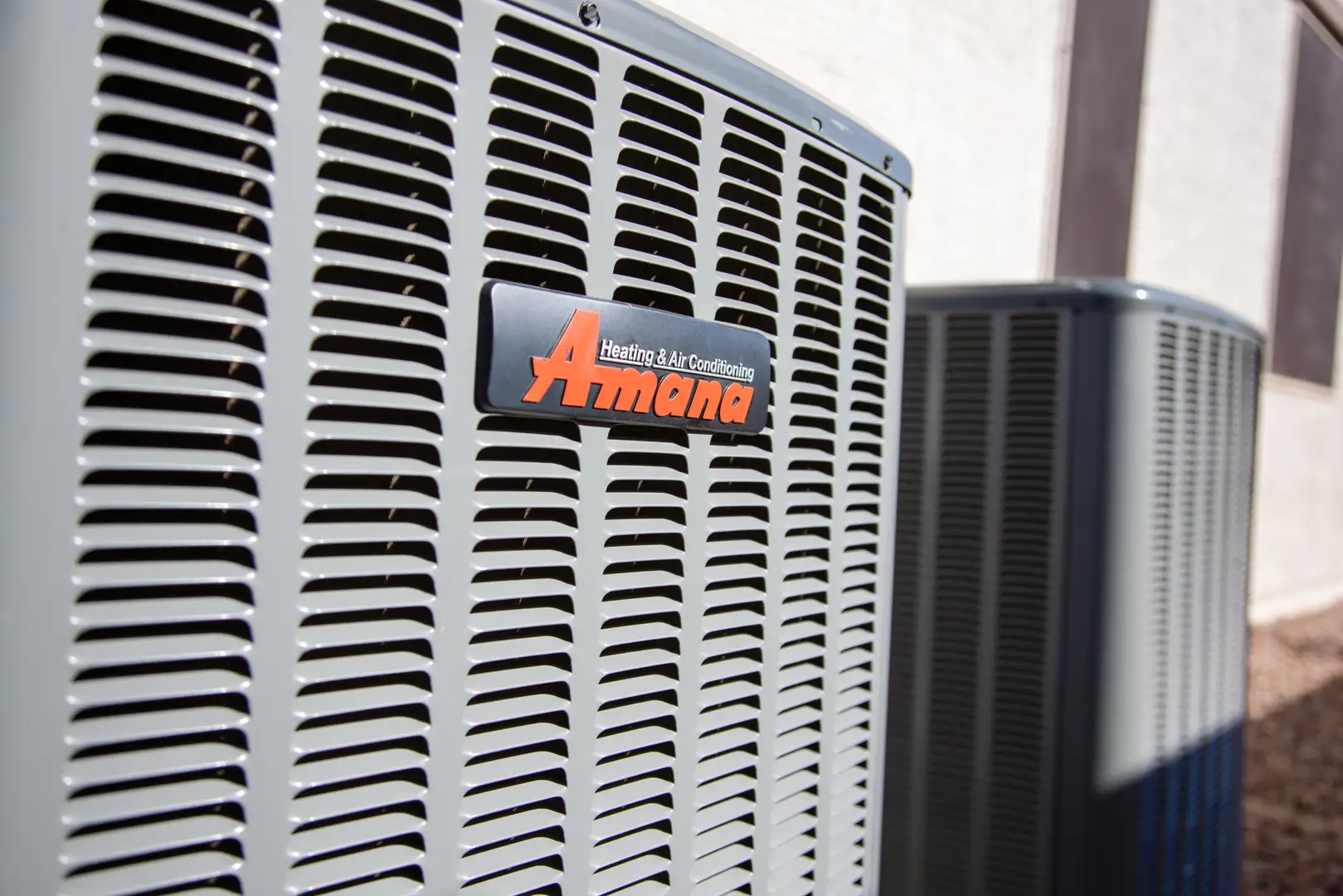
- Outdoor Condenser Unit: This is where the magic happens. It houses the inverter compressor and the condenser coil, which either releases heat (in cooling mode) or gathers it (in heating mode).
- The Conduit: A thin bundle containing the refrigerant lines, a power cable, and a condensate drain line. This links the indoor and outdoor units through a small 3-inch hole.
- Inverter Compressor: Unlike traditional compressors that are either "on" or "off," an inverter compressor acts like cruise control. It slows down or speeds up to maintain a precise temperature, significantly reducing energy use.
Why Homeowners are Adding Cooling Without Ductwork
In May 2026, we are seeing more Arizona homeowners than ever looking for ways to improve comfort without a massive renovation. Whether you are retrofitting an older home in Mesa that never had central air or converting a garage in Gilbert into a home office, ductless is often the path of least resistance.
When Adding Cooling Without Ductwork Options Compared, mini-splits consistently beat out window units or portable ACs. They are more secure, much quieter, and far more efficient. They are also the perfect solution for sunrooms or "Arizona rooms" that the main AC system struggles to reach.
The Mechanics: How Ductless Systems Work for Heating and Cooling
At its heart, a ductless system is a heat pump. It doesn't use fuel to create heat; it uses electricity to move heat from one place to another using a refrigerant cycle.
The Cooling Process: Moving Heat Outdoors
When you set your remote to "Cool" on a blistering July afternoon in Queen Creek, the system begins a sophisticated exchange. The indoor unit’s fan pulls warm air from your room across the cold evaporator coils. The refrigerant inside these coils absorbs the heat from the air, turning from a liquid into a gas.
This heat-laden gas travels through the copper tubing to the outdoor unit. The compressor then squeezes the gas, increasing its temperature even further so it can release that heat into the outdoor air—even if it's 110°F outside. If you’re looking for a professional setup, our Ductless AC Install Gilbert Guide explains how we optimize this process for local homes.
The Heating Process: Reversing the Cycle for Winter Comfort
One of the coolest things about how ductless systems work for heating and cooling is the reversing valve. In the winter, the process literally flips. The outdoor unit extracts heat from the outside air (yes, even cold air has heat energy!) and pumps it into your home.
Modern "Hyper-Heat" technology allows these systems to provide 100% heating capacity at temperatures well below freezing. For those in the East Valley, our Ductless Mini Split Installation Mesa AZ Guide provides more details on how these units handle our desert winters, which, while mild, still require a reliable heat source.
System Configurations: Single-Zone vs. Multi-Zone Setups
Not every home needs the same setup. Ductless systems are incredibly flexible, offering two main configurations:
- Single-Zone: One outdoor unit connected to one indoor air handler. This is perfect for a single room, like a master suite or a workshop.
- Multi-Zone: One outdoor unit connected to multiple indoor units (up to 8 in some advanced systems). This allows you to heat and cool your entire home while giving every family member their own thermostat.
When considering a Mini Split vs Central AC Cost Comparison, multi-zone systems offer incredible long-term value because you only pay to condition the rooms you are actually using.
Understanding How Ductless Systems Work for Heating and Cooling in Large Homes
For larger homes in places like San Tan Valley or Queen Creek, a whole-home ductless solution requires careful planning. We perform detailed load calculations to determine the exact BTU (British Thermal Unit) capacity needed for each room. Factors like ceiling height, window placement, and insulation quality all play a role. Proper sizing is critical; a unit that is too large will "short cycle," while one that is too small will run constantly without ever getting the room comfortable. You can find more on sizing in our Ductless Mini Split Installation Provo Guide.
Comparing Mini-Splits to Traditional Arizona Cooling Options
In Arizona, we often deal with "hot spots"—rooms that stay warm no matter how low you set the central AC. Often, this is due to duct loss or attic temperatures that can turn your ductwork into a heater.
When you look at a Mini Split vs Window Unit for Arizona Rooms, the mini-split is the clear winner for efficiency and aesthetics. Window units are noisy, block your view, and provide an easy entry point for intruders. A ductless system, however, keeps your windows clear and your home secure.
Maximizing Efficiency: How Ductless Systems Work for Heating and Cooling in Desert Climates
Efficiency is the biggest selling point for ductless technology. Traditional ducted heat pumps typically achieve ratings between 15.2 to 25 SEER2. However, ductless mini-splits can reach staggering ratings of up to 35 SEER2.
By eliminating ductwork, you're cutting out the middleman. You aren't losing 20-30% of your cooling to leaks in the attic. Instead, the cold air is delivered exactly where you need it. This can lead to a reduction in energy consumption by up to 40% compared to conventional systems. For our neighbors in Utah, we also offer a Ductless Mini Split Installation American Fork UT guide that covers efficiency in cooler climates.
Whisper-Quiet Operation and Space Savings
If you’ve ever tried to watch a movie while a traditional AC unit kicks on, you know how loud they can be. Trane and Mitsubishi outdoor units operate as quietly as 46 decibels—about the level of a typical conversation. Indoors, the units are even quieter, often operating at 19 decibels, which is literally quieter than a whisper.
The compact footprint is another huge plus. Whether you choose a wall-mounted unit, a floor-mounted model, or a ceiling-recessed cassette, these systems take up very little space. Our Ductless Mini Split Installation Gold Canyon Guide highlights how these systems preserve the aesthetic of beautiful desert homes.
Best Practices for Installation and Maintenance
While the concept of how ductless systems work for heating and cooling is simple, the installation requires a professional touch. A typical installation involves a small 3-inch wall penetration to connect the indoor and outdoor components. It’s a clean process that can often be completed in a single day.
Essential Maintenance for Arizona Homeowners
Arizona is dusty. Between the haboobs and the constant desert breeze, your filters work hard. To keep your system running at peak efficiency, we recommend the following:
- Clean Filters Monthly: Most ductless units have reusable filters that you can simply pop out, rinse, and put back.
- Keep the Outdoor Unit Clear: Ensure there is at least 18 inches of clearance around your outdoor condenser. Keep it free of weeds, debris, and dust.
- Annual Professional Tune-ups: Once a year, have a pro check the refrigerant levels, inspect the coils, and ensure the condensate drain is clear. This longevity is key to protecting your investment, as detailed in our Ductless Mini Split Installation Provo Guide.
Frequently Asked Questions about Ductless HVAC
Can a ductless system effectively heat an entire home?
Absolutely. By using a multi-zone configuration, you can place an indoor air handler in every major living space. Each unit has its own thermostat, allowing for precise, whole-home comfort. With the right BTU sizing, a ductless system can be your primary source of both heating and cooling year-round.
How much energy can I save by switching to a ductless system?
Most homeowners see a significant drop in their utility bills. Because you avoid the 20-30% energy loss typical of leaky ducts and gain the benefits of inverter technology, you could reduce your energy consumption by up to 40% over a conventional system.
Are ductless systems difficult to maintain?
Not at all. In fact, they are often easier to maintain than central systems. There are no ducts to clean, and the filters are easily accessible for the homeowner. Aside from monthly filter rinses and an annual professional inspection, they are very "set it and forget it."
Conclusion
Understanding how ductless systems work for heating and cooling is the first step toward a more comfortable, energy-efficient home. Whether you are looking to fix a stubborn "hot room," finish a basement, or upgrade your entire home's HVAC system, ductless technology offers a level of control and efficiency that traditional systems simply can't match.
At Paragon Service Pros, we are proud to serve Chandler, Gilbert, Mesa, Queen Creek, Gold Canyon, and San Tan Valley. We focus on quality workmanship and complete transparency, ensuring your home stays cool in the summer and warm in the winter without the headache of ductwork.
Ready to experience zoned comfort for yourself? Contact our team for expert ductless mini-split solutions and let us help you find the perfect system for your Arizona home.
Keep reading: Heat Pumps & Ductless
Browse every article in Heat Pumps & Ductless or head back to the Learning Center .
Comfort you can count on, all year long.
Same-day service, honest diagnostics, and 24/7 emergency help with no overtime fees. A real Greater Phoenix team is standing by.